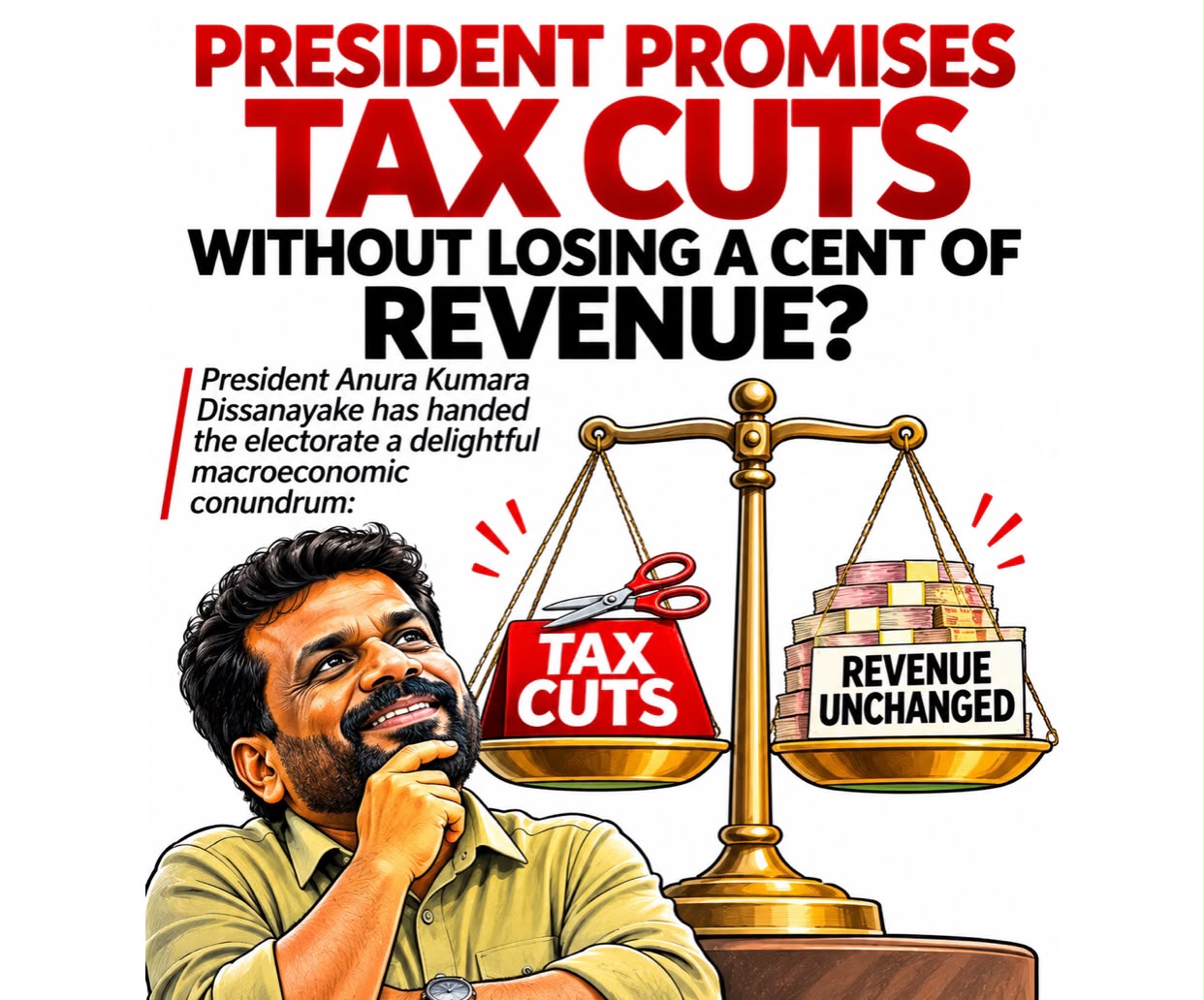
President Anura Kumara Dissanayake has handed the electorate a delightful macroeconomic conundrum: the upcoming Budget will deliver further tax reductions for weary citizens, yet state revenue targets will remain entirely uncompromised. For a country that spent decades watching previous administrations miss their fiscal collections by a comfortable ten percent margin, the announcement sounds like pure financial alchemy.
The President’s economic argument rests on a firm defense of his administration’s short record. Since taking office, no fresh levies have been slapped onto the public, and selected tariffs have even seen downward revisions. Against historical precedent, where fiscal authorities routinely promised champagne revenues on ginger beer budgets, the current treasury has actually hit its targets while preserving that holy grail of sovereign debt management: a primary budget surplus. In the austere vocabulary of international creditors, maintaining a primary surplus is non-negotiable if Sri Lanka ever hopes to lift the crushing weight of structural debt off its shoulders.
Yet, bridging the chasm between fiscal discipline and household relief is where the mathematics gets sticky. Everyday Sri Lankans facing the unforgiving squeeze of cumulative inflation care remarkably little about primary surplus ratios when their grocery bills remain stubbornly high. The administration clearly recognizes that a populace battered by rising living costs needs tangible breathing room. The dilemma, however, is that every tax cut granted at the retail counter cuts directly into the revenue streams required to keep multilateral lenders satisfied.
Submit Your Press Release
Get your company news, announcements, launches, appointments and events in front of a wider audience.


To pull off this fiscal magic trick, the state cannot rely on simple goodwill. It must engineer a dramatic expansion of the tax base itself, capturing uncollected revenues through mandatory compliance measures like the digital Taxpayer Identification Number rollout while aggressively plugging systemic leakage. If compliance surges, lower rates can theoretically yield higher total collections. But if compliance stumbles, cutting tax rates while trying to protect revenue targets becomes an exercise in balancing on a tightrope over an abyss. As the upcoming Budget approaches, economic observers will be watching closely to see whether the administration has discovered a genuine formula for sustainable growth, or merely a very clever way to frame the invoice.