
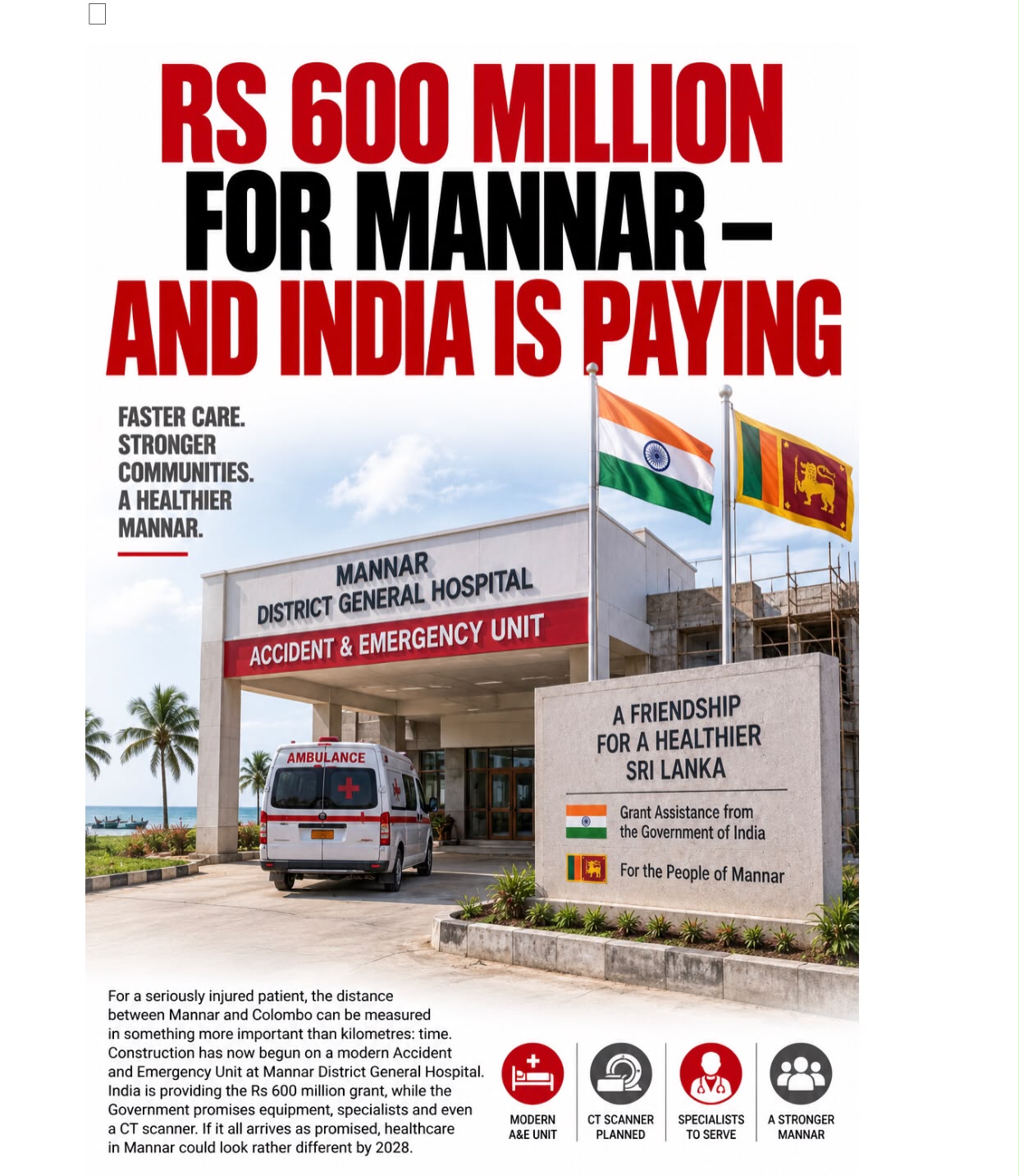
For a seriously injured patient, the distance between Mannar and Colombo can be measured in something more important than kilometres: time. Construction has now begun on a modern Accident and Emergency Unit at Mannar District General Hospital. India is providing the Rs 600 million grant, while the Government promises equipment, specialists and even a CT scanner. If it all arrives as promised, healthcare in Mannar could look rather different by 2028.
Something significant happened at Mannar District General Hospital on Wednesday.
President Anura Kumara Dissanayake formally marked the beginning of construction of a new Accident and Emergency Unit – a Rs 600 million project financed not through another loan but through a grant from the Government of India.
Submit Your Press Release
Get your company news, announcements, launches, appointments and events in front of a wider audience.


The project is scheduled for completion in the first quarter of 2028 and is intended to provide modern emergency, accident and trauma treatment closer to the people who actually live in the district.
For decades Sri Lanka’s public health system has possessed an uncomfortable geographical imbalance. Sophisticated specialist treatment tends to be concentrated in Colombo and a handful of major provincial centres. For patients living in districts such as Mannar, serious illness or traumatic injury can therefore mean not merely treatment, but travel.
The new Mannar unit is specifically intended to improve treatment during that critical period after an accident or medical emergency – the ‘golden hour’ when rapid intervention can substantially affect the outcome.
Health Minister Dr Nalinda Jayatissa says a four-storey doctors’ quarters building costing Rs 243 million is also being constructed at Mannar. A new paediatric unit costing approximately Rs 230 million is expected to begin construction this year. Mannar is also expected to receive a CT scanner worth approximately Rs 250 million.
The Minister says intern medical officers have been assigned to Mannar for the first time in the hospital’s history, with further interns expected in October, while steps are being taken to address shortages of specialist doctors.
Sri Lanka has no shortage of impressive hospital buildings. The real test begins after the ceremonial opening: whether there are sufficient consultants, doctors, nurses, technicians, medicines, equipment and maintenance budgets to make the building function as a hospital rather than merely look like one.
India’s presence in Sri Lanka is often discussed almost exclusively through geopolitics. But influence can also arrive wearing a white coat.
By the first quarter of 2028, the real measure of the Mannar project should not be whether a handsome new building has appeared beside the hospital. It should be whether the doors are open, the CT scanner works, the specialists are there and an emergency patient in Mannar no longer needs to begin a desperate journey towards Colombo to receive the treatment that could save a life.



