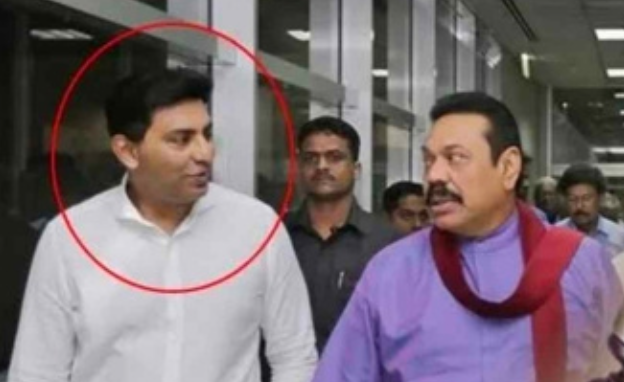
Be that as it may, the death of former Kapila Chandrasena was always likely to trigger something beyond ordinary public mourning.
In today’s Sri Lanka, where institutional trust has steadily deteriorated over decades, almost every high-profile death linked in any way to controversy risks entering dangerous territory – the territory where rumour, speculation and political mythology begin competing with fact itself.
And perhaps that alone should deeply concern the country. Because once citizens stop trusting systems, almost everything eventually becomes vulnerable to conspiracy theory.
The world has seen this phenomenon before. More than six decades after the assassination of John F. Kennedy, the arguments still continue. Entire bookshelves remain filled with competing explanations, hidden actors, missing truths and unanswered questions.
The official findings never fully settled public suspicion because the issue was never simply evidence alone. The issue was trust – trust in institutions, trust in government and trust in whether the full truth had ever really emerged.
Sri Lanka today increasingly appears to suffer from a similar erosion of confidence.
Not because the circumstances themselves are identical.
But because public trust in official systems, investigations and accountability mechanisms has weakened so profoundly that many citizens no longer instinctively believe official narratives irrespective of who occupies office.
And that is where the conversation surrounding Kapila Chandrasena’s death becomes far larger than one individual. Because his story intersects directly with Sri Lanka’s long and deeply uncomfortable history of political power, state enterprise governance and allegations of corruption that have stretched across administrations and political generations alike.
The transactions and procurement decisions that would eventually become central to the Airbus controversy surrounding SriLankan Airlines took place during the presidency of Mahinda Rajapaksa. That era, depending on one’s political persuasion, is remembered either as a period of ambitious national infrastructure expansion or as a period where executive power became increasingly concentrated and allegations of corruption expanded alongside it.
Rumours circulated then. Investigations followed later. International inquiries emerged. Court proceedings arose in foreign jurisdictions.
Yet years afterward, Sri Lanka still appears trapped in that familiar and exhausting grey zone between allegation and final legal conclusion.
And perhaps that is precisely the deeper national problem.
Sri Lanka has become a country where accusations are politically abundant but legal finality remains strangely elusive.
Every political movement that secured power over the past two decades promised accountability. Every administration arrived pledging investigations, anti- corruption drives, clean governance and consequences for abuse of power. Every opposition campaigned insisting public money had been stolen, state institutions weakened and political privilege abused.
And yet somehow the system itself survives largely intact beneath the changing slogans.
Governments change. Ministers change. Committees change. Investigations change.
But meaningful institutional consequence often appears remarkably slow, selective or incomplete.
That reality has now produced a dangerous national cynicism where almost every investigation immediately becomes interpreted not as a legal process but as political warfare.
The moment a new administration investigates the conduct of a former administration, the same phrases emerge almost automatically:
“political victimisation.”
“witch hunt.”
“revenge politics.”
Sri Lanka has heard these phrases so frequently that they now function almost as institutional reflexes.
But one is often left wondering what exactly is meant by “revenge.”
Because if public money was genuinely abused, if procurement systems were manipulated, if state enterprises were politically exploited or if losses were ultimately transferred onto ordinary taxpayers, then who precisely are the victims?
The politicians?
Or the public?
Who paid for the losses? Who endured the taxes?
Who absorbed inflation, pension erosion and economic collapse while state institutions bled money through years of alleged mismanagement and politically connected decision-making?
The answer, of course, is painfully obvious. It was the citizen.
And that perhaps is the great irony of Sri Lankan politics.
The actual stakeholders – the public itself – often appear reduced to spectators while political elites rotate endlessly between the roles of accuser, defender and victim depending entirely on who currently controls power.
Meanwhile, the deeper structural weaknesses remain largely untouched.
And that is why the present administration led by Anura Kumara Dissanayake faces a challenge far larger than simply revisiting old allegations or opening old files. The real challenge is whether Sri Lanka can finally rebuild systems strong enough to produce accountability that is timely, transparent and independent of political cycles themselves.
Because many of Sri Lanka’s failures stem not merely from individual conduct but from the long erosion of checks and balances.
Over time, constitutional changes, political culture and institutional weakening created an environment where the Executive Presidency accumulated enormous power while many accountability structures became increasingly vulnerable to influence, patronage or paralysis.
Once systems become personality-driven rather than institution-driven, accountability itself becomes unstable. And unstable systems inevitably produce unstable public trust. That is precisely the environment Sri Lanka now inhabits.
A country where almost every major scandal becomes politically contested territory rather than cleanly resolved legal territory.
A country where every investigation is viewed through partisan suspicion.
A country where delay itself breeds conspiracy.
And perhaps that is the most dangerous consequence of all.
Because once institutional trust collapses deeply enough, every unexplained event begins attracting mythology. Every death becomes suspicious. Every prosecution becomes political. Every acquittal becomes doubted. Every explanation becomes negotiable.
That is an extraordinarily dangerous place for a democracy to arrive.
And perhaps that is the deeper warning hidden beneath the reaction now surrounding Kapila Chandrasena’s passing.
The tragedy is not merely that conspiracy theories may emerge. The tragedy is that so many citizens now find them emotionally believable.
Not necessarily because evidence exists. But because institutional trust no longer does.
Until Sri Lanka rebuilds systems capable of delivering consistent, independent and credible accountability regardless of political colour, the country risks remaining trapped inside the same exhausting cycle:
allegation,
outrage,
investigation,
delay,
political theatre,
and eventually public exhaustion.
Meanwhile, the public continues paying the price. Often literally.