
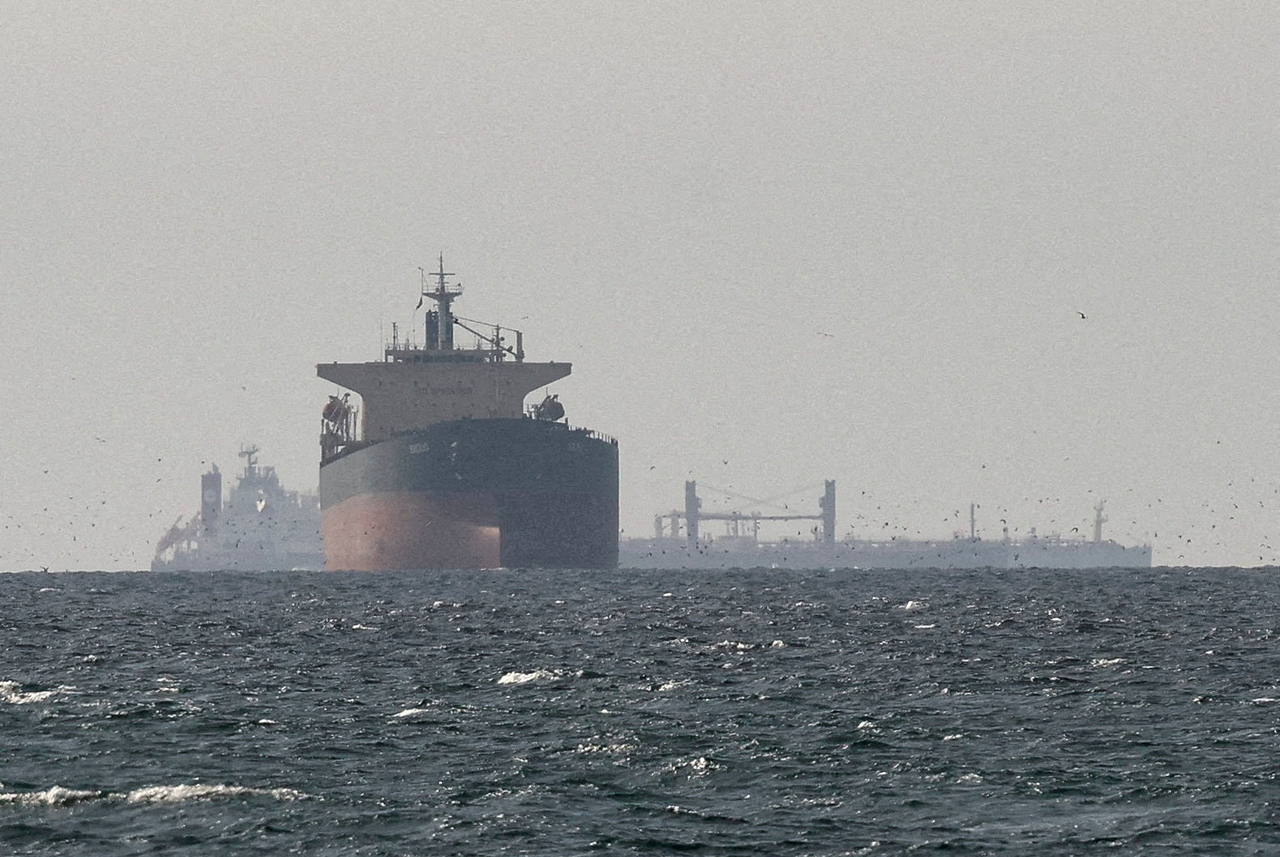
Seafarers stranded in Hormuz face hunger, fear, and a system struggling to protect them
By NewsLine Desk
Be that as it may, while the world debates oil, strategy, and power, there is another storyquieter, more human, and far more urgent.
It is the story of the seafarers.
As of today, the International Maritime Organization confirms that nearly 20,000 seafarers aboard roughly 2,000 vessels remain stranded in and around the Strait of Hormuz. These are not combatants. They are not policymakers. They are workers – caught in a war they did not choose.
The numbers alone are staggering.
What began as reports of “around 1,000 ships” has now widened into a far more serious reality: a maritime system partially frozen, with thousands of ships unable to transit, dock, or rotate crews.
Crew changes have stalled. Ships are anchored. Movement is restricted. And time is becoming the enemy.
LIFE ON BOARD – STRETCHED, NOT BROKEN… YET
The legal framework is clear. Under the Maritime Labour Convention, seafarers are entitled to:
• Adequate food and drinking water • Hygienic living conditions
• Medical care
• Communication access
But law, in war, does not always translate into reality. Reports from maritime bodies indicate that some vessels are already facing shortages of food, water, fuel, and medical supplies, while anxiety levels among crews are rising sharply.
This is not uniform across all ships. But it is widespread enough to concern regulators.Hygiene, too, becomes fragile under strain. Without regular resupply, sanitation systems, food handling, and daily living standards begin to degrade – not immediately, but gradually. And in prolonged situations, gradually becomes critically.
Communication remains a lifeline – but an imperfect one. Satellite systems allow basic contact, and international helplines such as SeafarerHelp remain active. Yet connectivity is inconsistent, and for many, communication with home is limited, controlled, or emotionally strained.
WHAT IS BEING DONE – AND WHAT IS NOT
There are interventions. The IMO is working toward: • A safe maritime corridor
• A UN-backed task force
• A coordinated resupply and evacuation framework Shipping bodies and unions are:
• Coordinating with Gulf states
• Establishing supply chains for food and water
• Pushing for crew changes and medical evacuation
Some countries are negotiating directly.
The Philippines, for instance, has secured assurances from Iran for safe passage of its seafarers. But these are partial solutions. There is no unified enforcement mechanism. No guaranteed corridor. No universally respected framework.
THE INSURANCE AND LEGAL VOID
If a seafarer dies in this conflict, compensation depends on:
• War-risk insurance (not always guaranteed)
• Employer liability
• International labour agreements
War-risk cover has already tightened. Some insurers have issued cancellation notices for Hormuz transit without special approval.
Meanwhile, labour agreements offer: • Double compensation for death
• Risk bonuses
• Right to refuse sailing
But these protections are uneven in enforcement.
THE REAL PROBLEM – LAW WITHOUT POWER
The legal architecture exists:
• UNCLOS protects navigation
• The Maritime Labour Convention protects seafarers • The IMO coordinates safety
But the question is not law. It is compliance.
Are the principal actors – the United States, Israel, Iran – fully aligned with these frameworks?
The answer, candidly, is no.
Each engages selectively. Each prioritises strategy. And in that space, the seafarer becomes collateral.
THE STING
They move the oil. They carry the world. And when war comes… they are left to wait.


