
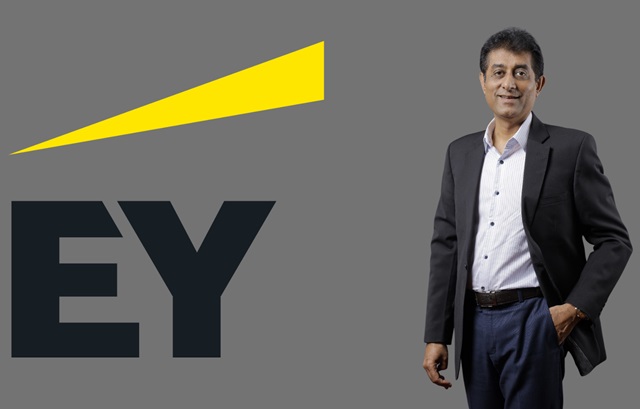
Colombo’s political and corporate circles are increasingly abuzz with speculation that Presidential adviser and EY Sri Lanka & Maldives Country Managing Partner Duminda Hulangamuwa may be in line for a senior leadership role at the Board of Investment.
As of publication, however, there has been no formal government announcement confirming such an appointment.
That distinction matters.
But so too does the discussion now unfolding around it.
The issue is not whether Hulangamuwa is professionally qualified. Few seriously dispute his credentials. He is widely regarded as one of Sri Lanka’s more experienced chartered accountants and tax specialists, with extensive exposure to both corporate governance and economic policy.
The issue instead revolves around optics, independence and institutional confidence.
Because if – and at present it remains an “if” – Hulangamuwa were to assume a senior BOI role while simultaneously remaining head of one of the world’s largest professional services firms and serving as a close economic adviser to President Anura Kumara Dissanayake, questions surrounding overlapping influence would almost inevitably follow.
Not necessarily allegations. Questions.
And in governance, unanswered questions have a habit of growing larger over time.
The BOI is not merely another state institution. It is effectively Sri Lanka’s international investment storefront. It negotiates with investors, facilitates projects, promotes incentives and attempts to convince foreign businesses that Sri Lanka is stable, predictable and commercially trustworthy.
That is why governance standards surrounding such positions matter enormously.
Globally, executives moving into sensitive state or quasi- state appointments often step away from active leadership roles within audit, consulting or advisory firms precisely to avoid even the appearance of competing loyalties.
The reasoning is straightforward.
Public trust depends not merely on actual independence but visible independence.
Be that as it may, there is also a second and perhaps more uncomfortable debate quietly emerging beneath the surface.
What exactly should the BOI be in 2026?
Should it primarily function as a technically efficient administrative and regulatory body led by governance specialists and financial technocrats?
Or should it resemble an aggressive international investment promotion agency led by globally networked commercial operators capable of directly attracting strategic capital into Sri Lanka?
Those are not identical skill sets.
Critics privately argue that Sri Lanka’s challenge today is less about accounting compliance and more about international deal-making, investor confidence and global commercial connectivity.
Supporters counter that after years of economic crisis and governance failures, credibility, structure and financial discipline may in fact be precisely what Sri Lanka requires most urgently.
Both arguments contain merit.
Yet the larger issue remains one of transparency.
If an appointment is indeed under consideration, clarity matters early – not after speculation hardens into suspicion.
Because Sri Lanka’s recovery now rests heavily upon one fragile national asset:
credibility.
And credibility, once clouded by perceptions of overlapping influence or institutional ambiguity, can become extraordinarily difficult to restore.


