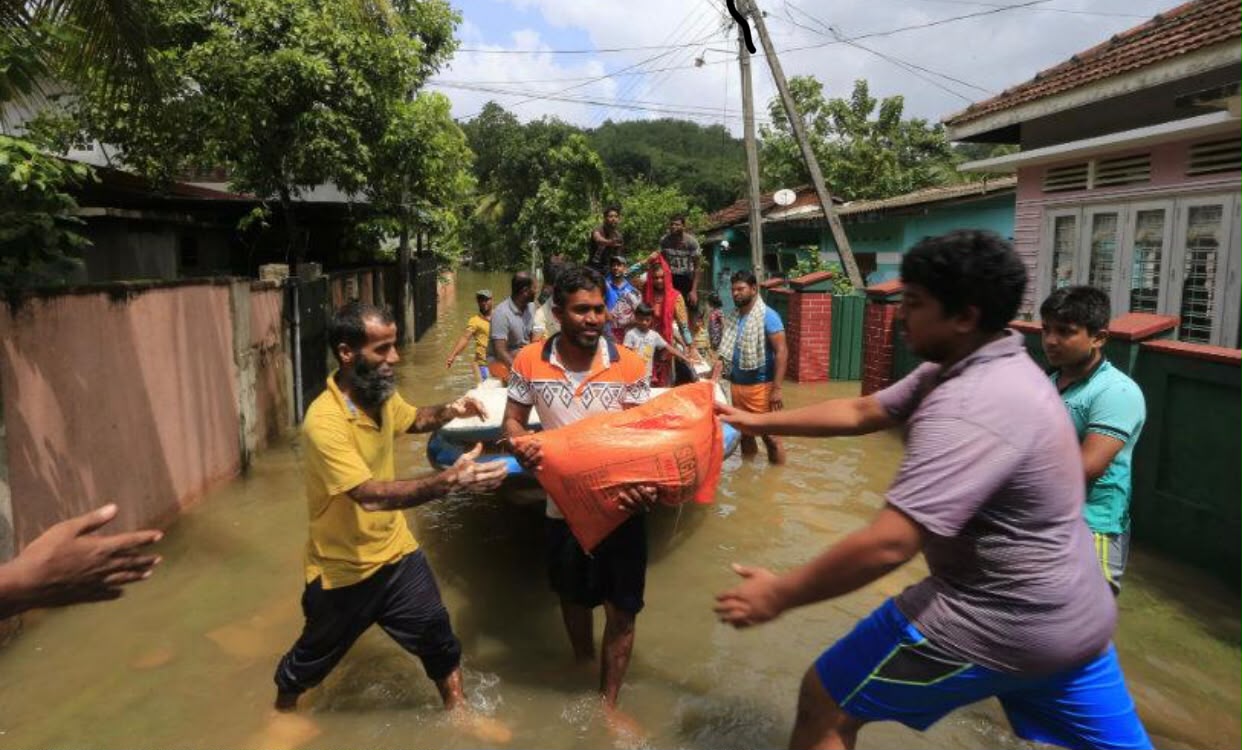
Sri Lanka has become accustomed to the spectacle of wrongdoing, from corruption and cruelty to political arrogance and the abuse of power. Yet behind the scandals and the suffering is another country, sustained by ordinary people whose decency rarely attracts attention. The question is whether our institutions recognise that humanity or merely depend upon it to compensate for their failures.
There is something profoundly disturbing about the ease with which human beings become accustomed to the suffering of others. A murder becomes a headline, corruption becomes a political argument and the humiliation of somebody once powerful becomes a form of public entertainment. The spectacle commands attention, while the quieter consequences of wrongdoing are often forgotten long before the damage has been repaired.
Sri Lanka has witnessed enough human cruelty to understand its destructive power. Decades of conflict, political violence, terrorism, communal suspicion and economic upheaval have left consequences that cannot be measured solely through official statistics. Behind every national tragedy are individual lives interrupted, families damaged and opportunities permanently lost.
Submit Your Press Release
Get your company news, announcements, launches, appointments and events in front of a wider audience.


Yet this same country has also demonstrated an extraordinary capacity for compassion. During disasters, ordinary people have opened their homes to strangers, shared food they could scarcely afford and assisted families with whom they had no personal connection. Their generosity has frequently emerged without instruction, publicity or any expectation of reward.
That contrast deserves considerably more attention than it receives. We have become adept at documenting the horror of human badness while treating the greatness of humanity as something almost too ordinary to deserve examination. The wrongdoing of a few can dominate national conversation, while the decency of millions is accepted as an unremarkable feature of everyday life.
Consider the circumstances of an elderly patient travelling to a government hospital for treatment. There may be a son or daughter who has taken leave from work, borrowed money for transport and spent hours waiting without knowing whether the prescribed medicine will be available. The public system may record a consultation, but it rarely records the sacrifices that made the consultation possible.
Consider the parent who goes without adequate food so that a child can eat, or the teacher who quietly helps a pupil whose family cannot afford the basic requirements of schooling. These are not abstract illustrations of kindness. They represent the daily decisions through which ordinary people preserve dignity in circumstances that might otherwise destroy it.
The greatness of humanity is not necessarily found in extraordinary achievements. It is frequently demonstrated by people fulfilling responsibilities when doing so requires personal sacrifice. Their conduct sustains families, communities and institutions in ways that no government budget adequately recognises.
There is, however, a danger in celebrating such resilience without examining why it is so frequently necessary. Sri Lankans are repeatedly praised for helping one another during hardship, but public admiration must not become an excuse for institutional neglect. A society should not depend upon charity to provide essential medicine, protect vulnerable children or ensure that elderly citizens can live with dignity.
Compassion is a human virtue, while the provision of basic public services is a responsibility of government. The two should reinforce each other rather than become substitutes. When families must repeatedly rely upon private generosity to meet essential needs, the generosity deserves admiration but the circumstances requiring it demand investigation.
This distinction is particularly important at a time when Sri Lanka is placing considerable emphasis upon accountability for alleged corruption and abuse of public authority. Investigations and prosecutions are essential where evidence justifies them, and no political party or individual should be protected from the ordinary operation of the law. But the purpose of accountability cannot be reduced to the spectacle of powerful people being arrested or brought before the courts.
Justice must ultimately serve the people whose rights, resources and opportunities have been damaged. Recovering misused public money matters because those resources could have supported hospitals, schools, transport, housing and other essential services. Punishing wrongdoing matters because unchecked abuse weakens the institutions upon which ordinary citizens depend.
The same standard should apply to every administration, regardless of political allegiance. A Government cannot claim moral superiority merely because it condemns the misconduct of its predecessors, while an Opposition cannot demonstrate public responsibility simply by cataloguing the failures of those presently in office. Both must explain how their policies will improve the lives of people who possess neither wealth nor influence.
There is also a responsibility for journalism. The media must investigate wrongdoing, challenge official explanations and expose abuses of power without fear or favour. But it must also recognise that the lives of ordinary citizens are not secondary to the political disputes which so frequently dominate public attention.
A pensioner unable to afford prescribed medicine deserves scrutiny of the policies that produced that predicament. A farmer facing financial ruin because of failed irrigation deserves an explanation from the authorities responsible for water management. A child whose education is interrupted by poverty deserves more than an occasional expression of public sympathy.
These are matters of governance, not merely human-interest stories. They reveal whether institutions are performing the functions for which they exist and whether public expenditure is improving the circumstances of those most dependent upon it. A country’s moral condition cannot be assessed solely by the number of people prosecuted for wrongdoing.
Nor should national greatness be confused with the accumulation of wealth, the construction of impressive buildings or the international recognition of political leaders. Economic development is necessary, and prosperity can provide the resources required for better public services. But prosperity loses much of its meaning when the benefits remain inaccessible to those who need them most.
The real measure of a civilised society is found in how it treats people when they are vulnerable. The sick, the elderly, the poor, children and those living with disabilities should not have to depend upon personal influence to obtain services that ought to be available as a matter of right. Their dignity should not be determined by the size of their bank accounts or the importance of the people they know.
Humanity is also demonstrated through the everyday exercise of public authority. A police officer who treats a suspect lawfully, a public servant who assists an applicant without demanding a favour and a hospital employee who recognises the distress of a frightened patient are performing duties that carry moral significance. Their conduct determines whether ordinary people experience the State as an institution of service or an instrument of intimidation.
These expectations are neither extravagant nor sentimental. They concern the basic standards by which people should be able to live together and the obligations that public institutions owe the communities they serve. A society that tolerates cruelty, dishonesty and indifference cannot compensate for those failures through economic statistics or political declarations.
There is something particularly revealing about the way we respond to wrongdoing by prominent individuals. Public anger may be justified, especially where allegations concern the misuse of resources or the abuse of authority. But anger becomes productive only when it strengthens the rule of law and improves the institutions intended to prevent further harm.
Humiliation is not reform, and the public disgrace of an accused person is not a substitute for a fair judicial determination. Equally, an acquittal or conviction does not by itself resolve the institutional weaknesses that allowed legitimate concerns to arise. A country genuinely committed to accountability must be interested in preventing injustice as well as punishing proven misconduct.
The greatness of humanity offers a different measure of national progress. It is visible when people act with restraint despite possessing power, when they fulfil obligations without expecting personal advantage and when they recognise the suffering of others without first asking whether those people belong to the correct community or political camp.
Sri Lanka possesses an abundance of such people, although their contribution is rarely celebrated with the enthusiasm reserved for political victories or commercial success. They continue working, caring, teaching, treating patients, cultivating land and supporting families through circumstances that would test the endurance of anybody. Their achievements are often modest in appearance but profound in consequence.
The country owes them more than praise for their resilience. It owes them institutions that function, laws applied fairly, public services delivered competently and an economy in which honest work provides a reasonable prospect of security. These are the practical foundations upon which human dignity depends.
There will always be wrongdoing, and journalism must never retreat from exposing it. But a national conversation dominated entirely by scandal risks forgetting the people for whose benefit public accountability is supposed to exist. The objective should not merely be to identify those responsible for making Sri Lanka worse, but to create conditions in which more Sri Lankans can make it better.
The horror of human badness reminds us of what people are capable of destroying. The greatness of humanity demonstrates what they are capable of preserving, even when circumstances offer little encouragement. Both realities exist within the same country, and neither should be ignored.
Be that as it may, history may remember the names of those who inflicted suffering, but Sri Lanka’s future will depend upon the countless people who refused to add to it. The greatest tribute we can pay them is not another speech about national resilience, but a country in which their decency is respected, their sacrifices are not taken for granted and their humanity is matched by the institutions established to serve them.