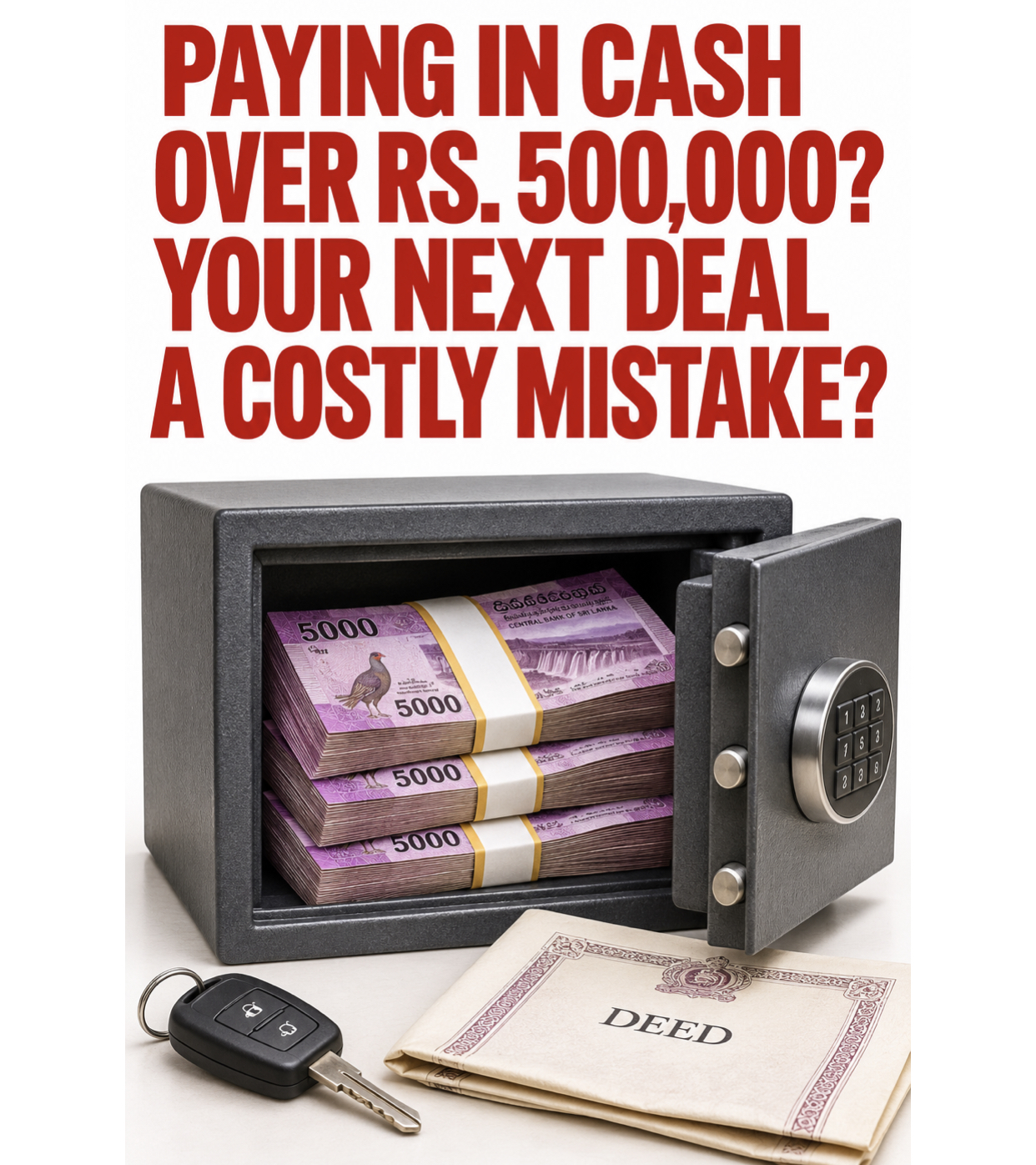
If you still like keeping bundles of Rs. 5,000 notes in a safe to settle big bills, buy a used car, or close a land deal, the Inland Revenue Department has a blunt warning that could hit your wallet hard. Under existing tax regulations highlighted by a senior IRD official, settling transactions above Rs. 500,000 in cash outside permitted banking channels can strip away your tax deductions and leave you paying tax on money you never actually earned as profit.
These rules sit inside the Inland Revenue Act No. 24 of 2017, specifically under Section 10(1)(b)(v) for business deductions and Section 37(3) for capital gains, designed to push large payments through traceable banking instruments like cheques, bank transfers, and electronic payments. In short, if you bypass the bank on a big payment, the taxman pretends you never spent that money in the first place.
Take a simple business example. Suppose your company pays Rs. 1,000,000 in cash to a supplier or service provider for a legitimate business expense. Because that payment exceeds the Rs. 500,000 threshold and was settled in cash, the IRD will refuse to recognize it as a deductible expense. Your taxable profit instantly jumps by Rs. 1,000,000. At the standard 30% corporate income tax rate, that single cash payment costs you an extra Rs. 300,000 in tax, all for an expense you already paid out of pocket.
Submit Your Press Release
Get your company news, announcements, launches, appointments and events in front of a wider audience.


The sting is even sharper if you are buying and selling land, property, or vehicles. Imagine you buy a plot of land for Rs. 9,000,000 and sell it later for Rs. 10,000,000. Normally, your capital gain is Rs. 1,000,000, and you pay tax only on that profit. Yet if you handed over that initial Rs. 9,000,000 in cash outside the permitted payment system, the IRD can refuse to recognize the Rs. 9,000,000 purchase cost altogether. Suddenly, your taxable gain is calculated on the entire Rs. 10,000,000 selling price instead of your Rs. 1,000,000 gain. Under Sri Lanka’s 10% capital gains tax rate for individuals, your tax bill shoots up from Rs. 100,000 to Rs. 1,000,000, wiping out your entire profit on the sale.
Why does the IRD enforce such a punitive rule? Cash leaves no paper trail, making it easy to under-declare property values, inflate expenses, or hide untaxed wealth outside the formal banking grid. By disqualifying cash payments over Rs. 500,000, tax collectors force buyers and sellers to create a verifiable bank record that cross-checks both sides of every transaction.
Before you sign your next deed, vehicle transfer, or supplier invoice, check how the money is moving. Keep every payment above Rs. 500,000 inside traceable banking channels, save your transfer slips and bank statements, and make sure both parties record the true transaction value. When the IRD comes calling years later, a bank receipt could be the only thing standing between a normal tax bill and a financial nightmare.