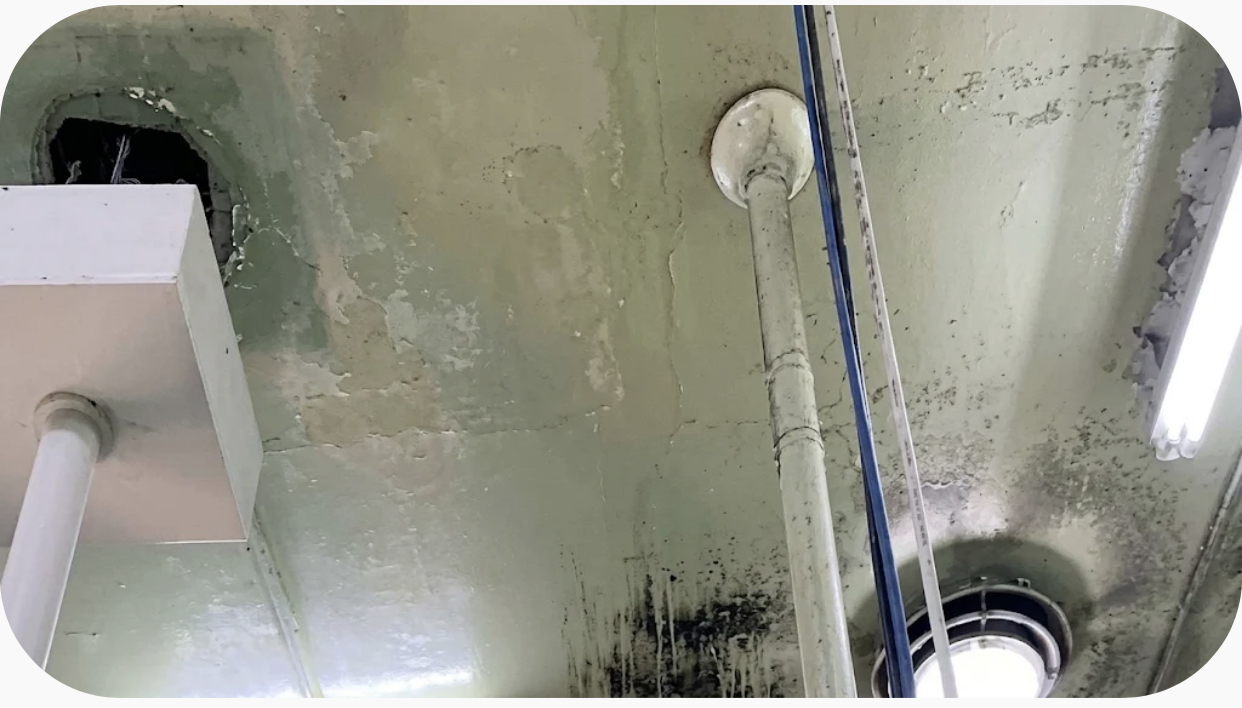
Surgeons at the Colombo National Hospital found themselves battling more than clinical complications yesterday, November 16, as water began dripping directly from the ceiling of the Theatre A complex right in the middle of a thyroid operation.
Hospital sources confirm the leak is not simply a passing headache brought on by Colombo’s rainy weather. Water continues to pool and stagnate above the affected surgical suites even on completely dry days, pointing to internal plumbing or air-conditioning drainage failures rather than a simple leaky roof. Meanwhile, an identical problem has surfaced on the first floor of the Accident Service Building, where the five-table Orthopedic Theatre Complex is also taking on water, with Operating Table No. 1 directly affected.
For an operating theatre, stagnant water overhead is the exact opposite of a sterile environment. Moisture trapped in ceiling panels breeds fungal spores and bacteria, creating serious contamination risks for patients lying open on the operating table and threatening delicate electronic surgical gear.
Submit Your Press Release
Get your company news, announcements, launches, appointments and events in front of a wider audience.


What makes yesterday’s disclosures particularly galling is that this exact crisis played out in the very same building barely sixteen months ago. In June 2025, surgical staff sounded the alarm over severe ceiling leaks soaking the 24-hour Orthopedic theatres and adjacent doctors’ rooms in the Accident Service Building, warning that vital operations risked grinding to a halt. Hospital administrators only moved to patch the problem in July 2025 after media coverage forced their hand, declaring at the time that all affected theatres had been fixed and were fully safe for surgery.
The National Hospital’s infrastructure woes have piled up steadily since then. In September 2025, faulty air-conditioning systems across critical units drew complaints over patient safety and equipment damage. Just ten days ago, on November 6, a downpour of 129 millimetres inundated parts of the hospital premises, exposing how vulnerable Sri Lanka’s premier state medical facility remains to basic drainage and maintenance failures.
Hospital staff have repeatedly noted that warnings about deteriorating facilities tend to gather dust until public embarrassment forces emergency patchwork. Now, with stagnant water once again hanging over open thyroid and orthopaedic procedures, patients at the country’s flagship hospital are left hoping the ceiling holds until the stitches go in.