
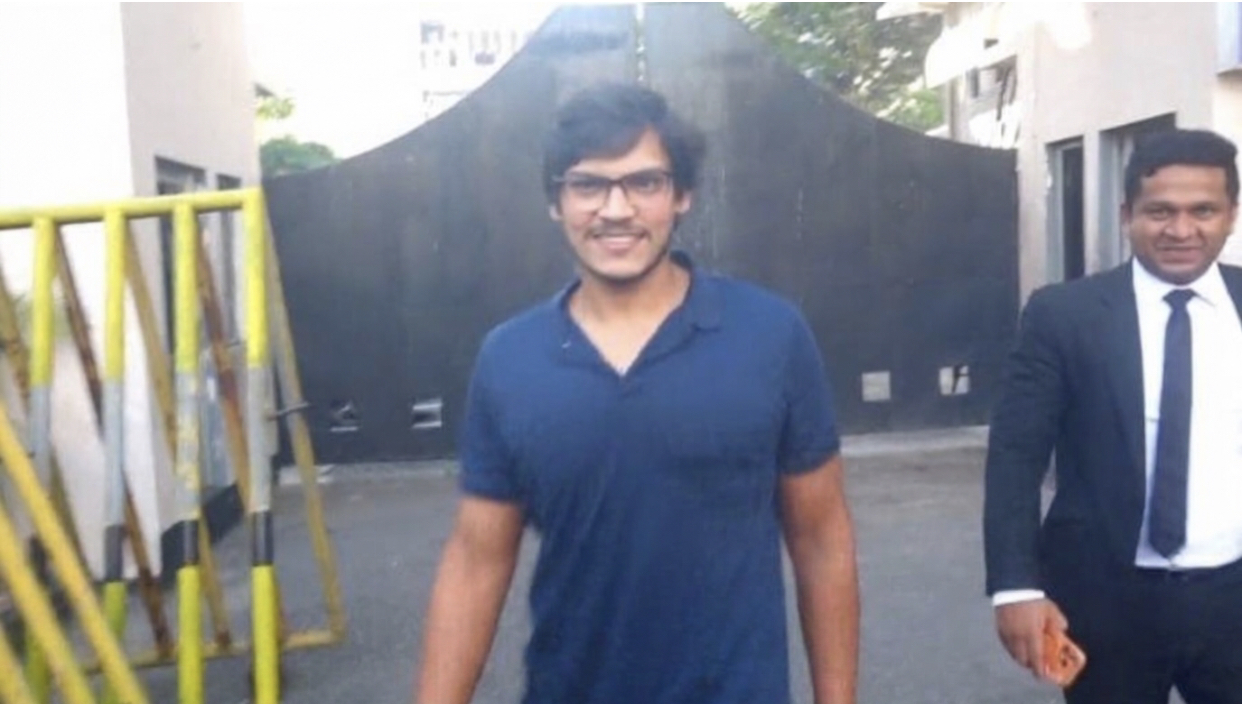
Fourteen years after Sri Lanka was promised a bold leap into the space age, the unanswered questions surrounding that orbit have pulled Rohitha Rajapaksa back into the offices of the Financial Crimes Investigation Division. The youngest son of former President Mahinda Rajapaksa spent nearly four hours at the FCID on Thursday, November 26, recording a statement as investigators pressed deeper into the financing, ownership, and regulatory trail behind the controversial SupremeSAT satellite venture.
The inquiry revives scrutiny over one of the most politically charged projects associated with the Mahinda Rajapaksa administration. Launched in November 2012 from China’s Xichang Satellite Launch Centre, SupremeSAT-1 was promoted at the time as Sri Lanka’s first communications satellite. Rohitha Rajapaksa, who was widely linked to the initiative in his capacity as a space engineer, has consistently maintained that no public funds were spent on the project, telling investigators during an earlier 2017 probe that the venture was financed by a Singaporean investor and executed with a Chinese partner.
Yet questions over ownership, financing, regulatory clearances, and actual commercial returns have dogged the project for more than a decade. SupremeSAT (Pvt) Ltd, chaired by businessman R.M. Manivannan, operated with Board of Investment approval and tax concessions while framing the enterprise as a private commercial venture valued at around US$320 million across its planned phases. Critics and opposition lawmakers repeatedly questioned how a newly formed local firm raised such capital, whether any state guarantees or public resources were indirectly leveraged, and what became of the satellite’s operations.
Submit Your Press Release
Get your company news, announcements, launches, appointments and events in front of a wider audience.


Debate flared again in Parliament in August 2025 when the government was forced to issue a clarification after initial Board of Investment figures tabled in the House contained statistical recording errors. Corrected BOI data placed SupremeSAT’s declared annual revenues between Rs. 19.17 million in 2015-2016 and Rs. 87 million in 2021-2022, prompting cabinet ministers to question the gap between billion-rupee investment claims and modest reported earnings, as well as the absence of International Telecommunication Union filings under Sri Lanka’s name.
Thursday’s session at the FCID also comes amid broader investigative pressure on members of the Rajapaksa family, with separate corruption and asset probes advancing through police units and the courts. Investigators have not yet disclosed what specific financial records or corporate agreements formed the focus of the four-hour questioning, or whether further summonses will follow as the FCID reviews statements and cross-checks corporate filings tied to the 2012 launch.



