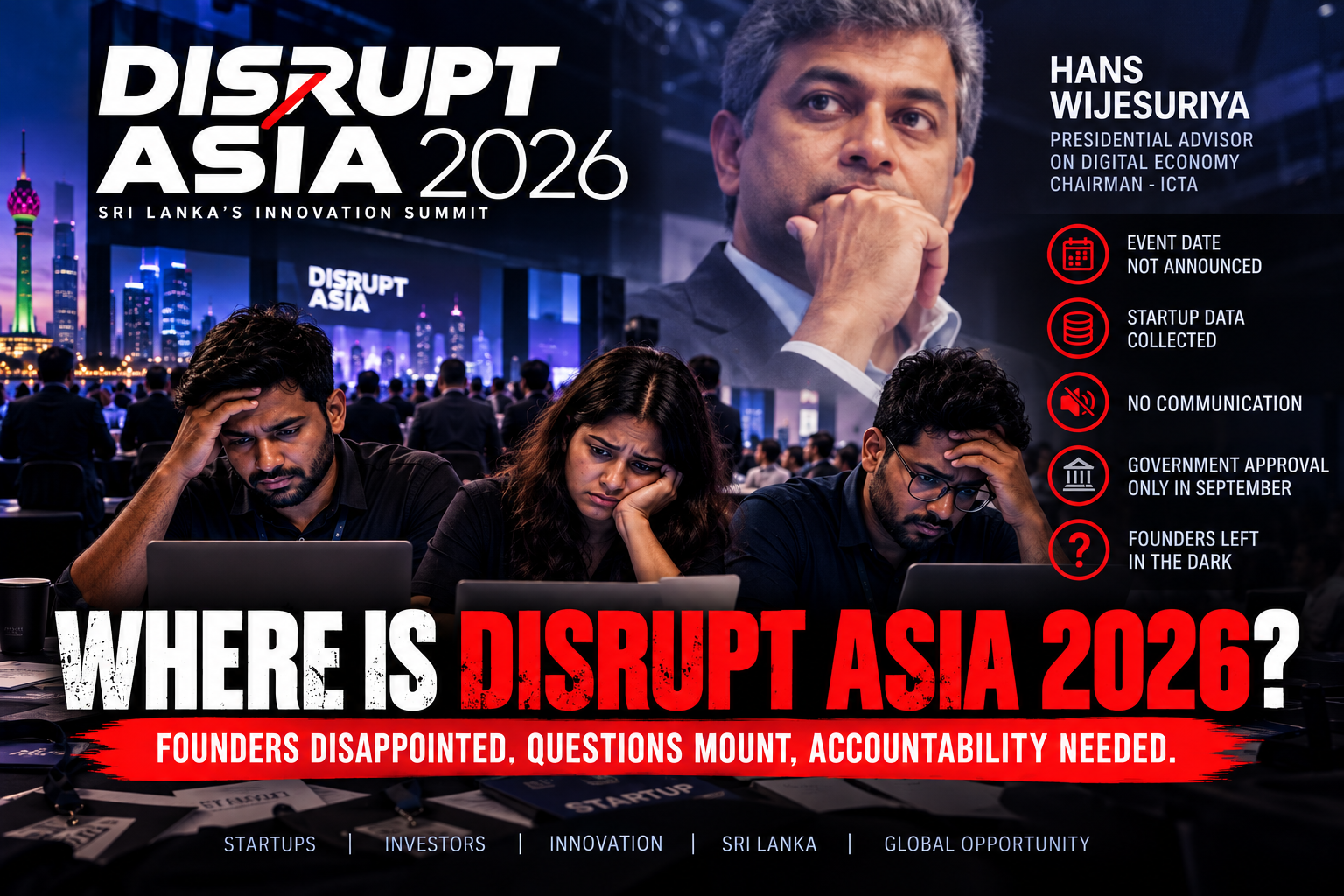
For Sri Lanka’s startup founders, the issue with Disrupt Asia 2026 is no longer simply whether a technology conference will take place. It is about the time, expectations and trust placed in the initiative by hundreds of entrepreneurs who were encouraged to participate in what was promoted as a major national platform.
Disrupt Asia’s own website continues to promote the 2026 edition as a forthcoming event, inviting startups, investors and partners to participate, while stating that final programme details will be announced closer to the event.
That might be acceptable for an ordinary private conference. But Disrupt Asia 2026 is different. The Cabinet officially approved the proposal for the event, with the Ministry of Digital Economy and GovTech Sri Lanka involved and UNDP Sri Lanka expressing readiness to serve as a strategic partner.
Submit Your Press Release
Get your company news, announcements, launches, appointments and events in front of a wider audience.


Founders Were Asked to Commit Before the Government Was Ready
This is where the frustration among founders becomes understandable.
Entrepreneurs who applied did not simply click a button to attend another business conference. They potentially provided information about their companies, products, founders, investment requirements and business models because they believed they were being considered for a national technology and innovation platform.
The event was positioned as a place where startups could meet investors, international partners and policymakers. The 2025 event, according to the organizers, involved more than 5,000 attendees, 50+ featured startups, 45+ international investors and accelerators, and more than 135 investor-startup meetings.
Therefore, founders naturally made plans around the expectation that the 2026 edition would follow.
When communication then becomes unclear or the event remains indefinitely at “Coming Soon,” the consequence is not merely an inconvenience. It damages confidence among the very entrepreneurs the government claims it wants to support.
Where Was the Leadership?
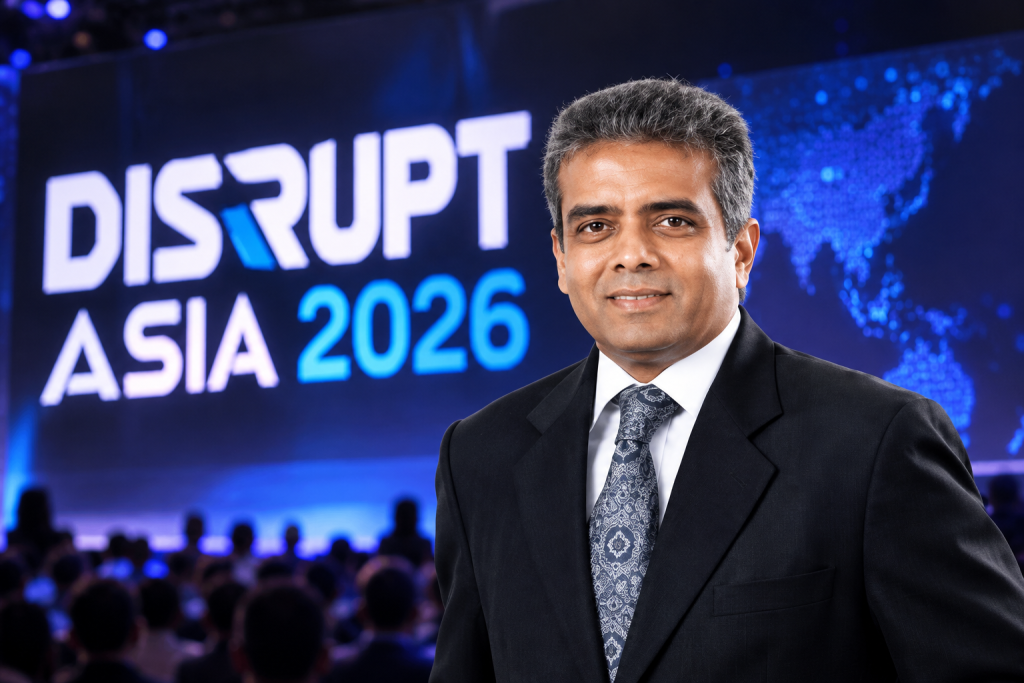
This also raises questions about the role of Dr. Hans Wijayasuriya, Chief Advisor to the President on Digital Economy and Chairman of ICTA.
His position makes him one of the most senior figures associated with Sri Lanka’s digital transformation agenda. Independent profiles confirm that he accepted the President’s invitation in January 2025 to lead the country’s Digital Transformation Agenda as Chief Advisor on Digital Economy.
The official Disrupt Asia platform itself prominently identifies him in connection with the 2025 event.
This does not mean that Dr. Wijayasuriya personally managed the event or that he is personally responsible for the delay. There is currently insufficient public evidence to make such an allegation.
But his senior position raises a legitimate public-interest question:
What role did the Presidential Advisor on Digital Economy play in ensuring that a flagship national startup initiative was properly planned, coordinated and communicated to founders?
If his role was advisory rather than operational, the government should say so clearly.
If he was involved in strategic oversight, then founders are entitled to ask what happened to that oversight.
The Timing Makes the Questions More Serious
The Cabinet Office states that the proposal was approved at the Cabinet meeting of 14 September 2026, with the proposal submitted by the President in his capacity as Minister of Digital Economy.
That fact provides an important explanation for why the event may have encountered operational difficulties.
But it simultaneously raises another question:
Why was the startup ecosystem being mobilized before the government’s formal approval had been secured?
That is the issue organizers need to explain.
It would be unfair to call the situation a proven fraud without evidence. The Cabinet record confirms that this is a genuine government-backed initiative, and UNDP has expressed readiness to act as a strategic partner.
But administrative failure is not an acceptable substitute for transparency.
Founders Deserve an Explanation
The organizers should now address founders directly and publish a clear timeline covering:
- When planning for Disrupt Asia 2026 actually began.
- When startup applications opened.
- What information was collected from founders.
- What date was originally targeted for the event.
- When government approval was sought.
- When Cabinet approval was obtained.
- Why founders were not given a clear update when the original timeline became uncertain.
- Whether the 2026 event will actually take place this year.
- What happens to the applications and information already submitted by startups.
- Who is responsible for communications with the founder community.
This Is Bigger Than One Conference
Sri Lanka is trying to build credibility as a regional technology and startup hub. The government itself describes Disrupt Asia as a platform intended to strengthen international visibility, attract global capital and talent, and help Sri Lankan startups scale beyond the country.
That ambition is welcome.
But credibility is built through execution, not announcements.
For a founder who has spent weeks preparing an application, expecting investor access and planning around a national technology event, silence is deeply disappointing.
The government cannot simultaneously ask entrepreneurs to move fast, innovate fast and compete globally while its own flagship digital initiatives remain trapped between marketing, approvals and bureaucracy.
The question therefore is not simply “Where is Disrupt Asia 2026?”
The more important question is:
Who was responsible for ensuring that Sri Lanka’s startup founders were not left waiting in the dark?
And given the seniority of the people associated with Sri Lanka’s digital transformation agenda, including Presidential Advisor Dr. Hans Wijayasuriya, the public deserves a clear account of who was responsible for strategic oversight, who was responsible for execution, and why the founders were not kept properly informed.
That is not an accusation of fraud.
It is a demand for accountability