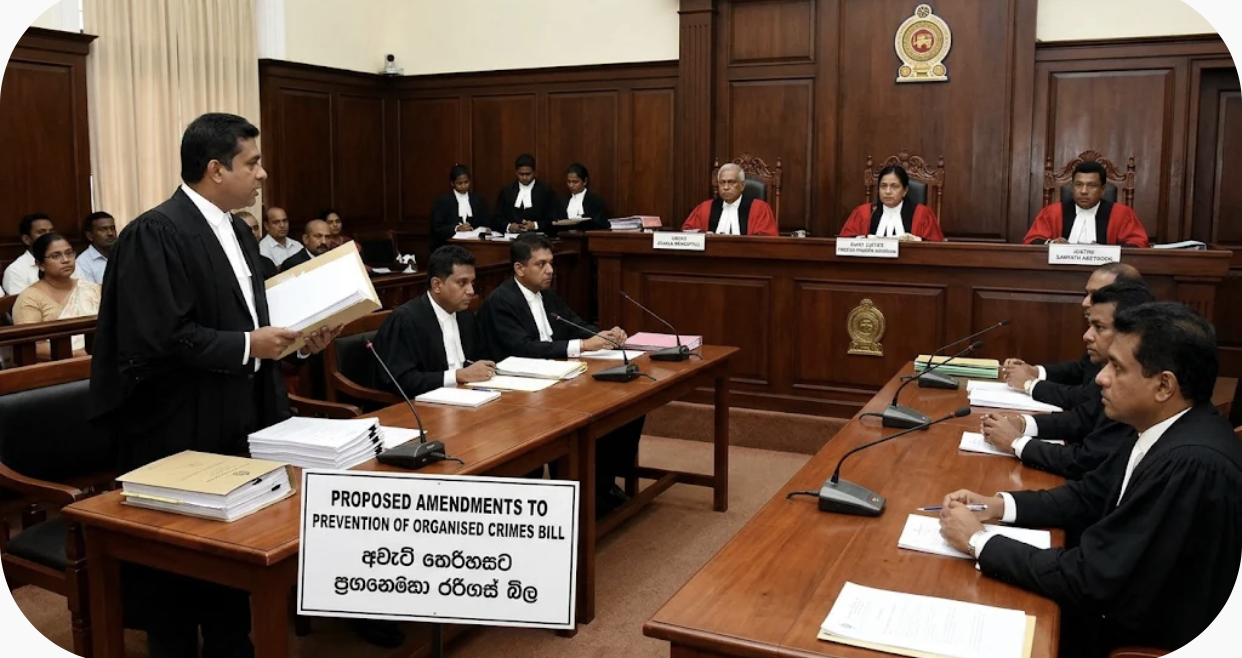
For observers tracking Sri Lanka’s legislative process, the latest developments in the Supreme Court come as little surprise. Facing twenty-six separate constitutional challenges, the Attorney General informed the court on November 9 that the government intends to introduce key amendments to the proposed Prevention of Organised Crimes Bill during the parliamentary Committee Stage.
The concession follows intense judicial review by a three-member bench comprising Chief Justice Preethi Padman Surasena, Justice Achala Wengappuli, and Justice Sampath Abeykoon. Since the draft was gazetted on October 6, petitioners including the Bar Association of Sri Lanka have argued that several provisions exceed constitutional bounds, granting overly broad enforcement powers that undermine fundamental rights.
Rather than presenting a tightly framed bill from inception, the executive branch appears to have followed a familiar pattern: publishing expansive draft legislation, allowing legal pushback to culminate in marathon court sessions such as the late-night proceedings on November 4, and ultimately submitting corrective amendments at the eleventh hour.
Submit Your Press Release
Get your company news, announcements, launches, appointments and events in front of a wider audience.


The document handed to the court effectively acknowledges that aspects of the initial text were legally vulnerable. While introducing amendments during the Committee Stage prevents a direct judicial strikeout, the process highlights recurring gaps in pre-legislative scrutiny. Civil society and legal institutions are once again left to serve as a corrective check against executive overreach.
Although the proposed modifications will likely temper the bill’s most controversial clauses, the episode underscores a long-standing issue in national policy formulation. Requiring twenty-six petitions and extensive court intervention to align legislation with basic constitutional standards is an inefficient path to governance. Sound policy requires thorough legal vetting before bills reach the Gazette, rather than reliance on the judiciary to compel necessary revisions.