
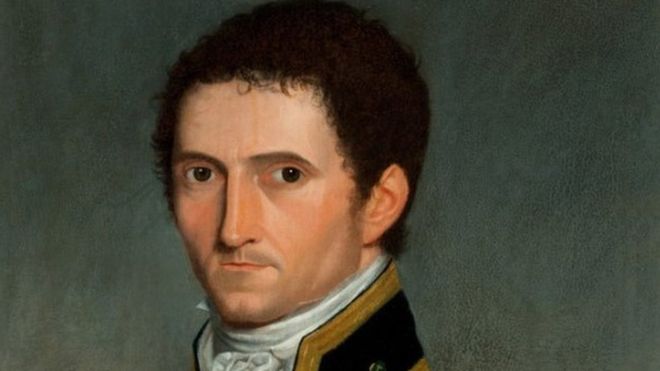
The remains of explorer Captain Matthew Flinders have been identified by archaeologists working on the HS2 project in a London burial ground.
Captain Flinders led the first circumnavigation of Australia and is credited with naming the country.
Some 61,000 skeletons will be removed from St James’s Gardens, where the station for the HS2 rail route will be built near London Euston station.
A recently discovered coffin showed the captain was buried on 23 July 1814.
The dig began in October – one of 60 archaeological sites between London and Birmingham being explored prior to the construction of the £55bn high-speed rail line.
It was known Captain Flinders was among the thousands of people buried at the site, which was built over when Euston station was expanded in the 19th Century but it was unclear whether his body or others would be able to be identified.
The discovery so early in the dig has thrilled archaeologists who were not confident they would find Captain Flinders among the 40,000 people interred there, HS2 said.
They were able to identify his remains by the lead breast plate placed on top of his coffin.

Captain Flinders, who was from Lincolnshire, made several significant journeys, notably as commander of HMS Investigator. In the ship he became the first known person to navigate around the entire coast of Australia, confirming it as a continent.
He is also credited with giving Australia its name – although he was not the first to use the term, his work popularised its use.


