
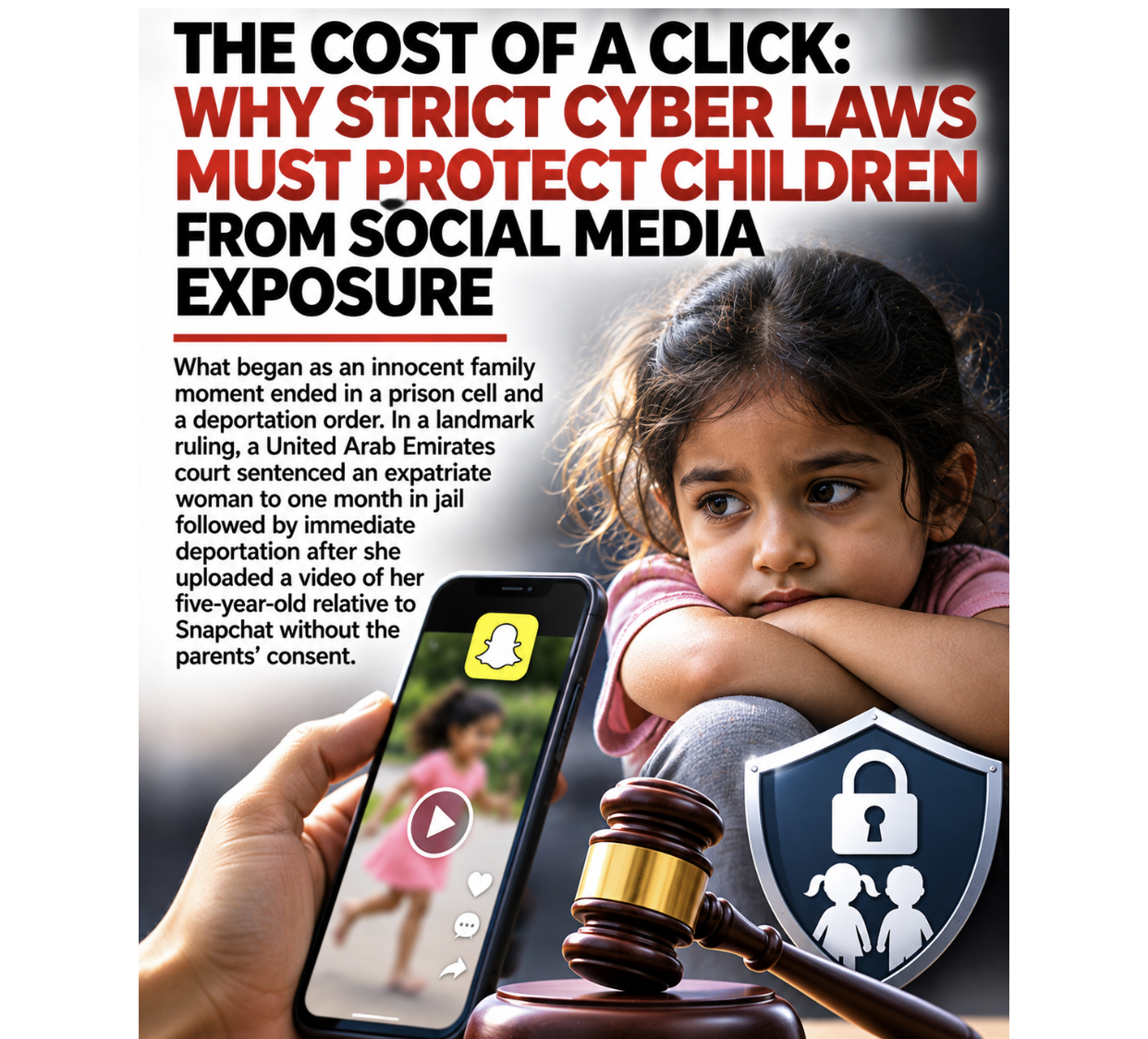
What began as an innocent family moment ended in a prison cell and a deportation order. In a landmark ruling, a United Arab Emirates court sentenced an expatriate woman to one month in jail followed by immediate deportation after she uploaded a video of her five-year-old relative to Snapchat without the parents’ consent.
The footage showed the child mispronouncing a food item at a private family gathering. Within hours, the clip racked up over 11,000 views, triggering formal complaints from the child’s father over privacy violations and psychological harm. The court firmly rejected the defense that the post was a harmless joke, establishing that under federal cybercrime statutes and child protection laws, sharing a minor’s likeness without parental authorization is a criminal offense regardless of intent.
This ruling sends a necessary message in a digital landscape where the boundary between public entertainment and child exploitation has become dangerously blurred. For too long, parents, relatives, and casual social media users have treated children as content, uploading millions of candid photos and videos every single day. While the person posting may harbor zero malicious intent, the digital reality beyond the upload button is vastly different.
Submit Your Press Release
Get your company news, announcements, launches, appointments and events in front of a wider audience.


The moment a child’s image hits a public network, control over that file vanishes forever. Digital security experts and law enforcement agencies regularly warn that open social media profiles serve as primary harvesting grounds for international predatory networks. Sophisticated bad actors routinely crawl public platforms, scraping innocent images of children at play, on beaches, or in private family settings. These files are then archived, traded on dark web forums, or manipulated using generative artificial intelligence tools for vile purposes. What a relative views as a cute viral clip can easily end up in the hands of online predators within minutes.
Beyond the threat of predatory exploitation lies the immediate risk of psychological damage and cyberbullying. Children thrust into public online spaces face severe humiliation, identity theft, and permanent digital footprints created long before they are old enough to understand consent. A child smiling at a smartphone camera is not granting informed consent for their face to be broadcast to thousands of strangers.
It is high time governments step up with aggressive legal frameworks to curb this reckless behavior. Voluntary guidelines and platform self-regulation have failed to stem the tide. Strict penal enforcement, heavy fines, and custodial sentences are essential tools to force a cultural shift in how society treats children’s digital privacy.
The takeaway for anyone with a smartphone is straightforward. Once a video or photo goes public, you lose control of where it ends up. Social media views are temporary, but the safety risks and privacy issues for a child are permanent. Keeping children off public feeds is not about ruining the fun, it is about basic safety.



