
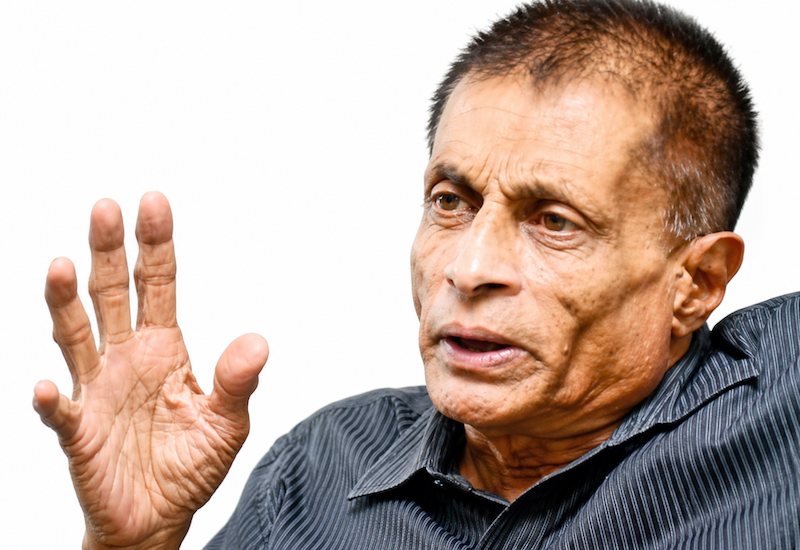
Every country has a handful of individuals who quietly alter the direction of an industry so profoundly that, years later, people forget how different things once were before they arrived. In Sri Lanka’s electronic media landscape, Shan Wickremesinghebelongs unmistakably within that category.
Today, in an age of YouTube channels, livestreams, podcasts, digital influencers and aggressive 24-hour media cycles, it is easy to forget how controlled, formal and institutionally rigid Sri Lankan broadcasting once appeared. There was a time when television carried hierarchy, caution and predictability. Presentation styles were restrained. Programming was conservative. News was often delivered with a tone of institutional distance rather than immediacy.
Then came the arrival of private broadcasting.
And at the centre of that transformation stood Shan Wickremesinghe and the TNL Network.
When TNL emerged, it did not merely launch another channel competing for ratings. It challenged the culture of Sri Lankan broadcasting itself. Suddenly television looked different. It sounded different. Younger presenters emerged.
Programming became faster, sharper and more contemporary.
Music television evolved. Political discussion felt less scripted. Production styles became more ambitious. Urban youth culture found a screen presence that had previously barely existed within mainstream broadcasting.
To many Sri Lankans coming of age during that period, TNL represented more than television. It represented modernity.
And perhaps more importantly, possibility.
What Shan Wickremesinghe appeared to understand earlier than many others was that audiences were changing far faster than institutions. Sri Lanka itself was changing.
he country was opening economically, culturally and technologically. Satellite broadcasting was altering global viewing habits. Younger audiences no longer wanted merely to be spoken to formally. They wanted entertainment, immediacy, energy and relevance.
TNL tapped directly into that shift.
In doing so, it became one of the defining symbols of Sri Lanka’s private media revolution.
Importantly, Shan Wickremesinghe was not simply building a television station. He was building an ecosystem. Radio, television, youth-oriented programming, music culture, advertising innovation and political discussion all increasingly began intersecting within the TNL brand. The network developed a distinct identity: modern, urban, commercially aware and less deferential than traditional broadcasting structures.
That naturally attracted both admiration and controversy. Private media in Sri Lanka has never existed in isolation from politics. Influence, regulation, ownership and editorial positioning have always collided uneasily within the country’s broadcasting industry. TNL itself periodically found itself caught within wider national tensions over media freedom, political pressure and state authority. Yet in many ways, that was inevitable. Once a broadcaster becomes influential enough to shape conversation, it inevitably becomes part of the political landscape whether it seeks that role or not.
But perhaps the most enduring aspect of Shan Wickremesinghe’s legacy lies not merely in politics or ratings, but in the professional and cultural pathways he helped create.
Entire generations of Sri Lankan broadcasters, presenters, producers, editors, technicians and media entrepreneurs emerged through or around the ecosystem that private broadcasting created. Many of today’s familiar media personalities across television, radio and digital platforms belong, directly or indirectly, to that wider transformation.
The influence extended beyond entertainment.
Private television fundamentally changed how Sri Lankans consumed news, politics, sport and culture itself. It accelerated public conversation. It reshaped advertising markets. It introduced competitive urgency into broadcasting. And in many ways, it forced state and traditional broadcasters themselves to modernise in response.
That process was neither smooth nor perfect. But it was transformational.
And Shan Wickremesinghe was among the architects who helped engineer it.
Today, as algorithms dominate attention spans and digital fragmentation challenges traditional broadcasting everywhere, the pioneering generation of private media builders risks being overlooked by younger audiences who inherited the media freedoms and diversity they helped create.
Yet Sri Lanka’s modern broadcasting environment did not emerge automatically.
It was built.
Often experimentally. Often controversially.
Often against institutional resistance.
Looking back now, perhaps Shan Wickremesinghe’s greatest contribution was not simply founding TNL.
It was helping convince Sri Lanka that television did not have to remain trapped within old boundaries forever.
That broadcasting could be younger. Faster. More commercially ambitious. More independent. More alive. And once audiences experienced that shift, there was no going back.
I had the absolute privilege of interviewing Shan Wickremesinghe several years ago on NewsLine Live TV1. I was pleasantly surprised that he accepted the invitation especially at a time when his brother was the Prime Minister and came in for heavy media criticism during the so-called Bond Scam – Faraz Shauketaly www.shauketaly.com
Tap to read. Before the pioneers of private television fade into broadcasting history.


