Tamil Nadu Chief Minister uses Southern Zonal Council meeting to press the Centre on parliamentary representation, NEET, Cauvery water and fiscal autonomy
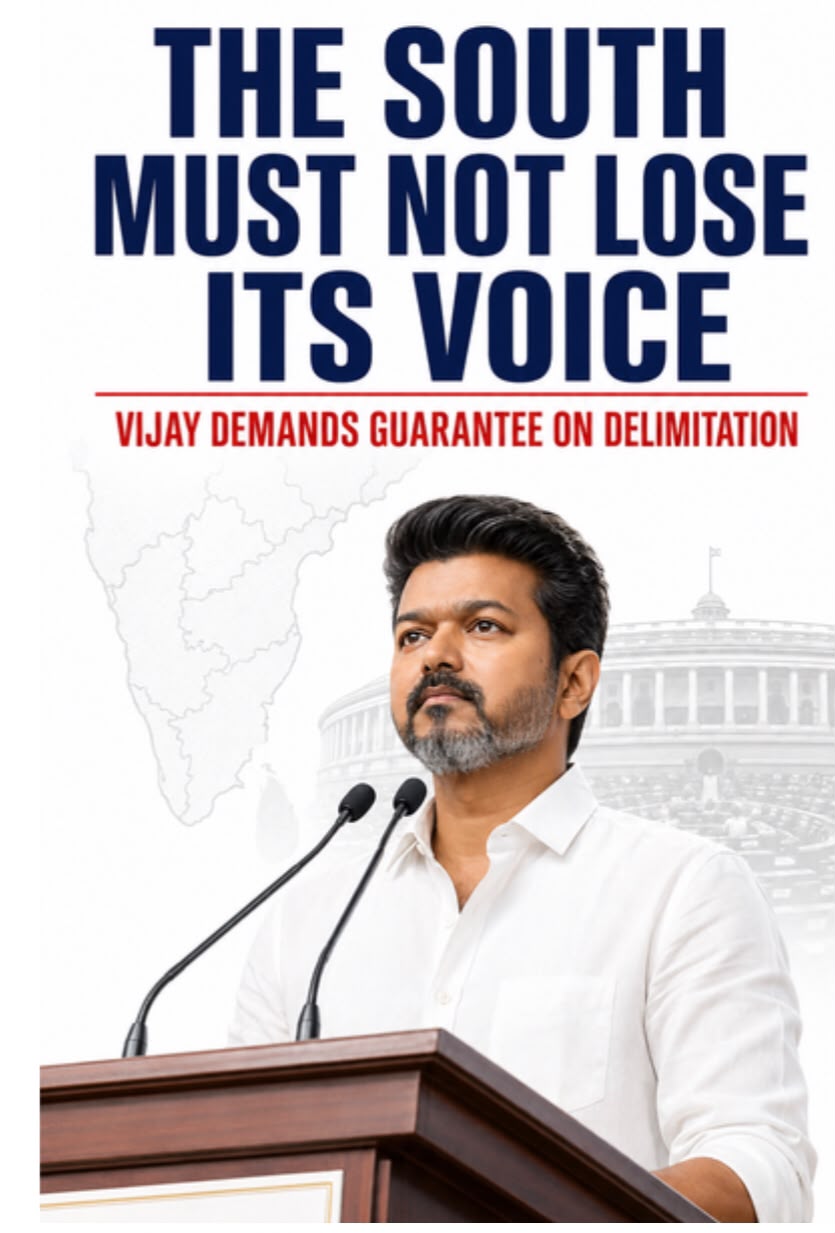
Tamil Nadu Chief Minister C. Joseph Vijay has demanded a legislative guarantee that no state will lose parliamentary representation as a consequence of India’s proposed delimitation exercise.
Addressing the 31st Southern Zonal Council meeting in Mahabalipuram on Thursday, Vijay warned that a predominantly population-based redistribution of parliamentary seats could punish southern states for successfully reducing population growth.

The meeting, chaired by Union Home Minister Amit Shah, brought together representatives of five southern states and three Union Territories.
Vijay argued that Tamil Nadu and its neighbours had contributed substantially to India’s economic expansion while improving education, health care and family welfare. Their success, he said, should not lead to a reduction in their political influence in New Delhi.
The Chief Minister also renewed Tamil Nadu’s demand for exemption from the National Eligibility-cum-Entrance Test. He proposed that admission to MBBS, BDS and AYUSH courses under the state quota should be based on Class 12 results, arguing that NEET disadvantages rural students and those from socially and economically weaker households.
River-water disputes featured prominently. Vijay reiterated Tamil Nadu’s opposition to Karnataka’s proposed Mekedatu reservoir and called for compliance with established directions governing Cauvery and Mullaperiyar waters.
He also pressed for compensation for revenue losses associated with the Goods and Services Tax and sought greater fiscal autonomy for states.
Regional cooperation was another theme. The Chief Minister proposed coordinated action against narcotics trafficking, describing the objective as a “drug-free South India.” Transport, coastal security, logistics and disaster response were also discussed.
Zonal councils do not themselves settle constitutional disputes or rewrite national policy. They do, however, provide a forum through which states can place disagreements directly before the Union Government.
Vijay’s test will be whether Thursday’s 17-page intervention becomes the beginning of sustained negotiation-or simply another strongly worded speech filed away after the meeting.