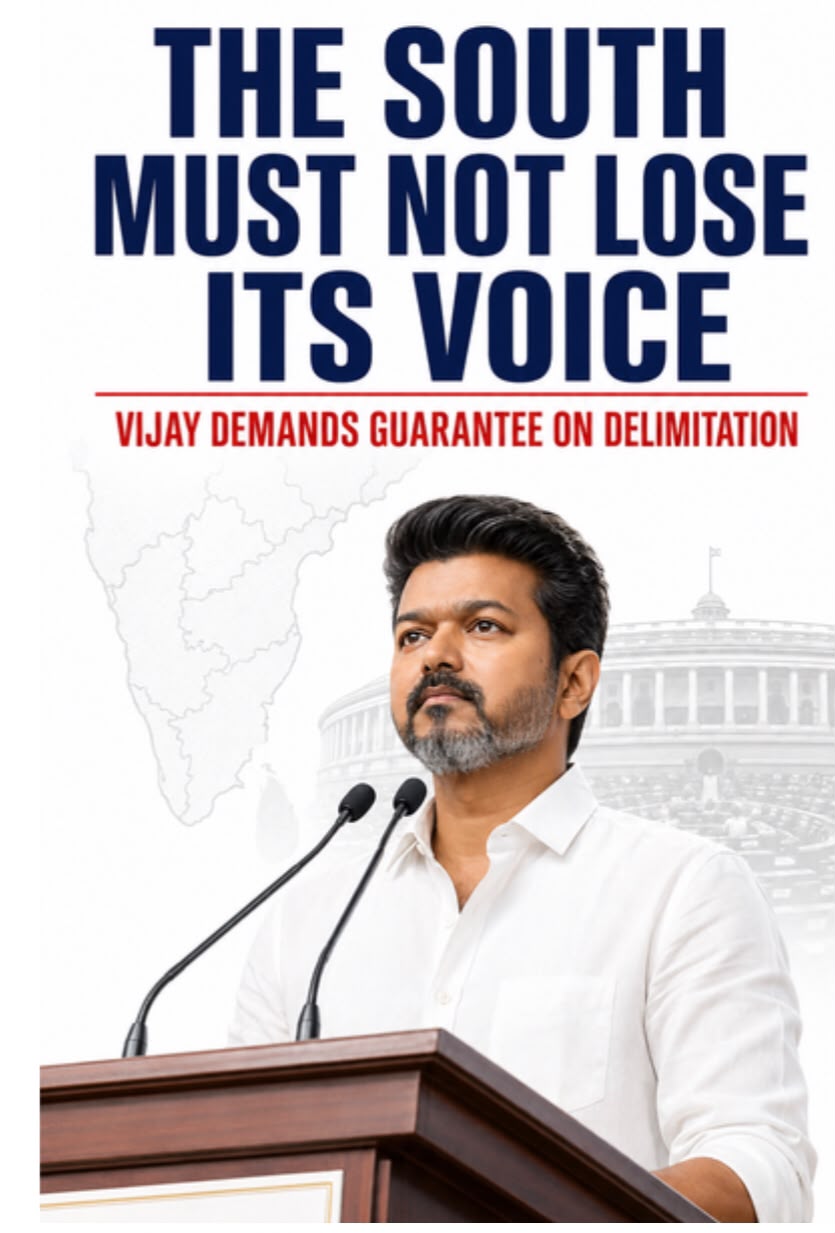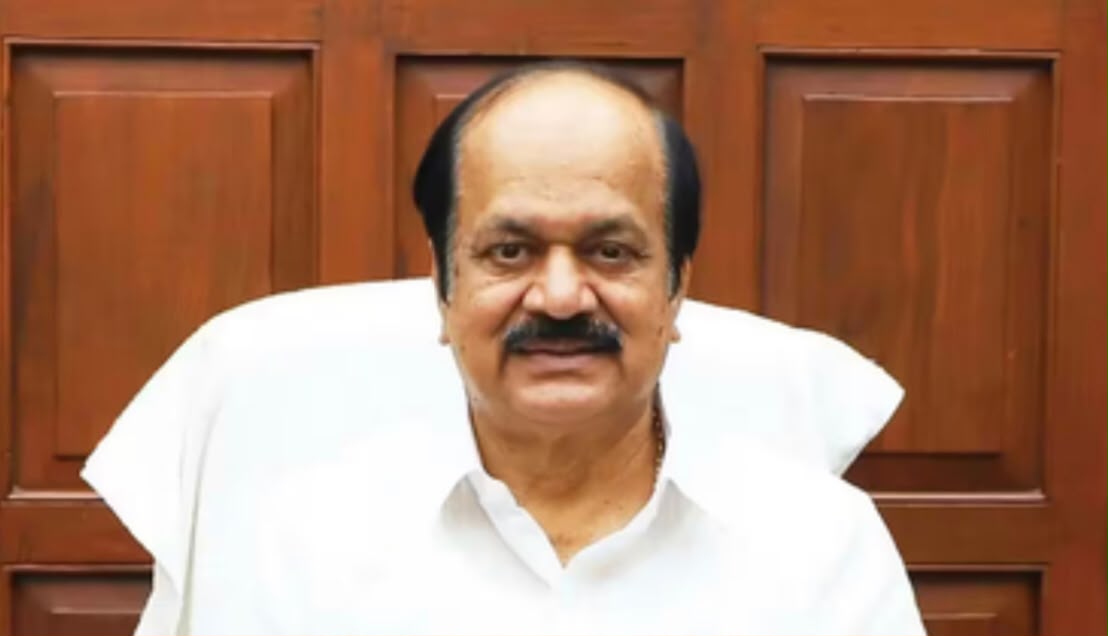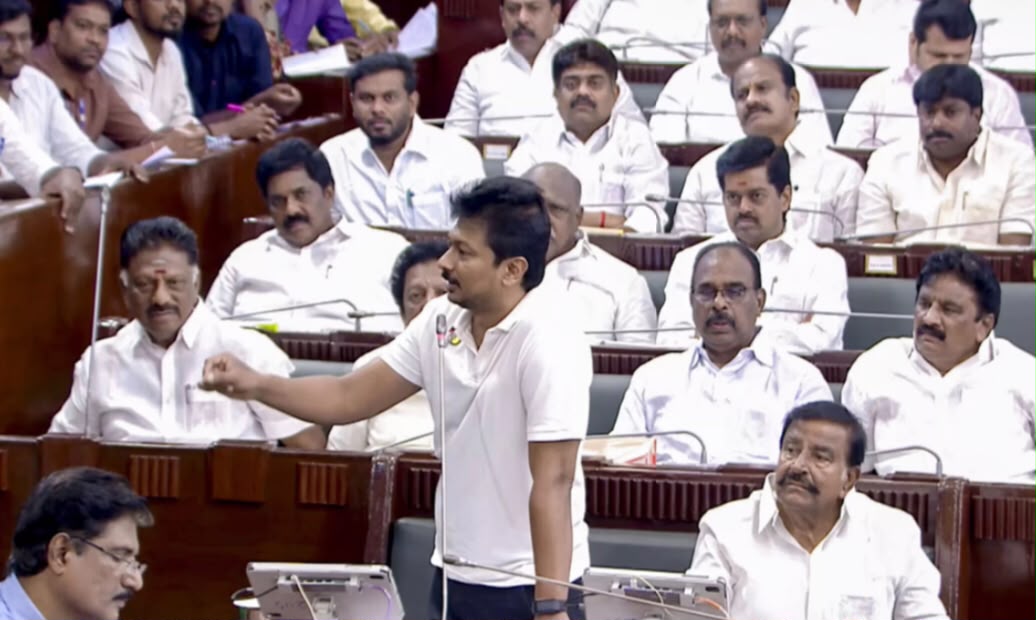
Forty-minute confrontation rocks State Assembly as DMK presses Chief Minister Vijay over whether his Government has moved from opposing delimitation to demanding a fairer version of it
CHENNAI – The politically explosive question of parliamentary delimitation erupted in the Tamil Nadu Legislative Assembly yesterday, producing a heated confrontation between Chief Minister C. Joseph Vijay’s ruling TVK and the opposition DMK over whether the State Government’s position has shifted on an issue capable of determining Tamil Nadu’s influence in New Delhi for decades.
The argument centres on the eventual redistribution of representation in India’s Lok Sabha and the possibility that states which successfully reduced population growth could lose relative political influence to more populous states. Tamil Nadu currently holds 39 Lok Sabha seats, and the State’s political establishment has long resisted any arrangement under which successful population-control policies might ultimately result in diminished representation.

The confrontation lasted approximately 40 minutes as DMK members questioned whether Vijay’s Government had moved from a position effectively opposing delimitation to one accepting the exercise provided Tamil Nadu received what the Chief Minister considers a fair allocation. The ruling TVK maintained that Tamil Nadu must preserve its existing 7.18 per cent share of Lok Sabha representation.
The distinction is politically important. Rejecting delimitation outright is fundamentally different from accepting the principle while negotiating over the formula, and the DMK is attempting to force the relatively new Vijay administration to define precisely where it stands before the national debate gathers greater momentum.
Tamil Nadu’s concern reflects an unusual consequence of successful public policy. Southern states generally achieved lower fertility rates earlier than several large northern states, helping slow their population growth. If parliamentary representation were subsequently redistributed primarily according to present population, those states argue they could effectively be penalised for achieving demographic objectives which India itself encouraged.
The debate therefore reaches considerably beyond the arithmetic of 39 parliamentary seats. Representation determines political influence over national governments, federal spending, legislation and the balance between India’s regions, making delimitation potentially one of the most consequential federal disputes the country will face.
Chief Minister Vijay is also confronting the realities of moving from campaigning to governing. Positions which can be expressed broadly from an election platform require considerably greater precision once a Chief Minister must negotiate with New Delhi and other states while simultaneously defending Tamil Nadu’s interests at home.
For Sri Lanka, the dispute across the Palk Strait provides an intriguing illustration of the complications created by genuine devolution within an enormous federal system. Tamil Nadu is not questioning whether it belongs within India; it is arguing fiercely about how much political weight it should possess inside it. The delimitation battle is therefore unlikely to disappear with yesterday’s Assembly confrontation.
The eventual formula could determine the political relationship between India’s north and south for a generation, and Tamil Nadu has made it abundantly clear that it does not intend to surrender representation quietly.