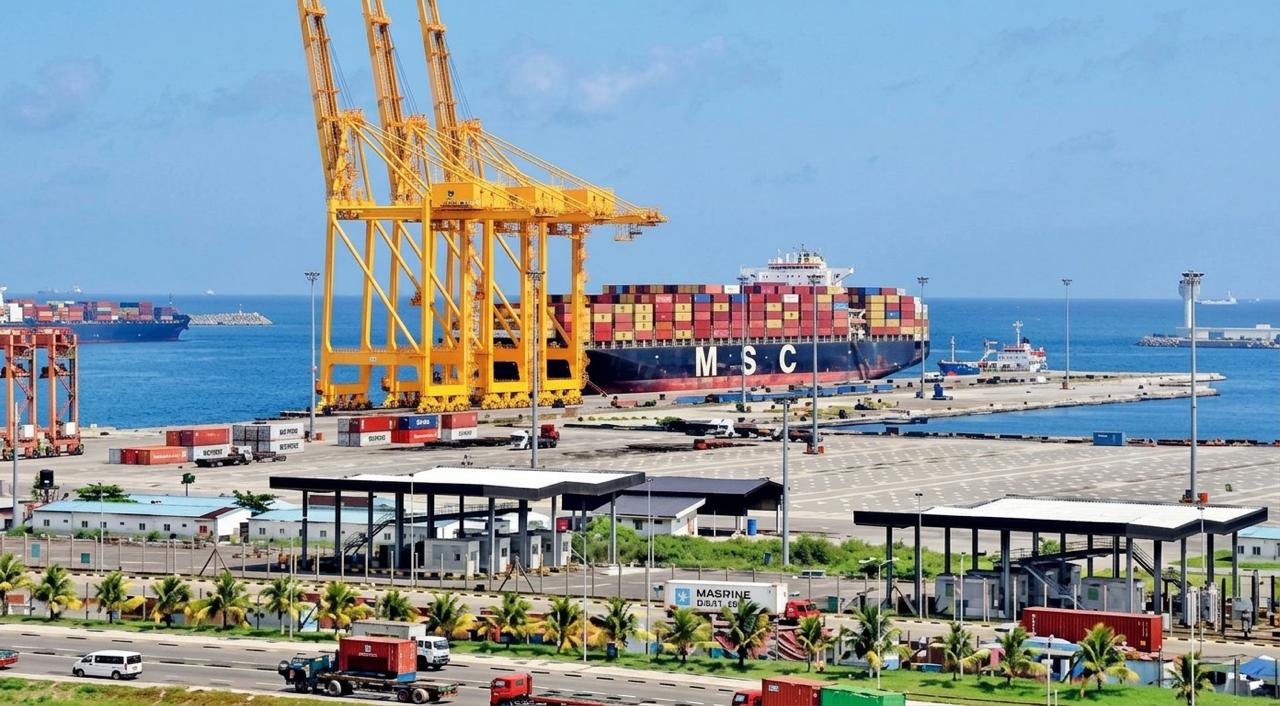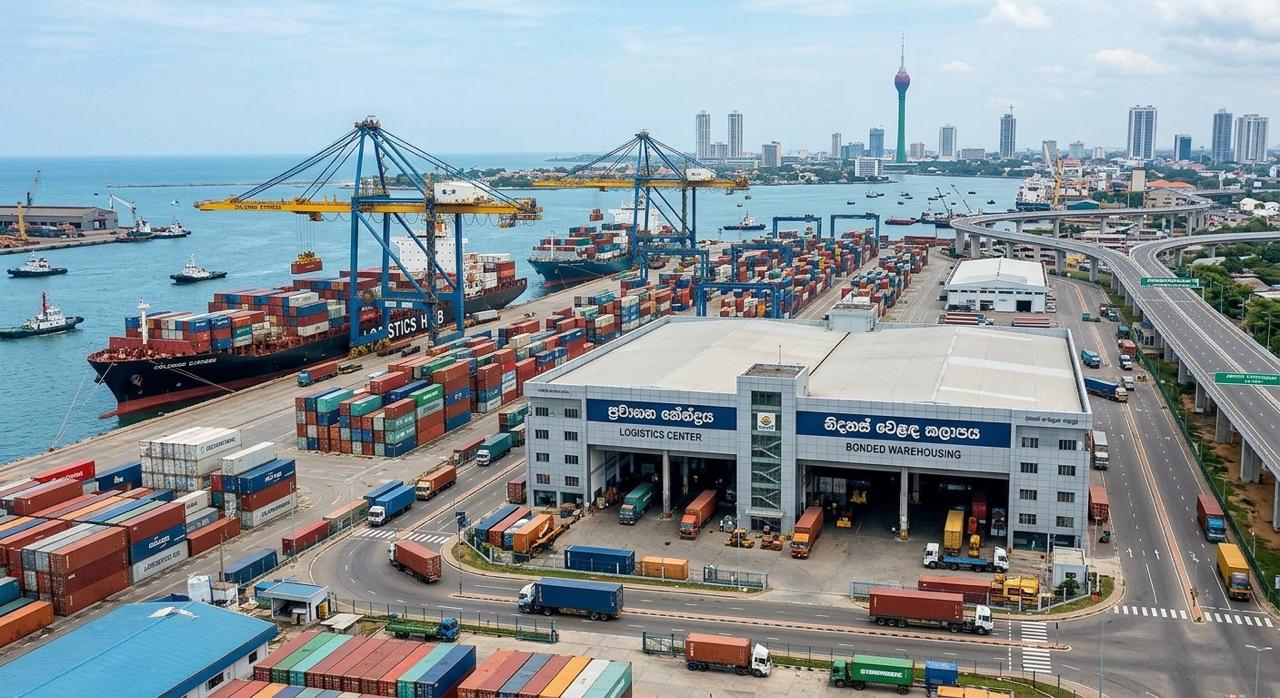
The Ports Authority says a long-awaited logistics hub with free-zone and bonded warehousing facilities could be operating within months. It could transform Colombo from a place where containers merely change ships into somewhere goods are stored, processed and redistributed. But this is not simply another new project there is already a substantial investment structure behind the logistics-hub story.
Sri Lanka has spent decades boasting about its position in the middle of the Indian Ocean. The boast is justified. The more awkward question is why the country has done comparatively little to monetise that position beyond allowing millions of containers to pass through Colombo on their way somewhere else.
Sri Lanka Ports Authority Chairman Dr Parakrama Dissanayake now says a long-awaited logistics hub incorporating free-zone and bonded warehousing facilities is expected to be launched within the next two to three months. He believes it could allow Colombo to graduate from its four-decade role principally as a transshipment port into a much broader logistics centre capable of attracting foreign investment in warehousing and related activities.
Submit Your Press Release
Get your company news, announcements, launches, appointments and events in front of a wider audience.


The timing is interesting. Container volumes increased by about 12 per cent during the first half of 2026, according to the SLPA Chairman, putting Colombo on course to handle close to nine million TEUs this year. The Ports Authority is targeting another 1.5 million TEUs of capacity by the end of 2027 as existing infrastructure comes under increasing pressure.
There is another potentially important development. The port-to-airport expressway connection is expected to open around October and could reduce the journey between the two to approximately 25 minutes. That creates the possibility of genuine sea-air logistics cargo arriving by ship, being processed in Colombo and moving rapidly to the airport for onward transportation.
But NEWSLINE believes the announcement deserves closer examination because Colombo’s logistics ambitions did not begin last week.
An official 2023 Gazette sets out the structure of the South Asia Commercial and Logistics Hub, a 50-year project involving China Merchants Port Holdings, the Sri Lanka Ports Authority and Access Engineering. Under that structure, China Merchants holds 70 per cent, while SLPA and Access Engineering each hold 15 per cent.
Phase One was envisaged as a US$280 million investment, financed on a 70:30 debt-to-equity basis. The same Gazette provided a 15-year corporate income-tax exemption, commencing from the first profitable year or two years after commercial operations begin, whichever comes first.
Cabinet records show the project emerged from an earlier proposal connected to Colombo International Container Terminal and was approved as a public-private partnership after evaluation by a Cabinet-appointed negotiating committee.
That does not make the project objectionable. Quite the contrary: a serious logistics hub could be exactly the sort of infrastructure Sri Lanka needs.
A container passing through Colombo earns one kind of revenue. A container whose contents are warehoused, consolidated, repackaged, labelled, processed and redistributed from Colombo creates an entirely different economic ecosystem warehouses, transport, finance, insurance, employment and foreign-exchange earnings.
Sri Lanka Customs already permits entrepôt operations, including bonded warehousing and limited activities such as repacking and relabelling. The missing ingredient has been doing it at sufficient scale and efficiency to make Colombo genuinely competitive with established regional logistics centres.
The Government should therefore be ambitious. But ambition and transparency are not enemies.
If major State assets, tax concessions and exceptionally long commercial rights are being used to turn Colombo into a logistics hub, the public should be able to see precisely what Sri Lanka contributes, what the investors contribute, what revenue the State receives and what performance obligations accompany those concessions.
Be that as it may, the fundamental idea is difficult to quarrel with. Sri Lanka sits beside one of the world’s great shipping highways. For far too long we have been satisfied watching the traffic go past. The opportunity now is not merely to unload the ships it is to build an economy around them.