
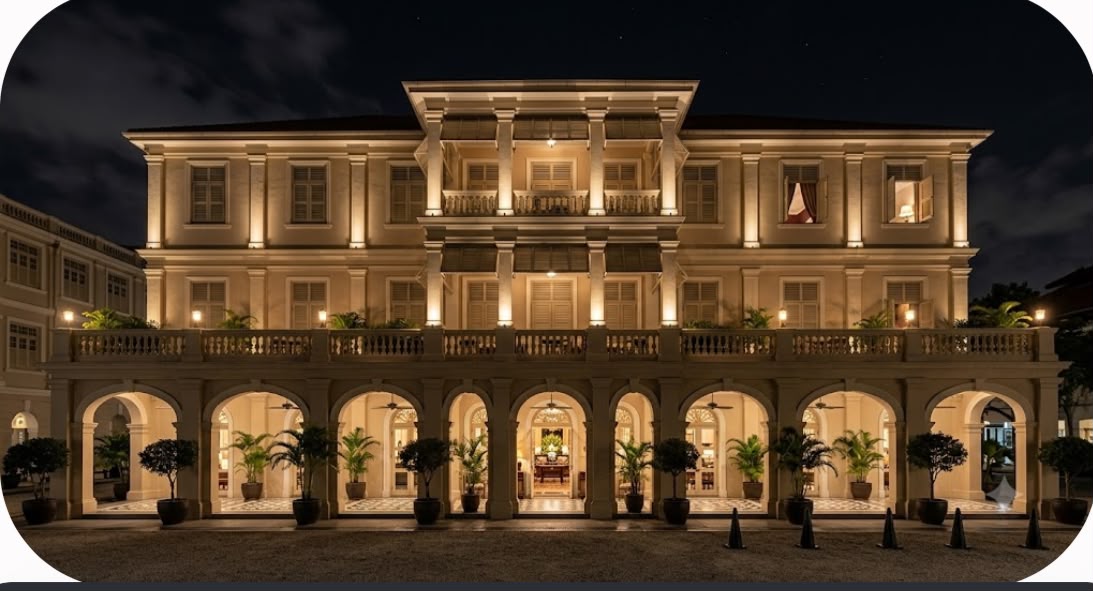
Historic Landmark Tops National Rankings for Artificial Intelligence Visibility
For more than 160 years, the Galle Face Hotel has occupied a unique place in Sri Lanka’s history. It has welcomed royalty, heads of state, celebrities, writers and generations of travellers who have regarded the grand old hotel as one of Asia’s most enduring hospitality landmarks.
This week, however, the hotel achieved a distinction that has nothing to do with its Victorian architecture or illustrious guest list. It has become Sri Lanka’s highestranked hospitality brand in the emerging world of artificial intelligence.
According to The State of AI Visibility in Sri Lanka 2026, compiled by BrandRadar, the AI search intelligence platform developed by Roar Global, Galle Face Hotel has been ranked the country’s leading hotel brand in terms of visibility across major artificial intelligence platforms, including ChatGPT, Google Gemini and Perplexity. The study examined how often brands are surfaced, cited and recommended when users seek information or recommendations through AI-powered search systems.
The distinction may sound technical, but it reflects a profound change in the way consumers are beginning to discover businesses.
For decades, companies invested heavily in traditional advertising, public relations and search engine optimisation in an effort to appear prominently on Google. Increasingly, however, travellers are asking artificial intelligence platforms where they should stay, what restaurants they should visit and which destinations are worth exploring.
Instead of scrolling through pages of search results, many users now rely on AI-generated recommendations that synthesise information from multiple trusted sources.
That shift is creating an entirely new measure of brand strength.
For a hotel such as the Galle Face, visibility within AIgenerated responses means that its reputation extends beyond conventional marketing. It reflects the consistency of its digital footprint, the quality of publicly available information, media coverage, customer reviews and the credibility that AI systems associate with the brand.
The achievement is also a reflection of leadership. Under General Manager Suresh Abbas, and with the guidance of Chairman Sanjiv Gardiner, the hotel has continued to modernise its operations while carefully preserving the heritage that has made it one of Colombo’s most recognisable institutions.
Balancing history with innovation is seldom easy. Yet the latest recognition suggests that the hotel has succeeded in presenting itself as both timeless and contemporary.
More broadly, the BrandRadar report offers an early glimpse into what may become one of the defining business metrics of the coming decade. Companies will increasingly find themselves competing not only for market share or online search rankings, but also for visibility within artificial intelligence systems that are rapidly becoming the first point of contact between businesses and consumers.
For Sri Lankan companies, the lesson is clear. A strong digital presence is no longer simply about having an attractive website or an active social media account. It is about building credibility, publishing reliable information and maintaining a reputation that artificial intelligence systems recognise as trustworthy.
The Galle Face Hotel has demonstrated that even an institution founded in the nineteenth century can thrive in the twenty-first century’s newest technological frontier.
The Galle Face Hotel has demonstrated that even an institution founded in the nineteenth century can thrive in the twenty-first century’s newest technological frontier.
In an age where algorithms increasingly shape first impressions, the Grand Old Lady of Colombo has once again shown that relevance is earned, not inherited.
Be that as it may, the real significance of this recognition extends beyond one hotel. It is an early indication that the future of brand reputation will be shaped as much by artificial intelligence as by traditional advertising, and Sri Lankan businesses would do well to take notice.


