
GAZA: THEY BOMBED THE BUILDINGS – BUT NOT THE HUMAN SPIRIT
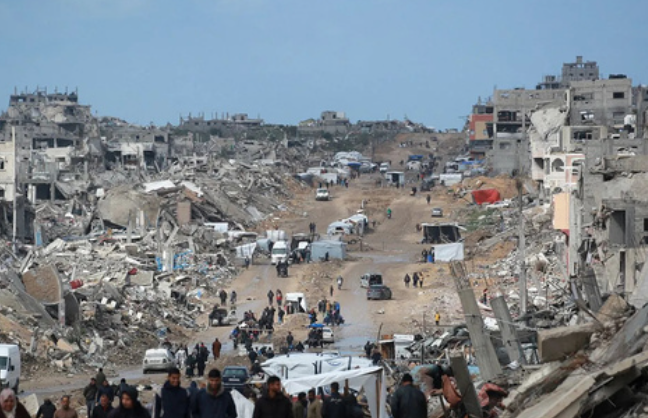
Gaza Strip today is little more than a landscape of shattered concrete, twisted steel, dust and grief.
Entire neighbourhoods have disappeared. Homes have collapsed into themselves. Schools, hospitals, roads and places where ordinary life once unfolded now lie reduced to rubble. Hopes, aspirations and pieces of an ancient civilisation appear buried beneath the debris of war.
The justification repeatedly advanced by Israel Defense Forces is that the military campaign seeks to eliminate Hamas following the horrors of October 7. No serious observer denies the brutality of terrorism or the right of civilians to live free from fear and violence.
But somewhere along the line, the distinction between destroying militants and destroying the environment within which ordinary human life exists appears to have collapsed entirely.
And yet, amid the devastation, something remarkable stubbornly survives.
Life.
Even as families are forced from bricks and mortar into tents and temporary shelters, Palestinians continue gathering together. Children still laugh. Families still share meals where they can. Young people still search for companionship and meaning. There are even reports and images of open-air weddings taking place amid the ruins – ceremonies illuminated not by luxury chandeliers but by resilience itself.
Psychologically scarred? Undoubtedly. Traumatised? Beyond question.
But broken? Not entirely.
That may ultimately be the one reality neither bombs nor military superiority have managed to extinguish: the
deeply embedded Palestinian determination to continue living despite everything around them suggesting otherwise.
Meanwhile, much of the international community appears trapped between outrage and impotence. Neighbouring states send tents, blankets, food aid and money. Western governments issue carefully worded statements. The United Nations warns of catastrophe. Yet the permanent political solution necessary to end the cycle remains painfully absent.
And what of Sri Lanka?
Like many smaller nations, Sri Lanka appears caught between moral instinct and geopolitical caution. Bullied in a way by the fear of the Trump Tarrifs. Statements condemning “violence” and “attacks” emerge carefully phrased, often avoiding direct attribution or confrontation.
It is almost as though many countries fear offending either Israel or the strategic influence of the President of the United States more than they fear history’s judgment.
True, one small voice may not alter the trajectory of war.
But moral support is not measured merely in military power or diplomatic leverage. Sometimes its value lies in affirming shared humanity itself. Sri Lanka, of all nations, understands what prolonged conflict does to people, economies and generations.
It understands displacement, trauma, grief and reconstruction.
That experience alone gives moral weight to empathy.
Be that as it may, history will eventually ask difficult questions of everyone involved in this tragedy – militants, governments, allies and bystanders alike.
But perhaps the most haunting question will not concern who possessed the greatest military power.
It may instead concern who, amid all the destruction, still remembered the humanity of the people trapped beneath it.
God save the people of Palestine – even if the physical boundaries of a viable Palestinian state grow fainter with every passing month under the continuing ar and the deeply controversial policies of the administration of Benjamin Netanyahu.


