
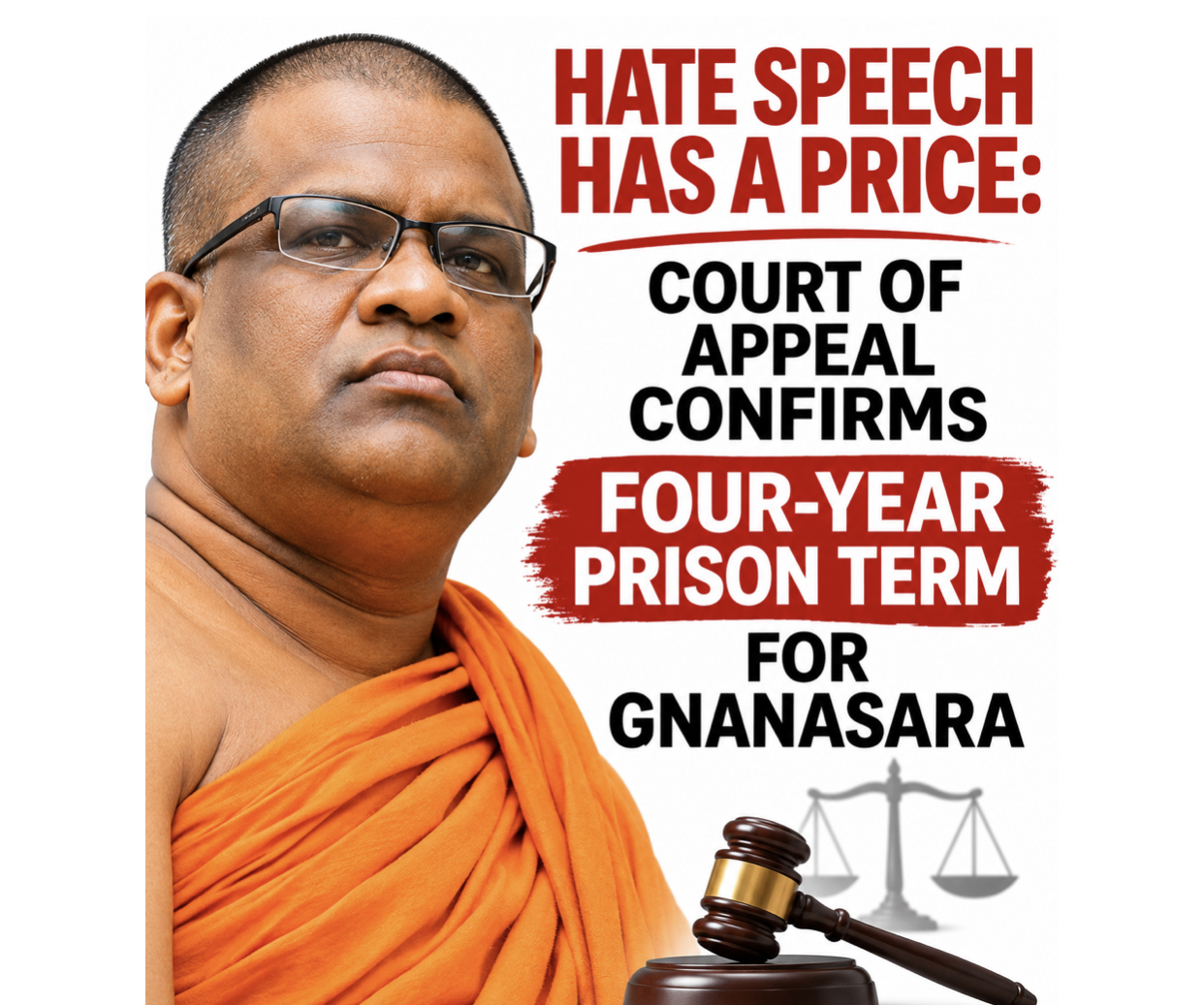
For years, the firebrand rhetoric of religious chauvinism was treated in Sri Lanka as a convenient political tool, weaponized by cynical actors to stoke division, distract the public, and tear at the fragile fabric of a multi-ethnic society. But every invoice eventually comes due.
Yesterday, the Court of Appeal delivered a clear and uncompromising message, upholding the four-year rigorous imprisonment sentence handed down to Bodu Bala Sena General Secretary Galagoda Aththe Gnanasara. In dismissing the monk’s appeal seeking acquittal, the bench firmly closed the door on attempts to escape accountability for remarks weaponized against the Islamic religion.
The legal reckoning stems back to a press conference held in Kirulapone way back on March 30, 2016, where Gnanasaratook aim at the Kuragala historical site. Under the guise of defending heritage, the press briefing descended into a tirade explicitly designed to insult Islam and rupture communal harmony. Acting on indictments filed by the Attorney General under Section 291 of the Penal Code, the Colombo High Court found him guilty in 2024 and slapped him with a four-year rigorous imprisonment term alongside a Rs. 100,000 fine.
Submit Your Press Release
Get your company news, announcements, launches, appointments and events in front of a wider audience.


True to form, the defense machinery went into overdrive, dragging the matter to the Court of Appeal in a bid to whitewash the rhetoric and secure an acquittal. The appellate bench was having none of it. By affirming the conviction, the court has made it abundantly clear that wearing sacred robes does not grant immunity from the criminal code, nor does it provide a license to trample upon the rights and dignity of fellow citizens.
For too long, individuals who wrapped themselves in religious nationalism operated under the dangerous delusion that they were untouchable, shielded by political patronage and institutional cowardice. Gnanasara’s legal history, marked by previous run-ins with the law and intimidation tactics, has long demonstrated a career built on sowing discord.
As Sri Lanka attempts to drag itself out of the wreckage of past mismanagement and societal polarization, the sight of extremist rabble-rousers finally facing the cold reality of a prison cell is both refreshing and long overdue. Hate speech is not a pious expression of faith; it is a match struck near a powder keg.
About time that the judiciary recognize that dangerous reality.



