
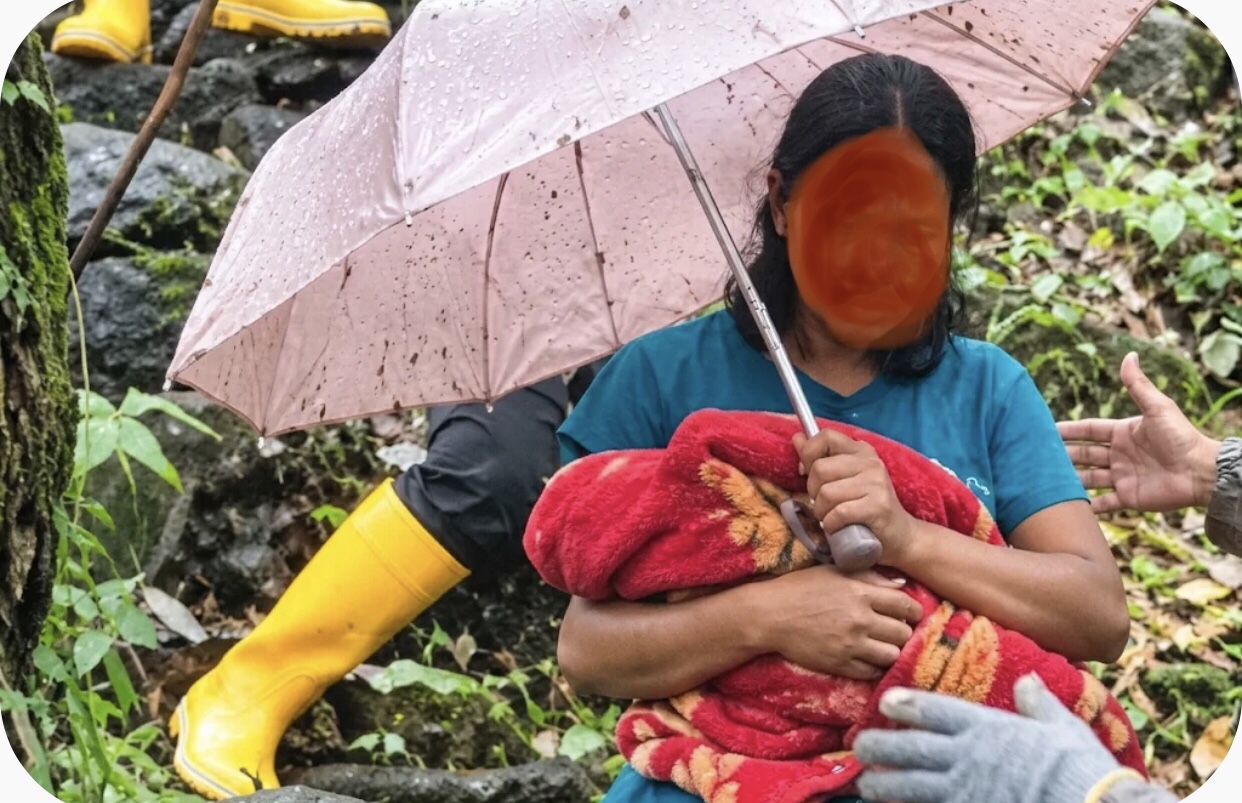
Hidden beneath plastic sheets inside a remote forest cave near Meemure in the Knuckles mountain range, Ududumbara Police made a discovery this week that reads less like a modern police blotter and more like an indictment of how easily a vulnerable child can slip entirely off society’s radar. A 15-year-old girl who had been reported missing from her home in the Kandy District since July was found living in the dense undergrowth alongside her two-month-old baby girl, having delivered the infant inside the cave without a doctor, midwife, or basic medical care.
Investigators tracked down the hideout only after noticing a young man repeatedly purchasing unusually large quantities of food from a local shop. Trailing him into the forest led officers to the makeshift shelter, where the teenager and infant had been surviving on forest herbs and rudimentary care. Two men connected to the case have since been arrested and remanded until November 20 by the Teldeniya Magistrate’s Court, as police pursue statutory rape and child protection investigations. Remarkably, despite the severe medical risks of an unattended adolescent birth in the wilderness, doctors confirmed that both the teenage mother and her baby are out of immediate danger.
The grim details of the Knuckles rescue prompted an urgent response from Women and Child Affairs Minister Saroja Savithri Paulraj yesterday, November 14, who announced that the Ministry is securing budgetary allocations to roll out a formal ‘Alternative Care Policy’ starting in 2027 to protect children caught in unsafe and vulnerable circumstances.
Submit Your Press Release
Get your company news, announcements, launches, appointments and events in front of a wider audience.


In her special statement, Minister Paulraj expressed relief that the girl and her newborn are safe under state protection, confirming that relevant authorities have been instructed to safeguard their ongoing physical and mental recovery. Looking beyond the immediate criminal investigation, however, the Minister pointed to a deeper social fracture: mounting economic, social, and political pressures, paired with a widening communication breakdown between parents and children, are leaving minors dangerously isolated even inside their own homes.
She urged parents to foster open dialogue and build unwavering trust so young people feel safe turning to their families during a crisis rather than disappearing into silence or danger. Equally telling was her candid admission regarding the state itself: government institutions and frontline responders dealing with vulnerable citizens must become far more approachable, accessible, and trustworthy if distressed teenagers are ever going to seek help before a situation spirals into tragedy.



