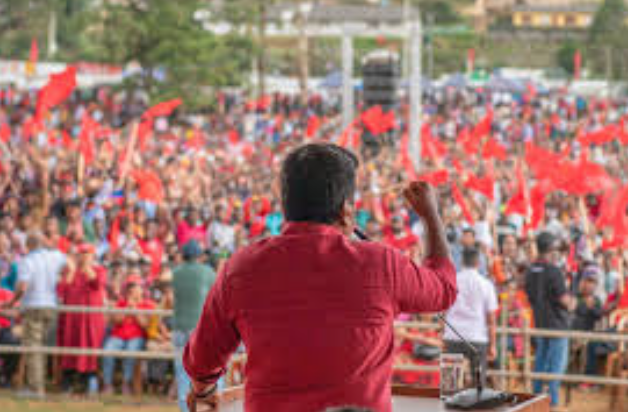
Be that as it may, May Day 2026 across Sri Lanka felt less like a traditional workers’ commemoration and more like a national political temperature check.
And the verdict?
Sri Lanka’s political class remains very much alive, very much mobilized and very much preparing for the next round of confrontation.
Across the country, dozens of rallies, processions and party gatherings unfolded under heavy police deployment, traffic diversions and intense political messaging.
Submit Your Press Release
Get your company news, announcements, launches, appointments and events in front of a wider audience.


The ruling National People’s Power staged the largest and most geographically widespread operation, reportedly organizing 21 district-level May Day events under the broad theme of people’s power and national rebuilding.
President Anura Kumara Dissanayake headlined the government’s flagship event, with large crowds reported particularly around Maharagama and several provincial centres.
The Opposition meanwhile refused to surrender the streets quietly.
The Samagi Jana Balawegaya held its principal rally in Maligawatte under the leadership of Sajith Premadasa, with speeches sharply targeting economic hardship, governance concerns and what the opposition describes as growing public frustration beneath the Government’s reform narrative.
Yet perhaps the more interesting political reality was not merely crowd size.
It was fragmentation.
Because unlike the old days where May Day often became a direct two-camp contest, Sri Lanka’s political map now appears increasingly fractured into multiple competingnarratives.
The Sri Lanka Freedom Party, the Frontline Socialist Party, Dilith Jayaweera’s Sarvajana Balaya, trade unions, leftist formations and smaller regional actors all attempted to carve out visible political space of their own.
Interestingly, both the United National Party and the Sri Lanka Podujana Peramuna largely avoided traditional mass political rallies this year, citing Vesak Poya observances and instead focusing on religious programmes and commemorative events.
That absence itself spoke volumes.
Because May Day in Sri Lanka has always been about more than workers. It is about momentum, morale, visibility and psychological projection. Political parties use May Day to signal relevance, energy and future electoral viability. And this year’s rallies revealed a country still politically restless beneath the surface calm of IMF stabilization and macroeconomic recovery.
The ruling NPP undoubtedly demonstrated organizational muscle and national reach. But the opposition too showed it remains capable of mobilization despite repeated predictions of collapse.
And perhaps that was the deeper takeaway from May Day 2026.
Sri Lanka may presently appear politically stable. But it is certainly not politically settled.