
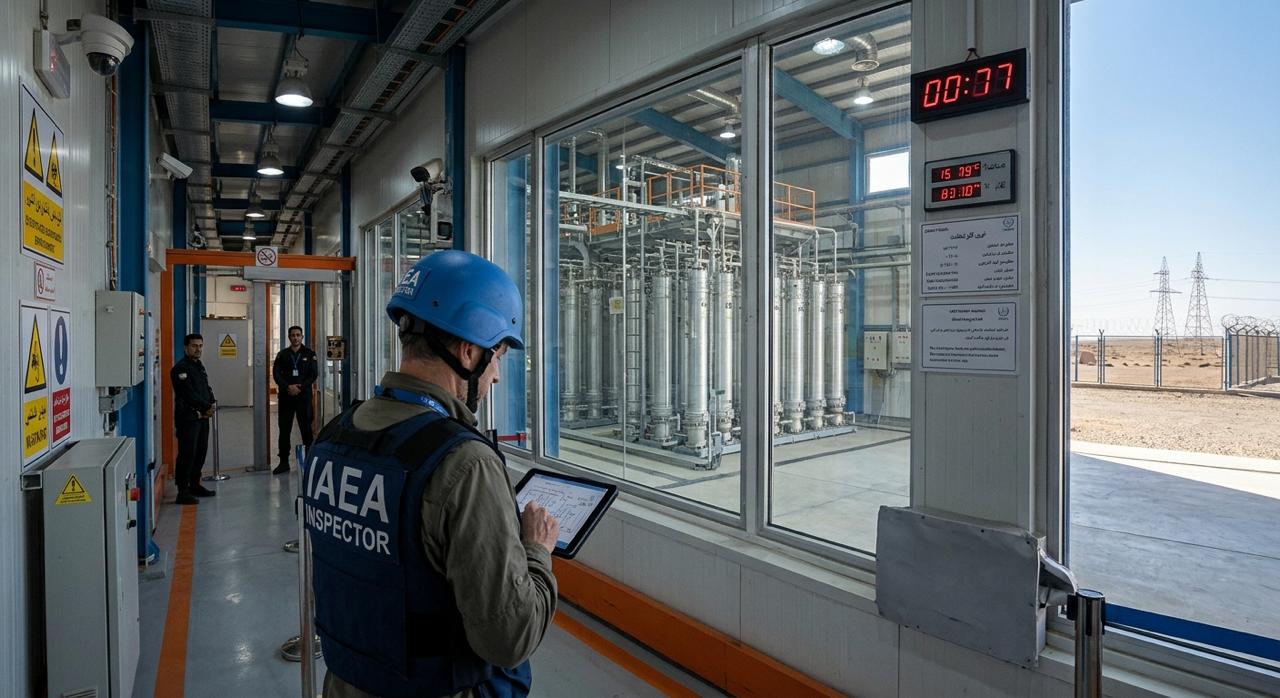
International Atomic Energy Agency Director General Rafael Grossi recently took to the podium with the uncomfortable task of reminding the world that watching a country enrich uranium without functioning cameras is a bit like monitoring a bank vault through a keyhole. His urgent appeal for Iran to reinstate top-tier nuclear inspectors came with a clear warning: the global non-proliferation architecture is not just cracking; it is holding together by little more than diplomatic etiquette. With access to key enrichment sites at Natanz and Fordow severely curtailed, the UN nuclear watchdog finds itself operating in a hazardous blind spot while centrifuge cascades spin uninterrupted in the background.
To understand how global diplomacy reached this impasse, one must trace the long, slow unraveling of the 2015 Joint Comprehensive Plan of Action. What was once designed as a multi-lateral triumph of verification began disintegrating when unilateral sanctions were reimposed, prompting Tehran to incrementally dismantle its compliance commitments over consecutive years. Sabotage incidents at enrichment plants, targeted assassinations of nuclear scientists, and recent regional strikes on nuclear infrastructure have only accelerated this downward spiral. Rather than forcing concessions, years of covert warfare and economic pressure have simply pushed Iran’s nuclear program deeper underground and further away from international oversight, turning a structured regulatory framework into an unmonitored guessing game.
For the rest of the world, this intelligence blackout is far more than a localized Middle Eastern headache. When a major threshold state restricts IAEA inspectors while pushing enrichment purity toward the ninety percent weapons-grade mark, it sends shockwaves through the global non-proliferation treaty network. Neighboring states, suddenly stripped of empirical reassurance that their rival is not building a warhead, face intense domestic pressure to kickstart their own latent nuclear capabilities. A breakdown in Natanz directly threatens to trigger a multi-polar nuclear arms race across volatile regional blocs, proving that when international verification mechanisms fail, global security devolves into a nerve-wracking standoff where miscalculation becomes statistically inevitable.
Submit Your Press Release
Get your company news, announcements, launches, appointments and events in front of a wider audience.


From the perspective of non-aligned nations like Sri Lanka, this standoff highlights the dangerous fragility of an international order governed by selective enforcement. As a state party to the Treaty on the Prohibition of Nuclear Weapons and a steadfast advocate for global disarmament, Sri Lanka views the erosion of IAEA oversight with deep concern. The breakdown in verification protocols exposes a stark double standard: while non-nuclear states are routinely pressured to forgo peaceful atomic energy technologies, major geopolitical players continue to engage in brinkmanship that threatens global maritime trade routes and energy pricing. For a developing island economy attempting to stabilize its financial recovery, an unmonitored nuclear crisis in the Middle East is not a distant academic debate; it is an immediate threat to global oil markets, shipping lanes, and economic stability.
This inspection blackout does not exist in a geopolitical vacuum; it unfolds against a background of heightened regional tensions and stalled diplomatic negotiations. With the UN Security Council formally alerted to non-compliance, operating without accredited IAEA inspectors on the ground removes the only neutral buffer standing between diplomatic posturing and military miscalculation. In a landscape where intelligence reports are routinely weaponized and technical ambiguity breeds paranoia, turning off the IAEA’s cameras effectively forces the international community to trade empirical verification for dangerous guesswork. Until Tehran and Western powers return to the negotiating table to restore these verification safeguards, the region remains trapped in a high-stakes game of nuclear chicken, where a single intelligence misstep could easily trigger the very military confrontation both sides claim to avoid.
Resolving this high-stakes nuclear standoff demands that all parties step back from the illusion that sanctions, covert sabotage, or military posture can permanently erase technical know-how. Pushing nuclear programs deep underground while cutting off camera feeds might buy short-term leverage at negotiating tables, but it leaves the rest of the world watching a ticking clock with no idea how many minutes are left. Until raw technical transparency replaces geopolitical gamesmanship, the IAEA will remain stuck in the thankless role of issuing stern press releases while the centrifuges keep spinning.



