
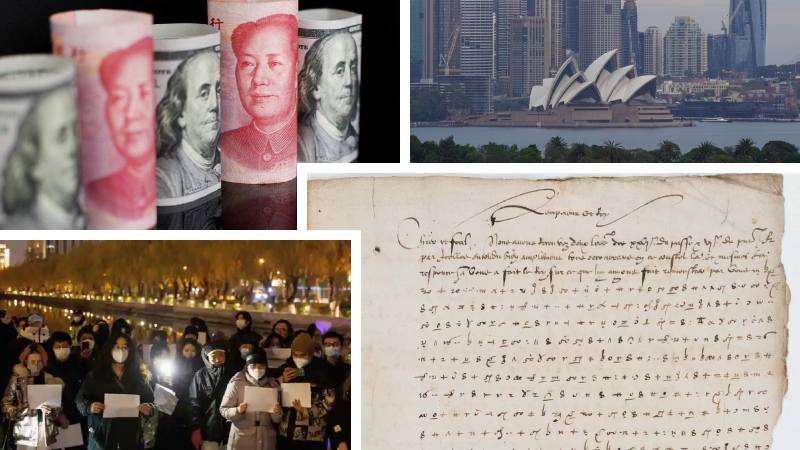
Australia lowers terror threat level for first time since 2014
Australia lowered its terrorism threat level on Monday to “possible” from “probable” for the first time in eight years, citing a reduced risk of attacks from extremists.
The level was raised in 2014, spurred by concerns over the number of Australians believed to be fighting overseas with Islamist militant groups and the likelihood of terror attacks by those radicalised in Iraq or Syria.
But spy agency the Australian Security Intelligence Organisation (ASIO) said the factors prompting the threat level no longer existed or only persisted to a lesser degree.
Dollar slips, while yuan slumps on COVID unrest in China
The dollar weakened on Monday as investors weighed up the recent drop in U.S. government bond yields, while anti-government protests in China sent the yuan to a two-week low.
Protests have flared across China and spread to several cities in the wake of an apartment fire that killed 10 people in the city of Urumqi in the country’s far west. Hundreds of demonstrators and police clashed in Shanghai on Sunday night.
BBC journalist ‘beaten and kicked by the police’ as protests spread across China
Edward Lawrence, a journalist at the BBC, was arrested by police in Shanghai at the scene of protests on Sunday night, according to the BBC and as captured on what appears to be mobile phone footage of the arrest.
While he has since been released, a BBC spokesperson has expressed extreme concern about his treatment, saying he was “beaten and kicked by the police.”
Protests have erupted across China in a rare show of dissent against the ruling Communist Party, sparked by anger over the country’s increasingly costly zero-Covid policy.
Charles V: French scientists decode 500-year-old letter
A coded letter signed in 1547 by the most powerful ruler in Europe has been cracked by French scientists, revealing that he lived in fear of an assassination attempt by an Italian mercenary.
Sent by the Holy Roman Emperor Charles V to his ambassador at the French royal court – a man called Jean de Saint-Mauris – the letter gives an insight into the preoccupations of Europe’s rulers at a time of dangerous instability caused by wars of religion and rival strategic interests.
For historians, it is also a rare glimpse at the dark arts of diplomacy in action: secrecy, smiling insincerity and disinformation were evidently as current then as they are today.


