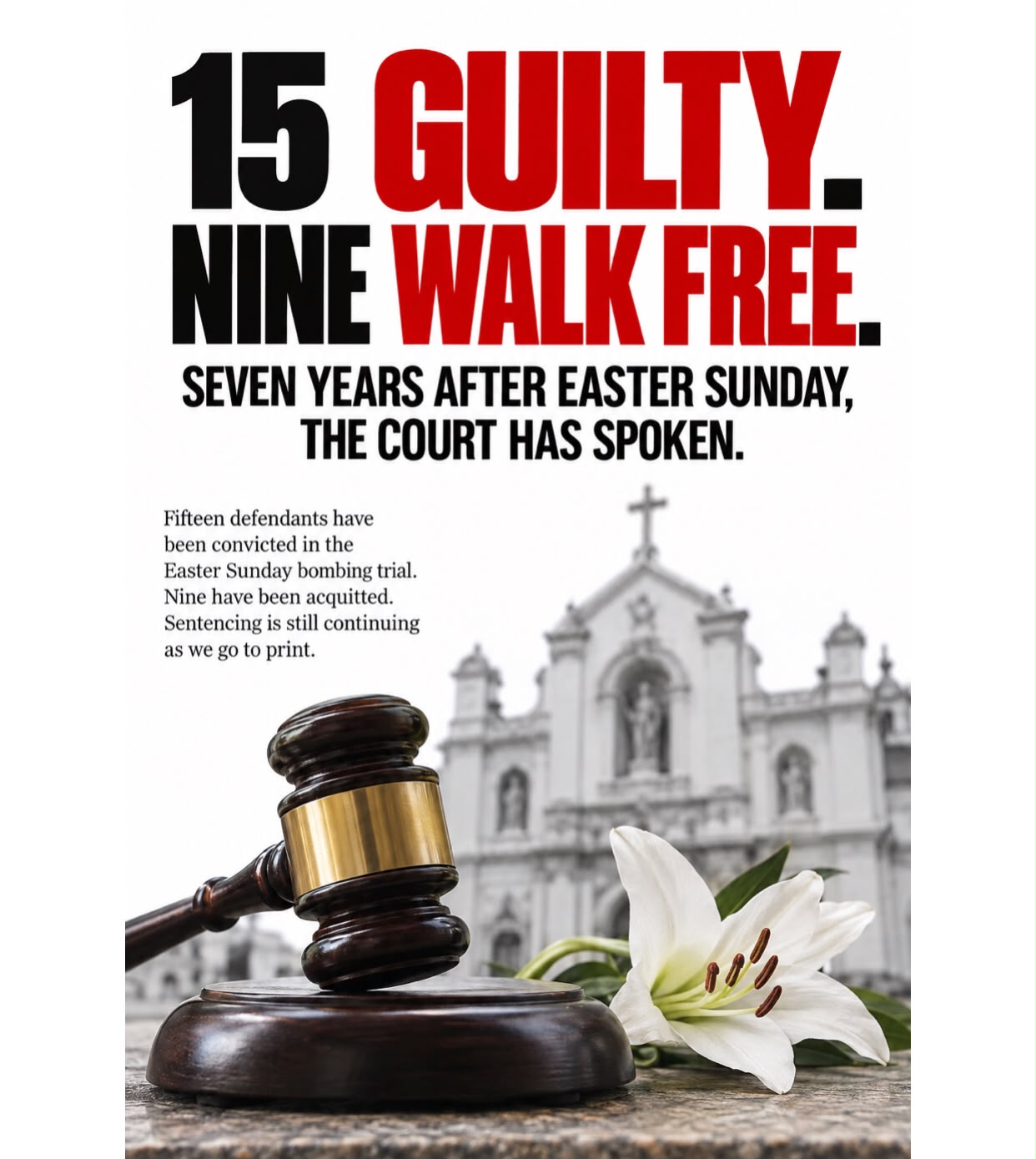
Fifteen defendants have been convicted in Sri Lanka’s principal Easter Sunday bombing trial. Nine have been acquitted. Sentencing was continuing as NEWSLINE prepared this edition.
Seven years after suicide bombers walked into churches and hotels on Easter Sunday and turned a morning of worship and celebration into one of the darkest days in Sri Lanka’s modern history, a Colombo court has delivered its judgment in the principal criminal prosecution arising from the attacks.
The Permanent High Court Trial-at-Bar found 15 of the 24 defendants guilty and acquitted the remaining nine, ordering their release. The case included Naufer Moulavi and arose from allegations that the defendants conspired with, aided or assisted those responsible for the coordinated attacks of April 21, 2019.
Submit Your Press Release
Get your company news, announcements, launches, appointments and events in front of a wider audience.


The scale of the prosecution was extraordinary. The Attorney General’s case contained 23,270 charges, including allegations of murder, conspiracy to commit terrorism and offences involving firearms and explosives. Proceedings stretched across years before the three-judge bench comprising Navaratne Marasinghe, Ramanathan Kannan and Sujeewa Nissanka.
The attacks struck three churches and three major hotels during Easter services and celebrations, killing more than 260 people and injuring hundreds more. The men who actually carried out the suicide bombings died in the attacks.
But today’s judgment does something important that years of political argument could not do: it determines the criminal responsibility of the people who were actually before this court, on the evidence placed before it.
It does not, however, necessarily close the larger Easter Sunday story.
Separate questions concerning intelligence failures, the conduct of state officials and allegations surrounding the wider circumstances of the attacks have generated other proceedings and investigations. Those matters should not be conflated with today’s convictions, but neither should today’s convictions be presented as answering questions that were not before this Trial-at-Bar.
For the families who buried husbands, wives, children and parents after April 21, 2019, the legal process has taken more than seven years to reach this point.
Fifteen men have now been convicted.
Nine have been acquitted.
The court has spoken on the case before it. Sri Lanka must now be equally determined to establish the truth wherever questions still remain.