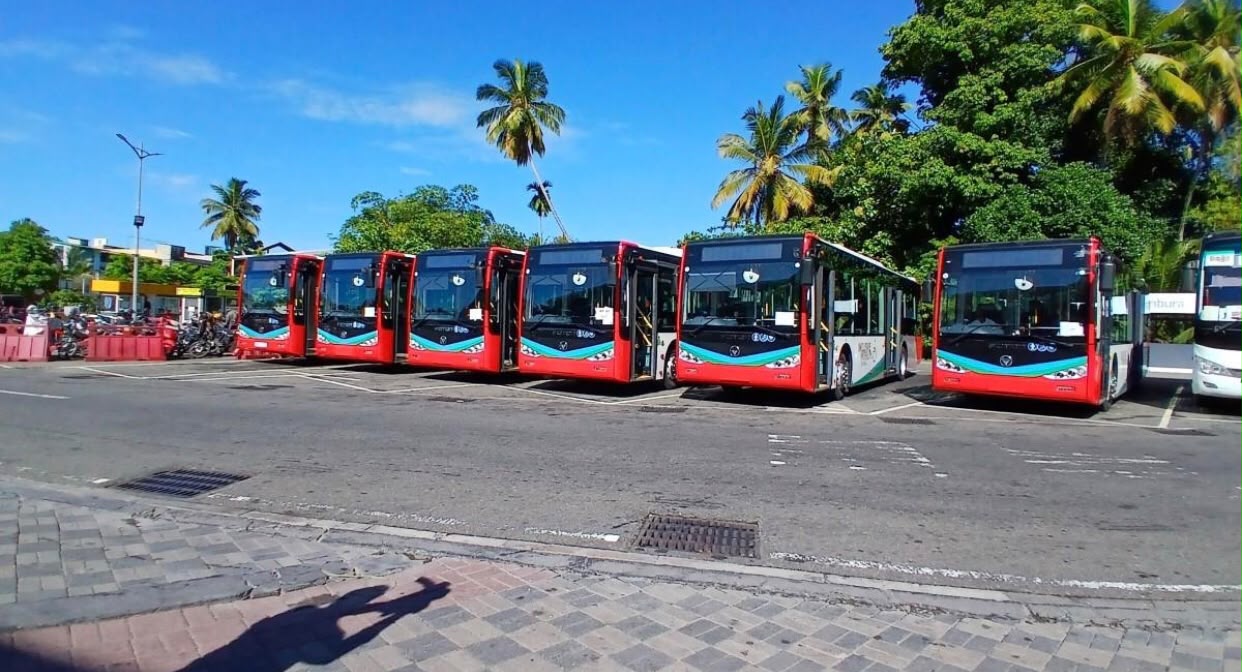
A new Metro fleet begins operating on Western Province routes today as police tighten enforcement of bus-priority lanes. The ambition is to persuade commuters to leave their cars behind. That will happen only when public transport becomes sufficiently reliable that leaving the car at home no longer feels like an act of faith.
One hundred and four new Metro buses are scheduled to begin operating across Colombo-centred routes today, September 29, in the latest attempt to address a problem successive governments have discussed considerably more often than they have solved.
Colombo has too many vehicles chasing too little road space.
Submit Your Press Release
Get your company news, announcements, launches, appointments and events in front of a wider audience.


The new Metro services will operate across seven routes in the Western Province. Announced routes include Millennium City-Colombo Fort, Panadura-Dematagoda, Kesbewa-Pettah and Ekala-Battaramulla, alongside existing services involving Makumbura, Kadawatha and Colombo. A Colombo circular service is also planned. The Transport Ministry says 121 Metro buses are ultimately expected to operate across the seven routes.
At the same time, police are tightening enforcement of designated bus-priority lanes. Seven priority lanes are to operate between 6 a.m. and 9 a.m. and again between 4 p.m. and 7 p.m., with other vehicles generally prohibited from using or parking in them during those periods.
There is considerable sense in this.
A bus carrying dozens of passengers uses scarce urban road space far more efficiently than dozens of cars each carrying one person. Metro Bus itself has explicitly identified single-occupant vehicles entering Colombo as part of the congestion problem.
But persuading motorists to abandon their cars requires more than explaining the arithmetic.
The commuter sitting inside an air-conditioned car in traffic already knows that buses exist. The question is whether that commuter believes a bus will arrive when promised, provide a reasonable degree of comfort, complete the journey predictably and deliver its passenger somewhere useful.
That is where Sri Lanka’s public transport debate repeatedly becomes trapped.
We tend to think in vehicles rather than systems.
Buying buses is visible. There is a launch ceremony. Photographs can be taken. Politicians can stand beside gleaming new vehicles and announce another beginning.
The less glamorous work comes afterwards.
Timetables must mean something. Bus lanes must remain bus lanes after the initial burst of enforcement has passed. Stops must connect sensibly with railway stations and other bus services. Passengers need usable information about arrival times. Vehicles must be maintained after the new-bus smell disappears. Drivers need incentives that reward safe, scheduled operation rather than a race to the next passenger.
Above all, public and private transport cannot continue to be treated as separate universes.
Colombo’s congestion problem is not going to be solved by building enough road space for everybody who might eventually want to drive a private vehicle into the city. The geometry makes that difficult before the economics even enter the argument.
That makes the new Metro initiative worth watching.
If dedicated lanes allow buses to move while cars remain stationary, commuters acquire a powerful reason to change behaviour. If buses simply join the same congestion, that advantage disappears.
The Government says the programme will initially concentrate on the Western Province before expanding to areas including Jaffna, Kandy, Nuwara Eliya and Galle.
Good. But the measure of success should not be how many buses were launched today.
It should be how many private cars no longer need to enter Colombo tomorrow.