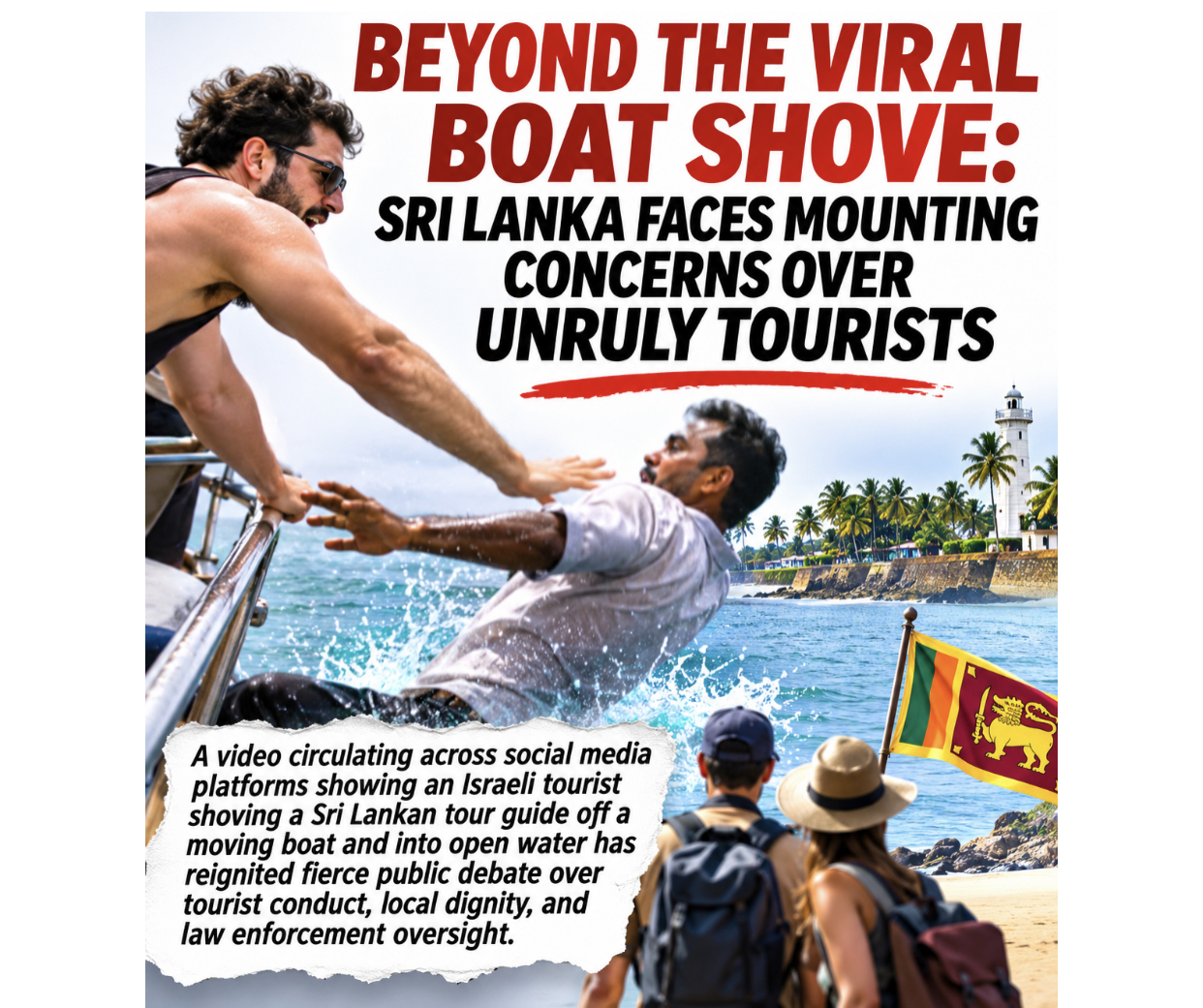
A video circulating across social media platforms showing an Israeli tourist shoving a Sri Lankan tour guide off a moving boat and into open water has reignited fierce public debate over tourist conduct, local dignity, and law enforcement oversight.
The footage, originally published by Russian outlet RT, captures a group of young Israelis aboard a leisure boat in Sri Lanka. As the male local guide stands near the edge taking a drink of water, one of the tourists suddenly shoves him from behind, sending him plunging into the sea while the group laughs.
The online fallout was swift, with social media users condemning the act as physical assault and a blatant display of arrogance toward local hospitality workers. Israeli social activist Daniel Amram later published a statement from the tourists involved, who claimed the incident was a harmless, pre-arranged prank. According to their account, the guide was unhurt, aware of the plan, and participated willingly. Defending their actions, the tourists stated that they were set to enlist in the military shortly and did not deserve public hostility for what they deemed innocent fun.
Submit Your Press Release
Get your company news, announcements, launches, appointments and events in front of a wider audience.


However, for many in Sri Lanka, the video is not an isolated piece of poor judgment, it is symptomatic of a much broader, systemic friction point. Over recent months, government authorities have faced mounting pressure over illegal commercial and social activities linked to long-term Israeli visitors, particularly in coastal hubs such as Arugam Bay.
Sri Lankan Cabinet officials and law enforcement have confirmed ongoing investigations into foreign nationals operating unregistered businesses, running unauthorized surf schools, establishing non-compliant community centers, and conducting commercial operations while holding standard tourist visas. These activities circumvent local tax frameworks, take vital income away from domestic business owners, and create isolated enclaves that alienate local residents.
Sri Lanka is hardly alone in facing these challenges. Across global travel hotspots, host communities have voiced identical grievances regarding post-military service tourist groups. In Thailand’s Koh Phangan, local business associations and activists have staged protests and filed formal complaints over unlicensed commercial ventures and public misconduct by Israeli visitors. Similar controversies have erupted in Siargao in the Philippines, where local authorities were forced to intervene following brawls and public friction over unpermitted structures.
While international tourism remains a vital economic pillar for post-recovery Sri Lanka, incidents like the boat video underscore a growing demand for firm enforcement. Dismissing physical push-backs or economic rule-breaking as harmless youthful pranks overlooks a basic truth: visiting a country is a privilege that requires absolute respect for its laws, its culture, and the people who work to welcome them.