Sacred tradition expected to draw thousands of pilgrims and visitors to Kandy
Kandy is once again preparing to host one of Asia’s most celebrated religious and cultural festivals as the annual Esala Perahera begins, drawing thousands of devotees, local visitors and international tourists to the hill capital.
Centred on the Sacred Temple of the Tooth Relic, the Perahera remains one of Sri Lanka’s oldest living traditions. For generations it has symbolised not only Buddhist devotion but also the continuity of the island’s rich cultural heritage, bringing together religion, history, music, dance and pageantry in a spectacle recognised around the world.
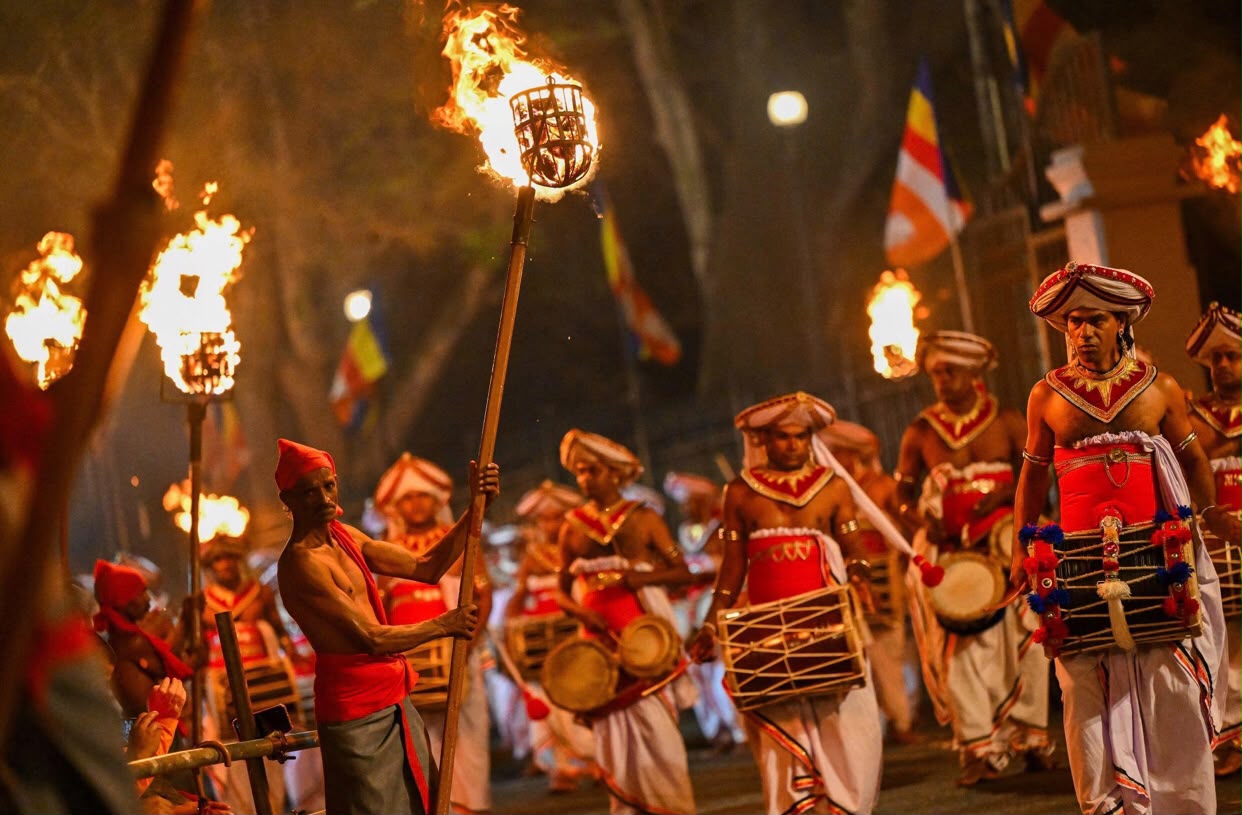
The colourful procession of elaborately adorned elephants, traditional dancers, drummers, torch bearers and whip crackers is expected to once again transform the streets of Kandy into the focal point of national attention. Security agencies and local authorities have implemented extensive arrangements to facilitate the large crowds expected throughout the festival period.
Beyond its spiritual significance, the Perahera delivers an important economic dividend. Hotels across Kandy report strong demand during the festival, while restaurants, transport operators, retailers, craftsmen and small businesses benefit from the increased flow of visitors. For Sri Lanka’s tourism industry, the event represents one of the country’s most powerful cultural attractions.
The festival also arrives at an important moment as Sri Lanka continues efforts to strengthen tourism following several challenging years. International visitors increasingly seek authentic cultural experiences, and few events showcase the country’s history and traditions more effectively than the Esala Perahera.
Its significance, however, extends well beyond economics. The procession represents an unbroken tradition that has endured through colonial rule, political change, civil conflict, economic hardship and national crises.
It continues to unite generations of Sri Lankans around a shared cultural and religious heritage. In an era when headlines are frequently dominated by politics, economic pressures and institutional challenges, the Esala Perahera offers a different perspective.
It reminds the nation that while governments may change and public debates evolve, Sri Lanka’s enduring traditions remain among its greatest national strengths. As the drums begin to sound and the first procession makes its way through the historic streets of Kandy, the Perahera will once again demonstrate why it remains not merely a festival, but one of the defining expressions of Sri Lanka’s identity.