
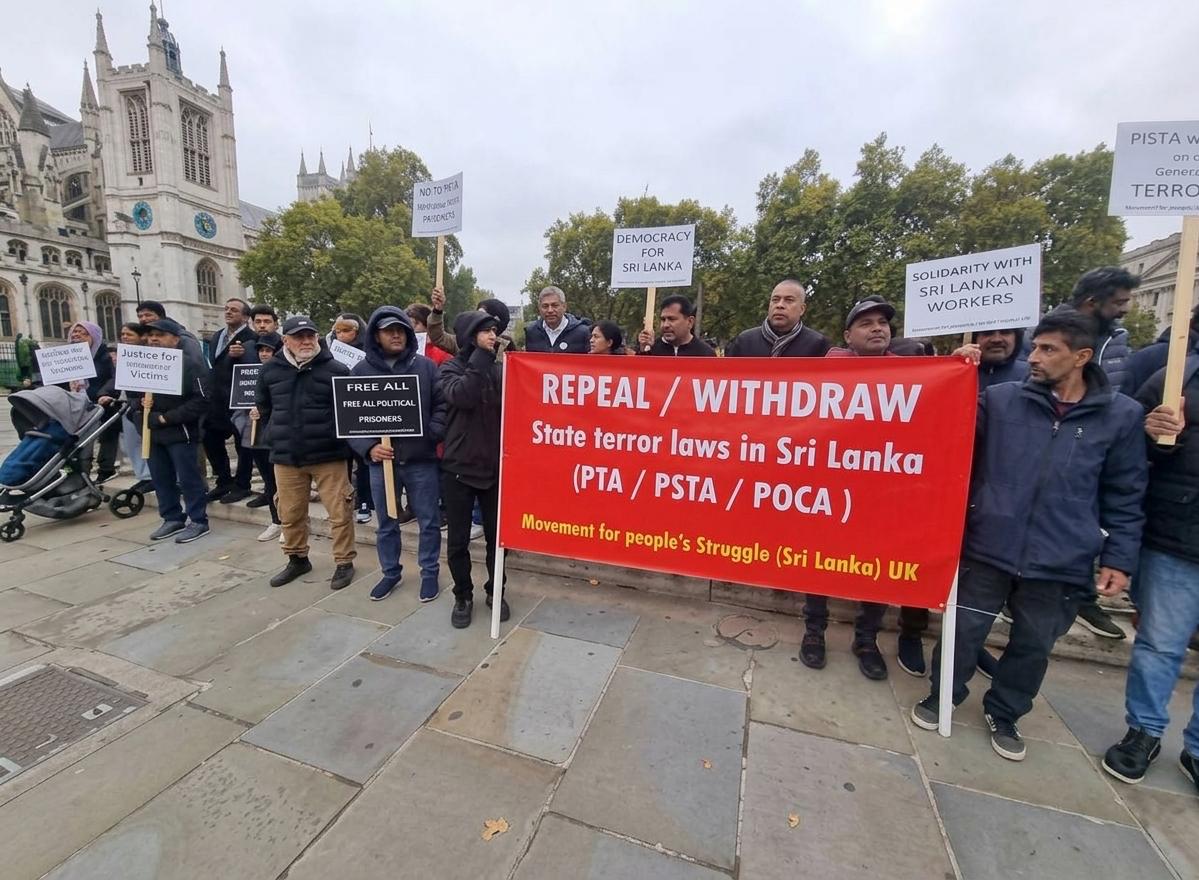
Members of the Sri Lankan diaspora gathered outside the British Parliament in London on Sunday, November 1, to stage a coordinated demonstration against Sri Lanka’s existing and proposed anti-terrorism and public security laws. Organised jointly by the UK branch of the People’s Struggle Movement (Sri Lanka) and the Mass Movement for Social Justice, the protest brought together participants spanning Sinhala, Tamil, Muslim, and Burgher communities at Parliament Square in Westminster.
Protesters called for the immediate repeal of the 1979 Prevention of Terrorism Act (PTA) while voicing alarm over proposed security legislation introduced under the National People’s Power (NPP) administration, including the Protection of the State from Terrorism Act (PSTA) and the Prevention of Organised Crimes Act (POCA).
The concerns raised in London reflect deep-seated critiques long voiced within Sri Lanka by prominent human rights advocates. Former Human Rights Commissioner Ambika Satkunanathan has repeatedly highlighted how successive legislative drafts serve as a facade of reform while preserving the coercive machinery of the state. Legal experts like Satkunanathan point out that sweeping definitions of terrorism in the PSTA risk criminalising routine civic actions (from public protests against economic austerity to peaceful advocacy for regional autonomy) by handing unchecked administrative detention powers to law enforcement and the military.
Submit Your Press Release
Get your company news, announcements, launches, appointments and events in front of a wider audience.


These domestic warnings mirror findings by international bodies like Human Rights Watch, which caution that new security drafts retain the core machinery of the PTA. Under existing legislation, suspects can remain locked in remand for years based on questionable confessions, stripped of basic procedural protections.
As demonstrators handed position papers to British MPs calling for international diplomatic scrutiny, the message from Parliament Square was clear: until Colombo dismantles the legal structures that enable arbitrary detention, no amount of statutory repackaging will convince those affected that real change has arrived.



