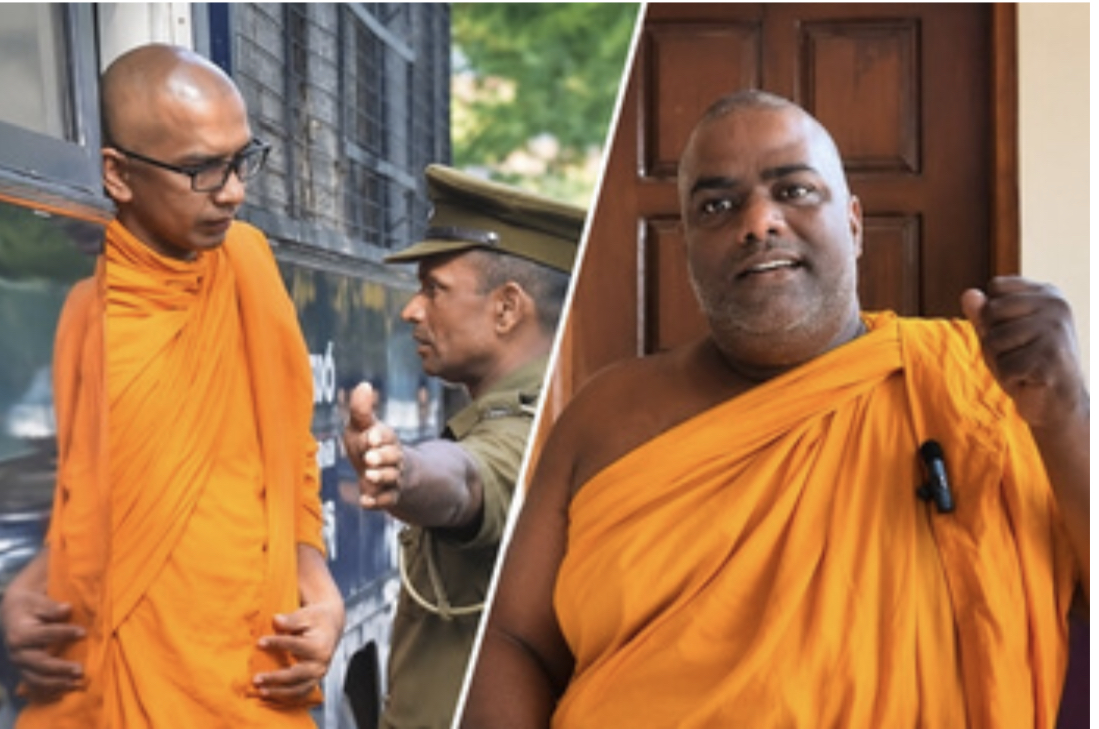
There is a particular irony in staging a fast unto death at one of Buddhism’s most revered sanctuaries, only for the so called exercise in spiritual endurance to end in a fistfight, hospital admissions, and seven separate criminal files. Yesterday, November 26, Anuradhapura Chief Magistrate Siyapath Sasindu Wickramaratne granted personal bail of Rs. 1 million each to 11 suspects, including Ven. Balangoda Kassapa Thera and Rajangane Saddharathana, bringing a temporary pause to a fortnight of unedifying theatre outside the historic Ruwanweli Maha Seya.
How did a supposedly non-violent “satyagraha” turn into a police logbook? Back on November 12, Ven. Balangoda Kassapa Thera and a group of followers were camped near the sacred premises in defiance of an existing court order to vacate the area. Things unravelled rapidly when a rival faction led by Rajangane Saddharathana arrived on the scene. Instead of serene contemplation, chaos broke out, leaving Saddharathana with head injuries and several participants requiring treatment at the Anuradhapura Teaching Hospital before police moved in to make arrests.
Four of the seven cases before the court name Ven. Kassapa Thera’s group as suspects, while three target the rival faction accused of assaulting them. At the time of their remand on November 13, the Chief Magistrate went so far as to visit the hospital to inspect the injured before ordering psychiatric evaluations and medical drug tests on the suspects, alongside noting an outstanding Trincomalee Magistrate’s Court arrest warrant against Kassapa Thera for failing to appear in an earlier case.
Submit Your Press Release
Get your company news, announcements, launches, appointments and events in front of a wider audience.


When the parties were produced again on Thursday, the court opted to release all suspects across the seven cases on personal bail of Rs. 1 million each and fixed the next hearing for April 29 next year. Yet the bench did not simply wave everyone off with a clean slate: the Magistrate also directed the Anuradhapura Divisional Crimes Unit to investigate whether Rajangane Saddharathana committed an offence under the International Covenant on Civil and Political Rights Act.
Which leaves a few awkward questions hanging in the Anuradhapura air. When court orders barring protests around sacred heritage sites are treated as optional suggestions, what deterrent remains? Why do public disputes involving prominent robe-wearers repeatedly spiral into physical clashes, social media spectacles, and ICCPR inquiries before anyone remembers the law? And when the dust settles before April 29, will anyone actually respect the sanctity of the Ruwanwelisaya premises, or are we merely waiting for the next loud confrontation to test the patience of the courts all over again?