
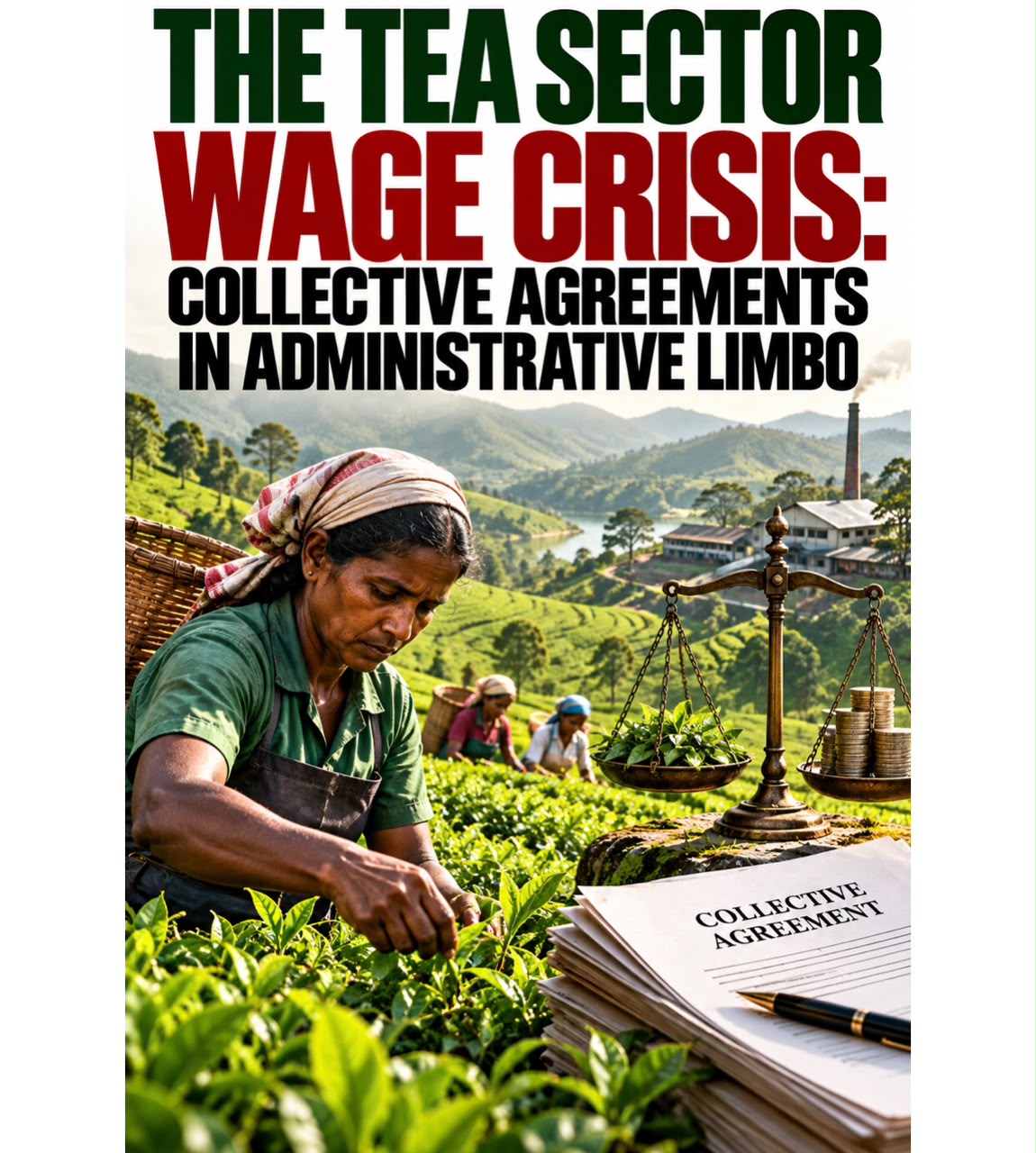
The ongoing dispute over daily minimum wages for regional plantation company workers has once again reached a deadlock, exposing the deep structural failures of Sri Lanka’s traditional tea industry. Despite multiple wages board notifications and ministerial directives ordering a mandatory increase in the daily basic wage, regional plantation companies continue to challenge the financial feasibility of the mandate in court, citing falling global auction prices, rising fertilizer costs, and declining crop yields. The result is an administrative stalemate that leaves over one hundred thousand plantation families trapped in a vicious cycle of poverty and economic vulnerability.
For generations, estate workers have formed the backbone of Sri Lanka’s foreign exchange earnings, laboring under physically demanding conditions for wages that have consistently lagged behind national inflation rates. The reluctance of plantation companies to implement wage increases without corresponding productivity hikes reflects an industry struggling to modernize. While global tea markets increasingly demand certified, ethically produced teas, domestic plantation management models remain largely unchanged from the colonial era, relying heavily on cheap manual labor rather than technological innovation and land productivity enhancements.
The administration’s intervention in the wage dispute highlights the limits of state price-fixing in a commercial export sector. Issuing statutory wage directives without addressing underlying productivity challenges, land usage rights, or tea smallholder logistics creates friction that threatens the long-term viability of the export tea sector. When plantation companies threaten to reduce working days or scale back estate maintenance to offset higher wage bills, the workers ultimately end up earning the same monthly take-home pay despite higher daily rates.
Submit Your Press Release
Get your company news, announcements, launches, appointments and events in front of a wider audience.


Resolving the plantation wage crisis requires a fundamental restructuring of the estate management system rather than temporary political band-aids. Transitioning toward revenue-sharing models, where estate families are granted land plots to manage independently while selling green leaf back to central processing factories, offers a sustainable path forward. Until the government and plantation companies commit to genuine structural reform, estate workers will remain caught between corporate inertia and state promises that fail to deliver at the end of the month.



