Fleeing the scene of a fatal crash often hinges on a simple gamble: that in the chaos of suburban traffic, a driver can vanish before anyone catches a license plate. On November 10, that gamble cost an 80-year-old pedestrian his life near the pedestrian crossing at Weli Park Junction along the busy Nawala-Nugegoda Road. Four days later, however, painstaking detective work by the Mirihana Police proved that modern surveillance networks leave far fewer blind spots than hit-and-run offenders imagine.
The chain of events began on November 10 along one of Colombo’s most heavily traversed suburban arteries. According to police investigators, the elderly pedestrian was crossing near Weli Park Junction when a car struck him with severe force and sped away without stopping to render aid. Emergency responders rushed the critically injured 80-year-old to the Colombo South Teaching Hospital in Kalubowila, where he was admitted to the Intensive Care Unit. Despite medical efforts to save him, the victim later succumbed to his injuries.
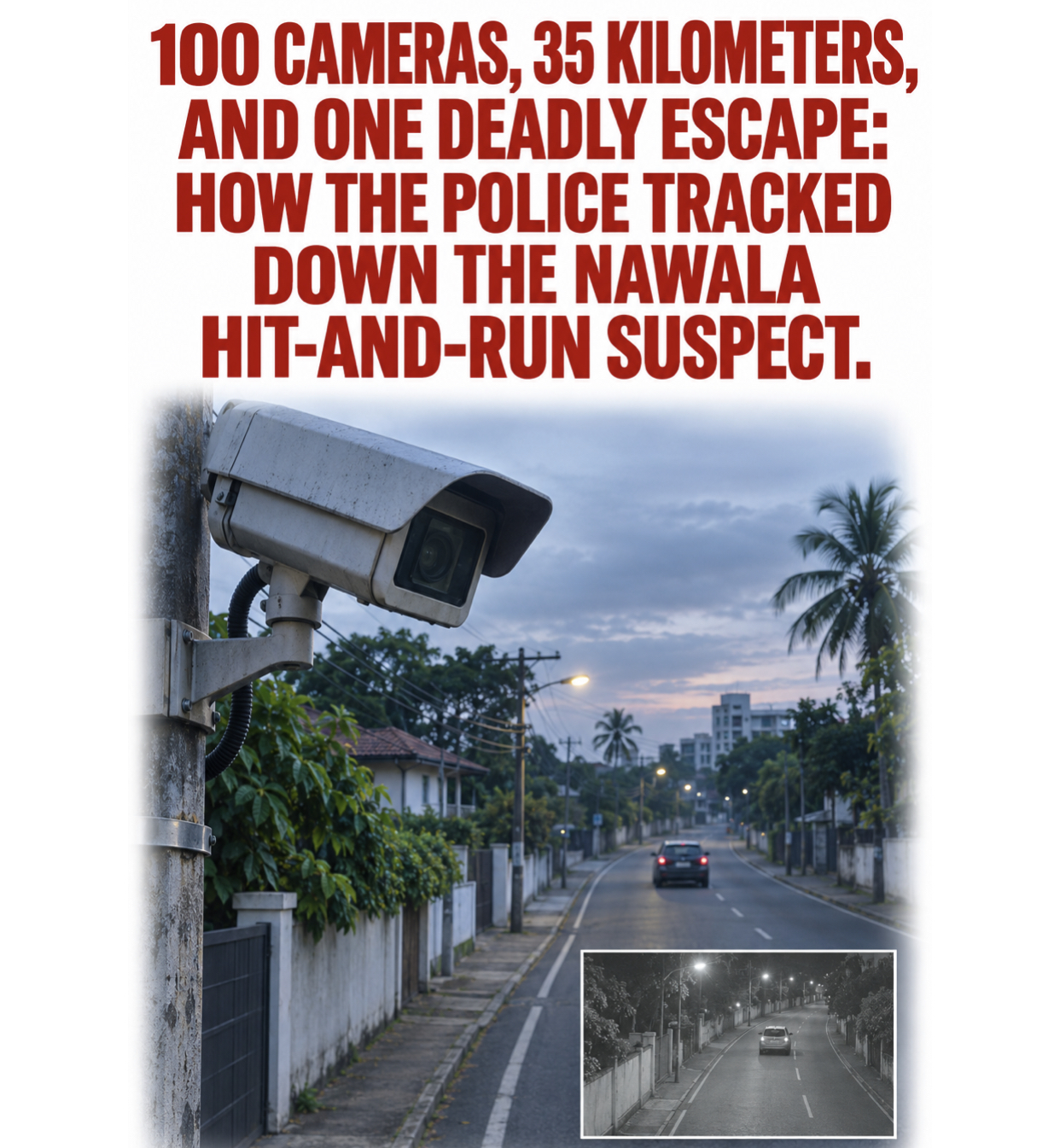
With no driver at the scene and an elderly citizen dead after using a marked crossing zone, officers from the MirihanaPolice launched an intensive digital manhunt. Rather than relying solely on eyewitness fragments, investigators reconstructed the suspect vehicle’s escape route frame by frame, reviewing footage from more than 100 CCTV cameras mounted along roads stretching roughly 35 kilometers from Nawala all the way into the Kalutara District town of Horana.
Submit Your Press Release
Get your company news, announcements, launches, appointments and events in front of a wider audience.


That methodical electronic trail paid off on November 14. Tracking the vehicle’s movements from camera to camera, police officers traced the car to a private residence in Munagama, Horana, where they located and seized a black Toyota Aqua believed to have been involved in the fatal collision. Subsequent inquiries in the area quickly narrowed the search from the vehicle to the person behind the wheel, leading to the arrest of the suspected driver in the Royal Garden neighborhood of Horana.
What followed during standard post-arrest forensic procedures added an even more troubling dimension to the case. Police produced the suspect before the Judicial Medical Officer at Kalubowila Hospital for a comprehensive medical examination. According to police reports, the medical assessment revealed that the suspect had consumed crystal methamphetamine, the synthetic stimulant widely known on Sri Lankan streets as Ice.
On November 15, Mirihana Police produced the suspect before the Gangodawila Magistrate’s Court, where he was ordered remanded into custody until November 27 as investigators continue compiling forensic, vehicular, and witness evidence for prosecution.
For road safety advocates and ordinary commuters alike, the Nawala tragedy highlights two stark realities on Sri Lanka’s highways. First, pedestrian crossings remain dangerously perilous for vulnerable citizens, particularly elderly residents navigating fast-moving suburban corridors, when impaired drivers treat traffic rules as optional. Second, the intersection of synthetic narcotics and motor vehicles poses a lethal threat that routine traffic stops alone rarely catch until after a life has been lost.
At the same time, the Mirihana Police investigation offers a rare note of institutional reassurance. By stitching together over 100 private and public camera feeds across two districts within 4 days, officers demonstrated that hitting the accelerator after a crash no longer guarantees anonymity.