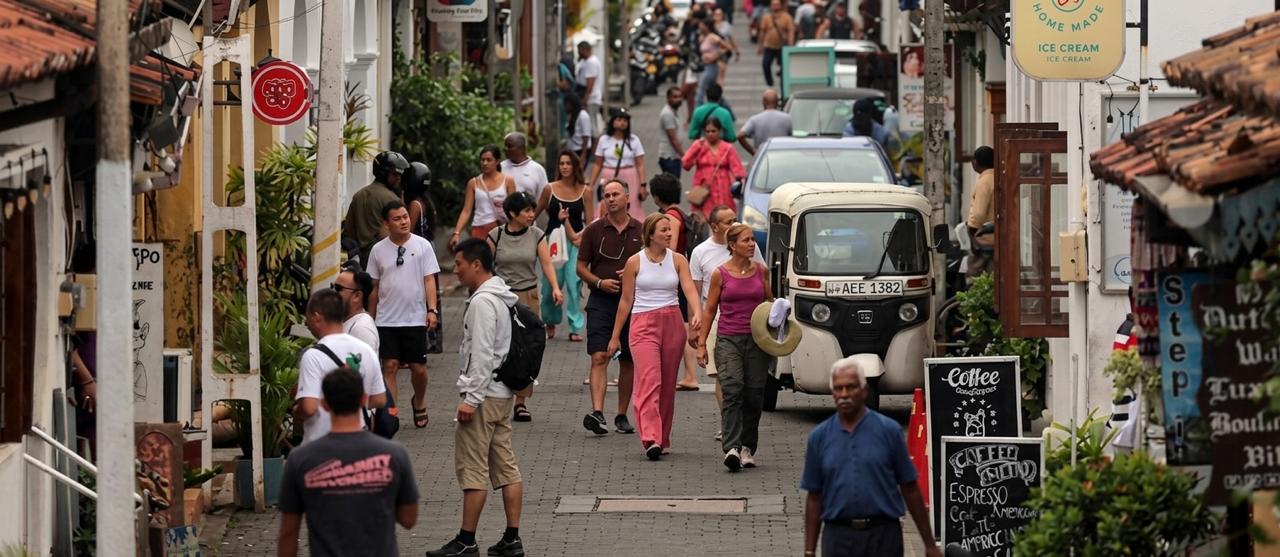
Six-country promotional campaign begins as Sri Lanka attempts to recover lost arrivals before the winter season
Sri Lanka has launched a targeted tourism campaign across six important markets as the Government attempts to earn US$4.2 billion from the industry this year-despite reducing its visitor target from three million to 2.7 million.
The digital campaign will focus on India, China, Britain, Germany, Russia and Australia ahead of the northern winter travel season. A broader international campaign is now expected only in April 2027, following years of delays.

Sri Lanka welcomed approximately 1.3 million tourists during the first seven months of 2026 and earned an estimated US$1.5 billion. Arrivals, however, fell by about 20 per cent during March and April as the Gulf conflict disrupted travel, raised fuel costs and unsettled several key markets.
The Government is therefore asking the industry to generate nearly US$2.7 billion during the remaining five months of the year. That would require not merely more visitors, but significantly improved earnings from each arrival.
This is where the numbers become important.
A successful tourism industry cannot be measured only by airport headcounts. It must also be measured by the length of stay, daily spending, regional distribution of income and the amount of foreign exchange that actually reaches the formal banking system.
Sri Lanka has repeatedly promoted itself as a high-value destination while simultaneously introducing policies that appear designed to attract visitors on relatively modest spending thresholds. The newly introduced Digital Nomad Visa, for example, requires proof of monthly income of US$2,000-a figure that may translate into limited daily spending once accommodation and dependants are included.
The six-country campaign is necessary and overdue. Be that as it may, advertising cannot compensate for weak air connectivity, bureaucratic delays, inconsistent destination management or a product that fails to persuade visitors to spend beyond their hotel rooms.
Sri Lanka does not need tourists merely to arrive. It needs them to stay, travel and spend.