Colombo and Gampaha remain at the centre of an outbreak that has continued despite repeated clean-up drives, military assistance and public-health warnings
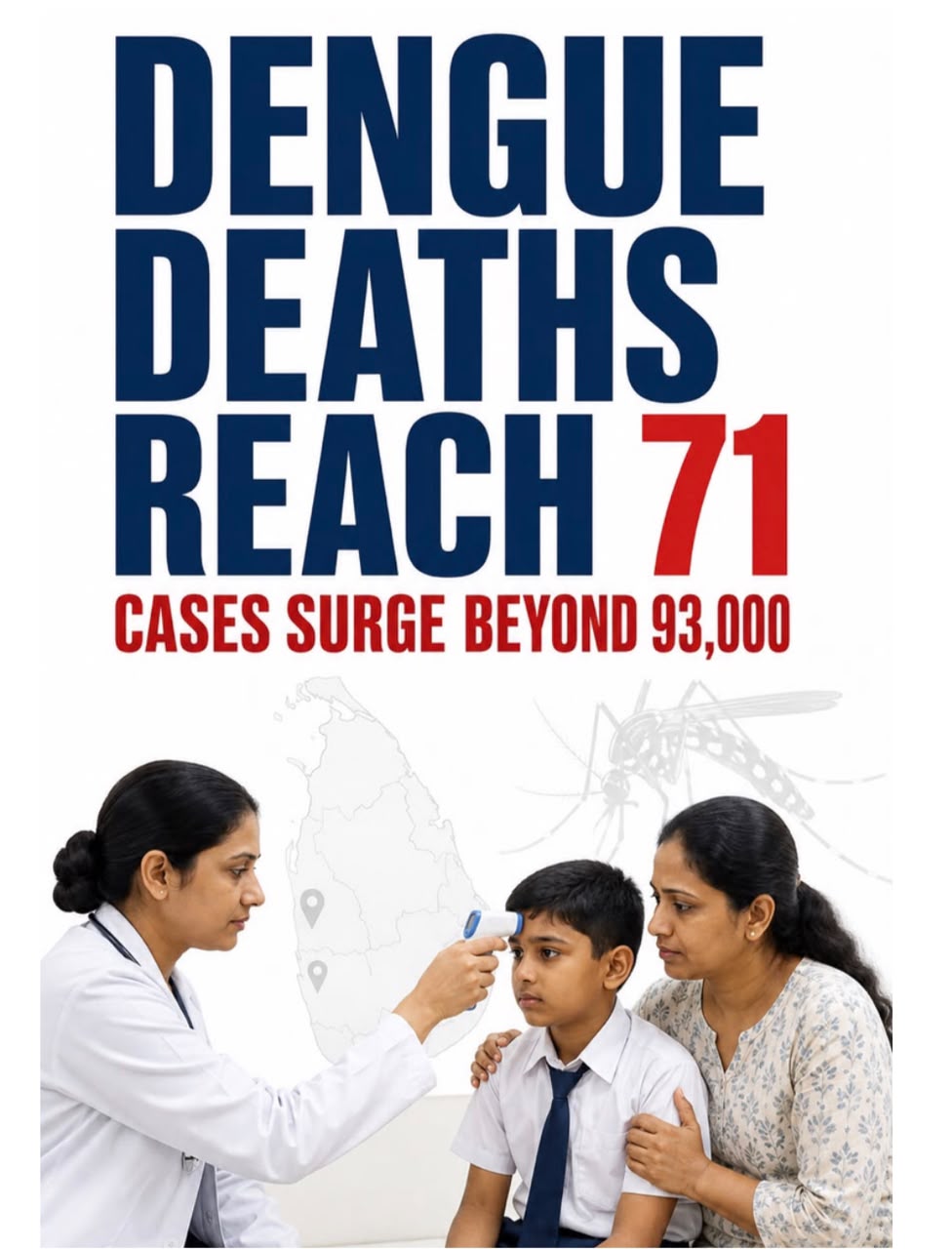
Sri Lanka’s dengue death toll has risen to 71, with 93,115 infections recorded since the beginning of the year, according to the latest figures released by the National Dengue Control Unit.
The Western Province continues to carry the heaviest burden. Gampaha has reported 19,825 cases, while Colombo has recorded 18,475. Together, the two districts account for more than two out of every five infections reported nationally.

August has already produced 7,777 cases. This follows the severe mid-year escalation that forced hospitals to expand capacity and brought the armed forces into mosquito-control operations. Air Force drones have been used to identify rooftop breeding sites, while soldiers, police officers and health inspectors have participated in neighbourhood inspections.
Yet the latest numbers show that the outbreak remains far from contained.
Sri Lanka has now moved uncomfortably close to the 100,000-case threshold, despite months of warnings, inspections and emergency interventions. The numbers also raise the question of whether responsibility is being placed too heavily upon individual households while construction sites, blocked drains, abandoned properties and poorly maintained public spaces continue to provide breeding grounds.
The present outbreak is already the country’s worst in nearly a decade. Health authorities have linked its severity to the more virulent DENV-2 strain, unplanned urbanisation and the environmental disruption left by Cyclone Ditwah.
The immediate requirement is medical vigilance. Anyone experiencing persistent fever, severe abdominal pain, vomiting, bleeding, unusual tiredness or difficulty breathing should seek medical advice without delay.
The larger question is institutional. Seventy-one people are dead and more than 93,000 have fallen ill. At some point, an annual “dengue season” must stop being treated as though it were an unavoidable act of nature.