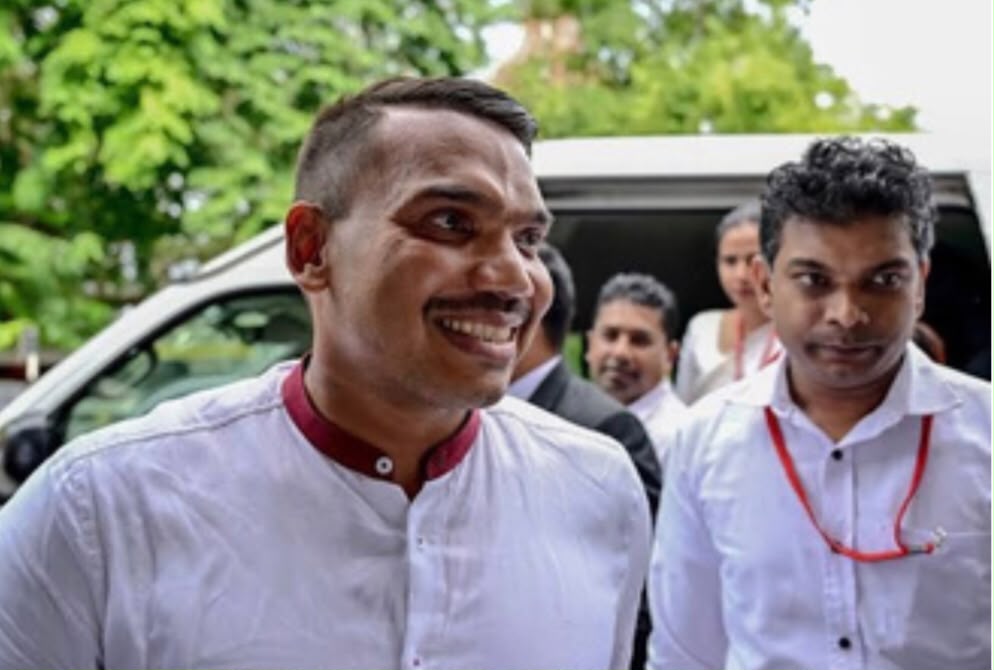
Namal Rajapaksa will spend at least another week in remand custody after the Colombo Magistrate’s Court yesterday extended his detention until September 30. The investigation concerns an alleged Rs 100 million payment linked to the SriLankan Airlines purchase of Airbus aircraft. The allegations remain unproved, but the case has now moved beyond the drama of an arrest into the more important question of what evidence investigators actually possess.
Sri Lanka Podujana Peramuna MP Namal Rajapaksa has been further remanded until September 30 as investigators continue their inquiry into an alleged Rs 100 million transaction connected to the controversial SriLankan Airlines Airbus procurement.
The Colombo Fort Magistrate’s Court extended the remand order yesterday after Rajapaksa was produced before court. He had originally been remanded following his arrest by the Commission to Investigate Allegations of Bribery or Corruption in connection with the investigation.
Submit Your Press Release
Get your company news, announcements, launches, appointments and events in front of a wider audience.


The allegation centres on approximately Rs 100 million which investigators say was received by a company connected to Rajapaksa. The money is alleged to have originated from funds associated with the Airbus transaction involving SriLankan Airlines.
Rajapaksa has denied wrongdoing. No finding of guilt has been made against him, and the allegations being investigated by CIABOC remain allegations unless proved through the judicial process.
That distinction becomes particularly important in a case involving one of Sri Lanka’s best-known political families.
The Rajapaksas dominated the country’s politics for much of the period following the end of the civil war. Namal Rajapaksa is not merely another suspect appearing before a magistrate. He is a serving Member of Parliament, the son of former President Mahinda Rajapaksa and a significant figure in the SLPP.
None of that should make prosecution more difficult if evidence exists. Equally, none of it reduces the evidentiary burden on investigators.
The Airbus controversy itself stretches back years and concerns SriLankan Airlines’ decision to acquire aircraft as part of an ambitious fleet-renewal programme. International investigations into Airbus subsequently exposed corrupt payments and arrangements in several jurisdictions, placing transactions connected with SriLankan Airlines under renewed scrutiny.
The current investigation concerns the alleged movement of money connected to that wider transaction. What matters now is establishing the documentary trail.
If Rs 100 million was transferred, investigators should be able to demonstrate where it originated, through which accounts it travelled, which company ultimately received it and what commercial explanation, if any, existed for the payment.
Those are questions that banking records, company documents, contracts and communications should be capable of answering. That is why the extension of remand should not become the story in itself.
Sri Lankan politics has repeatedly treated arrest and remand as though they were synonymous with conviction. They are not. Remand is a procedural decision made while an investigation or prosecution continues. It is not a judicial declaration that the accused committed the offence alleged.
The opposite mistake is equally dangerous. Political status should not create a presumption that an investigation is politically motivated merely because the person under investigation belongs to a former ruling family or sits in opposition.
The appropriate standard is much simpler. Follow the money and follow the evidence.
If investigators possess evidence linking Rajapaksa to an unlawful payment, that evidence should ultimately be presented before a court and tested. If the evidence does not establish criminal responsibility, the legal process must say so.
President Anura Kumara Dissanayake and his Government have repeatedly emphasised that no person should stand above the law. That principle will be tested not by how many prominent political figures are arrested, but by whether investigations are conducted professionally and prosecutions are capable of surviving judicial scrutiny.
The same principle protects Rajapaksa.
that money connected to aircraft procurement was improperly diverted therefore concerns more than the reputation of an individual politician.
It concerns taxpayers.
The next important date is September 30, when Rajapaksa is due to be produced before court again. By then the question should not simply be whether another remand order is requested.
The more important question is whether the investigation is moving closer to establishing what happened to the Rs 100 million at the centre of the allegation.
For now Namal Rajapaksa remains in remand, not convicted. The State has made a serious allegation against a serving Member of Parliament.
It must now prove it.