
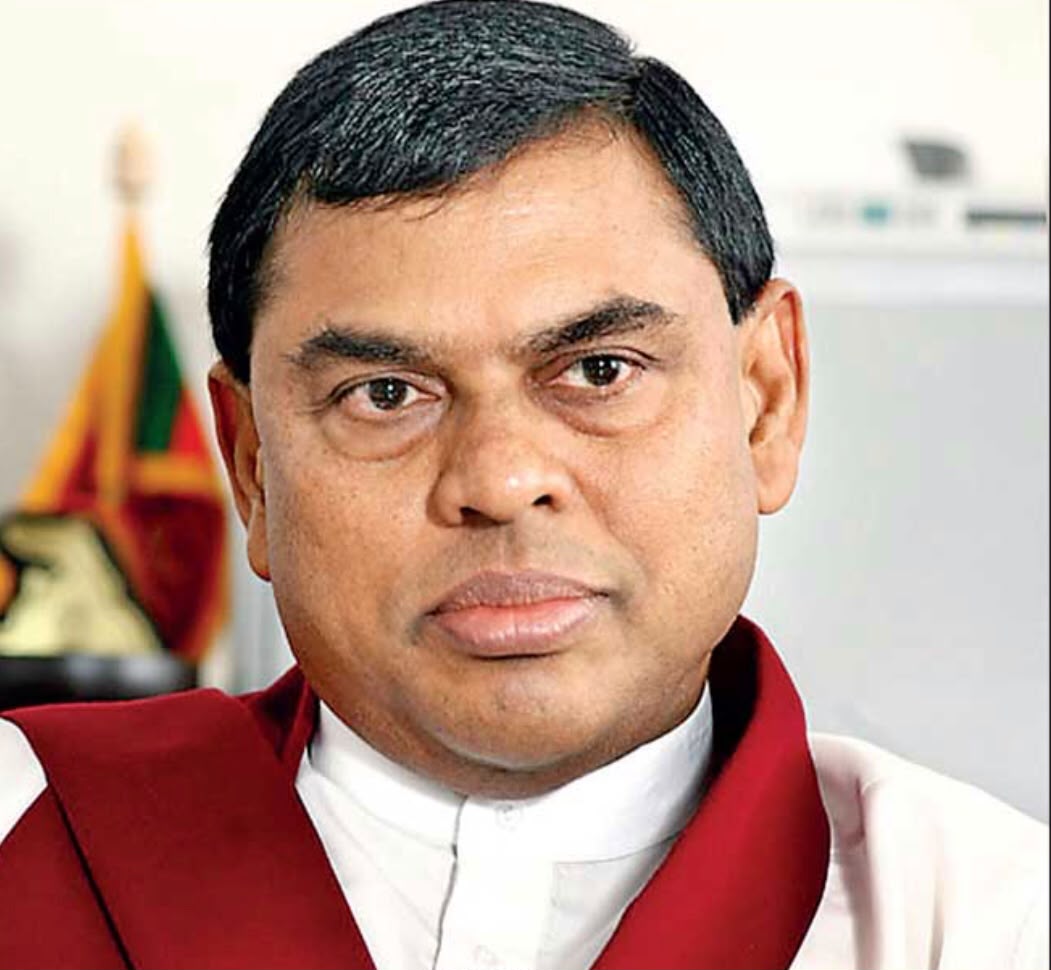
The Colombo Fort Magistrate’s Court has directed investigators to pursue an Interpol Red Notice against former Minister Basil Rajapaksa in connection with allegations that public funds belonging to the Sri Lanka Tourism Promotion Bureau were improperly used for political purposes. The proceedings concern approximately Rs. 7.8 million allegedly spent on T-shirts associated with the 2014 Uva Provincial Council election campaign, raising renewed questions about the use of State resources for party political activities.
The Colombo Fort Magistrate’s Court has directed investigators to take steps towards obtaining an Interpol Red Notice against former Minister Basil Rajapaksa in connection with allegations involving the misuse of public funds belonging to the Sri Lanka Tourism Promotion Bureau. The proceedings concern approximately Rs. 7.8 million allegedly spent on the purchase of T-shirts associated with political activities during the 2014 Uva Provincial Council election campaign. The court has also directed that the necessary arrest warrants be prepared in Sinhala and English to facilitate further action. Rajapaksa, a former Minister of Economic Development and a prominent figure in the Sri Lanka Podujana Peramuna, is reported to be residing overseas.
The authorities are seeking international assistance to secure his attendance before the Sri Lankan courts, but the practical consequences of an Interpol Red Notice require careful explanation. Such a notice is not an international arrest warrant and does not automatically authorise police officers in another country to detain a person. It is a request circulated through international police cooperation channels asking member countries to locate and provisionally arrest an individual pending extradition or other lawful proceedings. Whether a foreign jurisdiction acts upon that request depends upon its domestic laws, applicable treaties and the circumstances of the case.
Submit Your Press Release
Get your company news, announcements, launches, appointments and events in front of a wider audience.


The pursuit of an Interpol notice does not establish criminal guilt, and Rajapaksa remains entitled to the presumption of innocence and the full protections available under the law. The allegations must be established through admissible evidence before a competent court, and the prosecution must satisfy the legal requirements applicable to the offences alleged. These distinctions are particularly important where proceedings involve politically influential individuals and attract substantial public attention. Public interest in accountability must not be confused with a presumption that every allegation made against a former political leader is necessarily true.
Nevertheless, the underlying allegations raise a question that has troubled Sri Lanka for decades: where does the State end and the political party begin? Public institutions are established to perform functions authorised by law, and their budgets are allocated for specific purposes. The Sri Lanka Tourism Promotion Bureau exists to promote tourism and advance the country’s interests as a destination, not to finance political campaigns. If public money was diverted from its authorised purposes, the matter would concern more than the amount allegedly involved.
Successive administrations have faced allegations concerning the use of public vehicles, government employees, official premises and State expenditure for political activities. The problem has never been confined to one political party or one administration, although those exercising power have often found it convenient to remember the misconduct of their predecessors more clearly than their own. The distinction between government resources and party resources is fundamental to democratic accountability. Taxpayers are not required to subsidise election campaigns merely because a political organisation happens to control the machinery of government.
The present administration has promised to dismantle the culture of political privilege and misuse of public resources. That commitment must be demonstrated through consistent enforcement of the law, including where allegations concern individuals associated with the Government or its political allies. Investigations must proceed without political interference, while accused persons must receive the protections necessary for a fair trial. A system that applies different standards according to political affiliation would merely reproduce the failures it claims to have corrected.
The passage of time also deserves attention because the allegations concern events dating back more than a decade. Delayed investigations can create difficulties in obtaining evidence, locating witnesses and ensuring that proceedings remain fair to all parties. They also weaken public confidence in the ability of the State to respond promptly when allegations of wrongdoing arise. The pursuit of international assistance may be necessary, but it cannot conceal the broader question of why proceedings concerning alleged misuse of public funds have taken so long to reach this stage.
The public interest requires that the allegations be determined through lawful proceedings rather than becoming another prolonged political spectacle. If sufficient evidence exists, the prosecution should proceed and allow the courts to determine the matter. If the evidence is inadequate, that conclusion must also be accepted. Accountability is not measured by the number of arrest warrants issued, but by whether the justice system can establish the truth and apply the law without fear or favour.



