
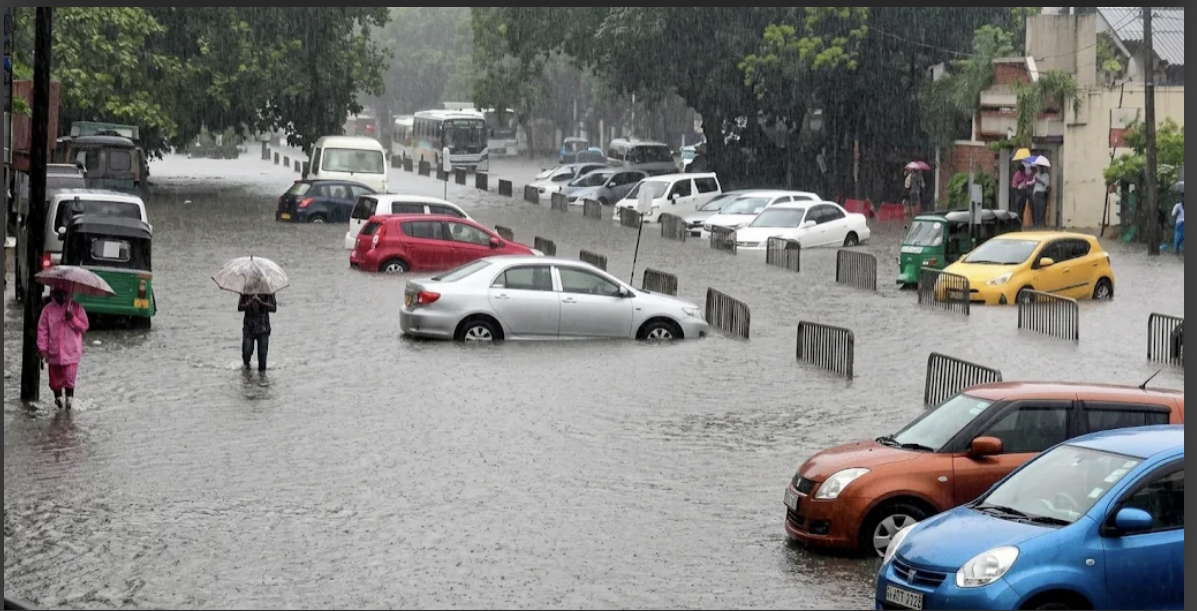
If your social media feed this week featured dramatic video clips of muddy floodwaters rushing past escalators and storefronts inside Colombo’s One Galle Face shopping mall, you were watching a cunning blend of genuine weather misery and digital fiction. Following days of severe cloudbursts that genuinely turned major thoroughfares across the capital into navigable rivers, Colombo Mayor Vraie Cally Balthazaar has announced that municipal authorities are preparing legal action against the creators and distributors of AI-generated deepfake videos designed to weaponize real civic anxiety for online clout.
The controversy centers on a circulating 14-second clip posted on Facebook and TikTok in the wake of torrential downpours that dropped 129 millimeters of rain within hours on November 6, followed by fresh storms on November 11. The viral footage purported to show knee-deep water swirling near the mall entrance and around an Under Armour store. To anyone who spent those afternoons wading through stagnant water on Galle Road or choking in bumper-to-bumper traffic outside, the visual looked entirely plausible. That is precisely why it worked.
However, local fact-checking organization Fact Crescendo Sri Lanka quickly picked the footage apart after staff members at multiple One Galle Face retail outlets confirmed that water never actually breached the indoor shopping complex. While minor rainwater pooling was managed in the basement parking areas during the peak storms, the high-end retail interior remained entirely dry.
Submit Your Press Release
Get your company news, announcements, launches, appointments and events in front of a wider audience.


Technical analysis of the viral clips revealed classic hallmarks of artificial intelligence manipulation. Independent detection tools flagged a 99 percent probability of AI generation in the opening frames, pointing to distorted facial features, warped brand lettering, and unnatural fluid dynamics. Google’s SynthID Detector also confirmed artificial editing across both video and audio tracks, proving that bad actors had stitched synthetic disaster imagery onto real-world weather events to maximize online engagement.
Mayor Balthazaar’s warning underscores a growing headache for municipal leaders as generative AI lowers the barrier for fabricating urban crises. When flash floods hit low-lying areas of Colombo and choked traffic around Galle Face, real infrastructure challenges demanded genuine attention from city engineers and disaster management teams. Instead, emergency services and mall administrators found themselves wasting valuable time debunking digital fabrications that threatened commercial activity and public confidence.
The real danger of modern deepfakes is not that they invent catastrophes out of thin air, but that they take a very real, painful grain of truth (like the capital’s persistent drainage failures) and inflate it into a pixelated panic. Real rain and flooded roads are bad enough on their own; viewers would do well to double-check their feeds before hitting share on digital floods that exaggerate a bad commute into a Hollywood disaster movie.



