Parliamentary tradition is a sacred, if occasionally tedious, beast in Sri Lanka, where everyone usually knows their script before stepping up to the dispatch box. So when the Second Reading debate on the 2027 National Budget kicked off in the legislature today, November 13, Prime Minister Harini Amarasuriya immediately seized on a glaring absence that broke years of legislative custom.
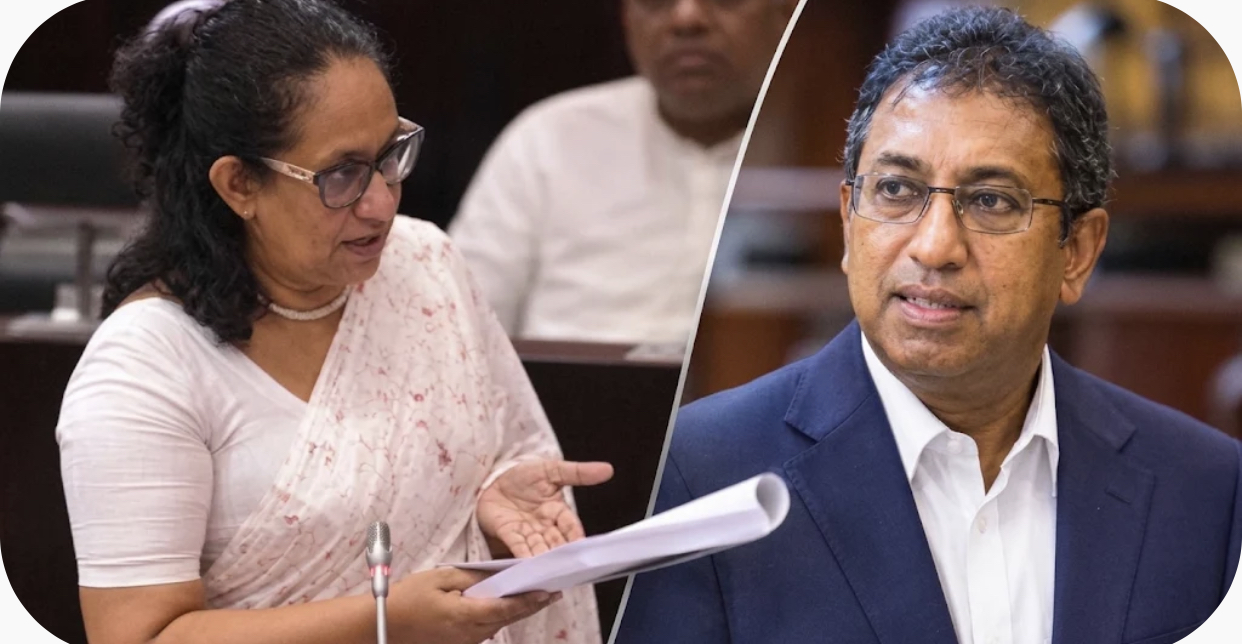
Addressing the House, the Prime Minister openly questioned why Samagi Jana Balawegaya (SJB) MP Harsha de Silva did not deliver the Opposition’s opening response to the budget. Pointing out a practice she had observed since entering Parliament in 2020, Dr. Amarasuriya noted that Dr. de Silva has traditionally led the charge for the opposition benches following every budget speech, setting the analytical tone for economic critiques. Watching Opposition Leader Sajith Premadasa handle the initial remarks instead prompted the Prime Minister to ask whether the departure signaled a deeper ideological shift within the SJB or a quiet internal disagreement over how to tackle the government’s 7.93 trillion rupee spending plan.
The backdrop to this parliamentary head-scratching is a jittery opposition trying to find its footing amid a complex economic recovery. In the days leading up to the budget presentation, SJB economic policy teams and associated think tanks like the Advocata Institute had been leaning hard into critiques of indirect tax burdens, slow state execution, and tax exemptions for luxury developments like Colombo Port City. Yet when the debate actually opened, the Prime Minister accused the Opposition Leader of leaning into misleading narratives regarding the International Monetary Fund and the World Bank rather than presenting a coherent alternative fiscal blueprint.
Submit Your Press Release
Get your company news, announcements, launches, appointments and events in front of a wider audience.


The government clearly relished the chance to poke at opposition unity, stating that they were eager to hear Dr. de Silva’s eventual contribution to determine whether backbenchers and senior economic spokespersons in the SJB actually share the leadership’s stated positions. For an opposition trying to project itself as a credible government-in-waiting while navigating internal leadership dynamics and shifting policy stances, a disorganized start to the biggest debate of the legislative calendar is an avoidable stumble.
As the seven-day Second Reading debate rolls on toward the final vote on December 14, the real question is whether the opposition can pivot from scoring procedural points over who gets to hold the microphone to offering a rigorous, data-driven critique of a budget that touches every household in the country. For now, the ruling benches are more than happy to sit back and watch the SJB argue over who reads the script.