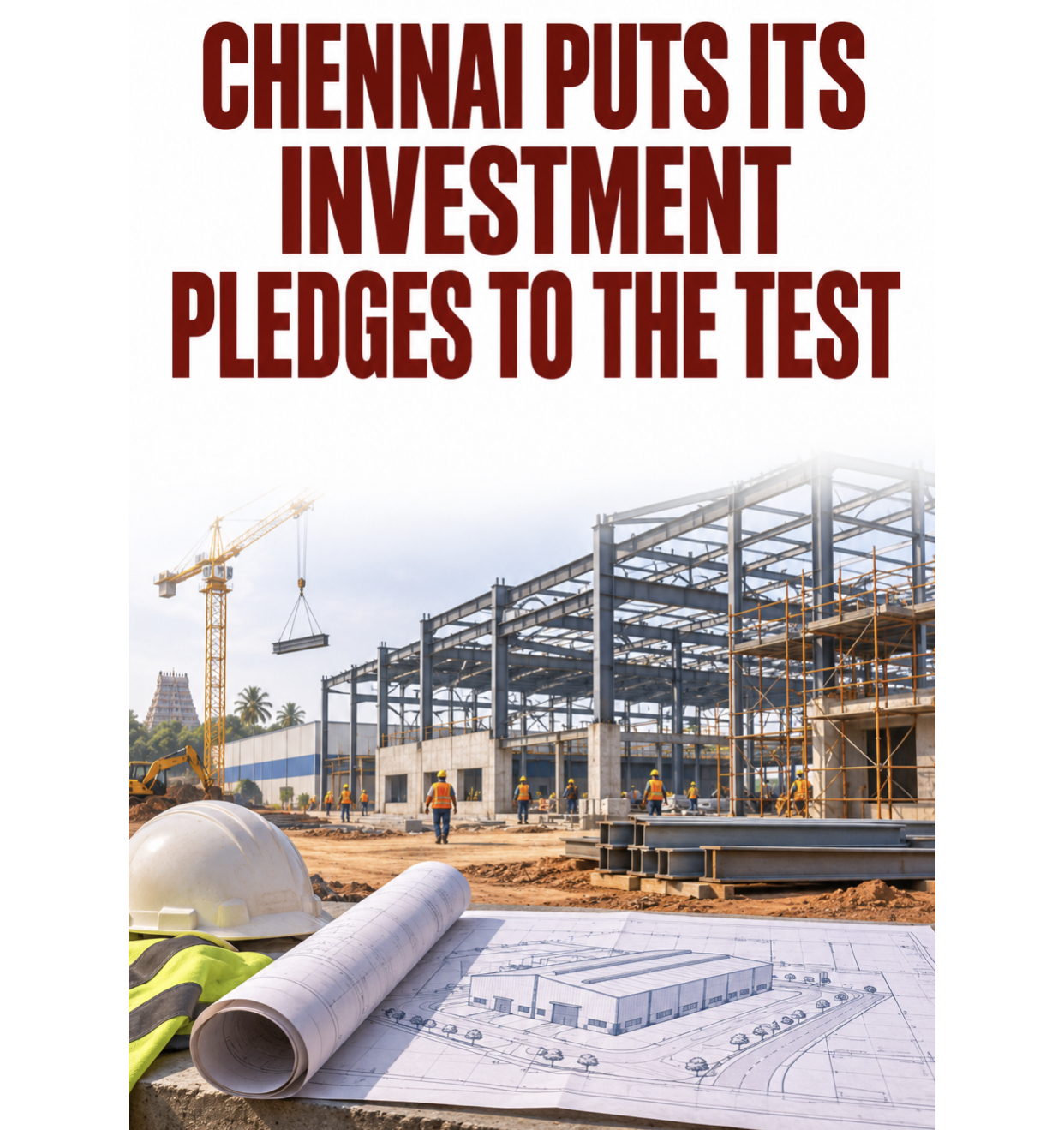
Tamil Nadu is scheduled to hold its second VETTRI Investment and Conversion Conclave in Chennai today, with the state government shifting attention from signing investment agreements to getting projects under way. The first conclave announced proposals worth ₹1.02 lakh crore. The industries department says this meeting will focus on turning commitments into capital spending and jobs. Ahead of the event, the government had yet to disclose how many projects would come up for review or their combined value.
The distinction is consequential for workers, suppliers and local authorities. A memorandum can record a company’s intention to invest before it has bought land, secured financing or settled on a construction date. For a family expecting a new employer to start recruiting, the useful information is when hiring might begin. For a local supplier considering whether to buy machinery, it is when the factory expects to place orders.
Industries Minister S. Keerthana has said the administration wants to move investment commitments into implementation. Bringing company representatives and public officials together can help when a project has stalled because responsibility lies across several departments. A manufacturer may have an agreement with the state and still need a road connection, a dependable power supply or permission to draw water. Each issue may have a different owner and a different timetable.
Submit Your Press Release
Get your company news, announcements, launches, appointments and events in front of a wider audience.


Speed also depends on which problem the Government is trying to solve. An investor waiting for a routine document should be able to find out who has it and when a decision is due. Where a project raises questions about water use, pollution or land acquisition, people affected should have access to the proposal and time to raise objections. Publishing each stage of the process would help distinguish administrative delays from decisions that require proper scrutiny.
Tamil Nadu could publish a project register that follows commitments from the first agreement through to construction and production. It could record expected and actual investment, distinguish temporary construction work from permanent jobs, and show when a company scales back or withdraws a proposal. The state could also identify where a delay sits with an agency and where a company has yet to make a final decision. Commercial details can be protected while the public sees whether projects are moving.
Sri Lanka has reason to watch the Chennai exercise. An investor comparing locations needs a credible date for starting production, including a realistic timetable for land, utilities and approvals. Colombo could publish the same milestones for major projects approved here, including those announced with government incentives. That would give prospective investors a clearer view of how the process works and give Parliament a way to examine what public concessions have delivered. The immediate test for Chennai is whether today’s meeting produces dates and decisions for projects people can track after the conclave ends.