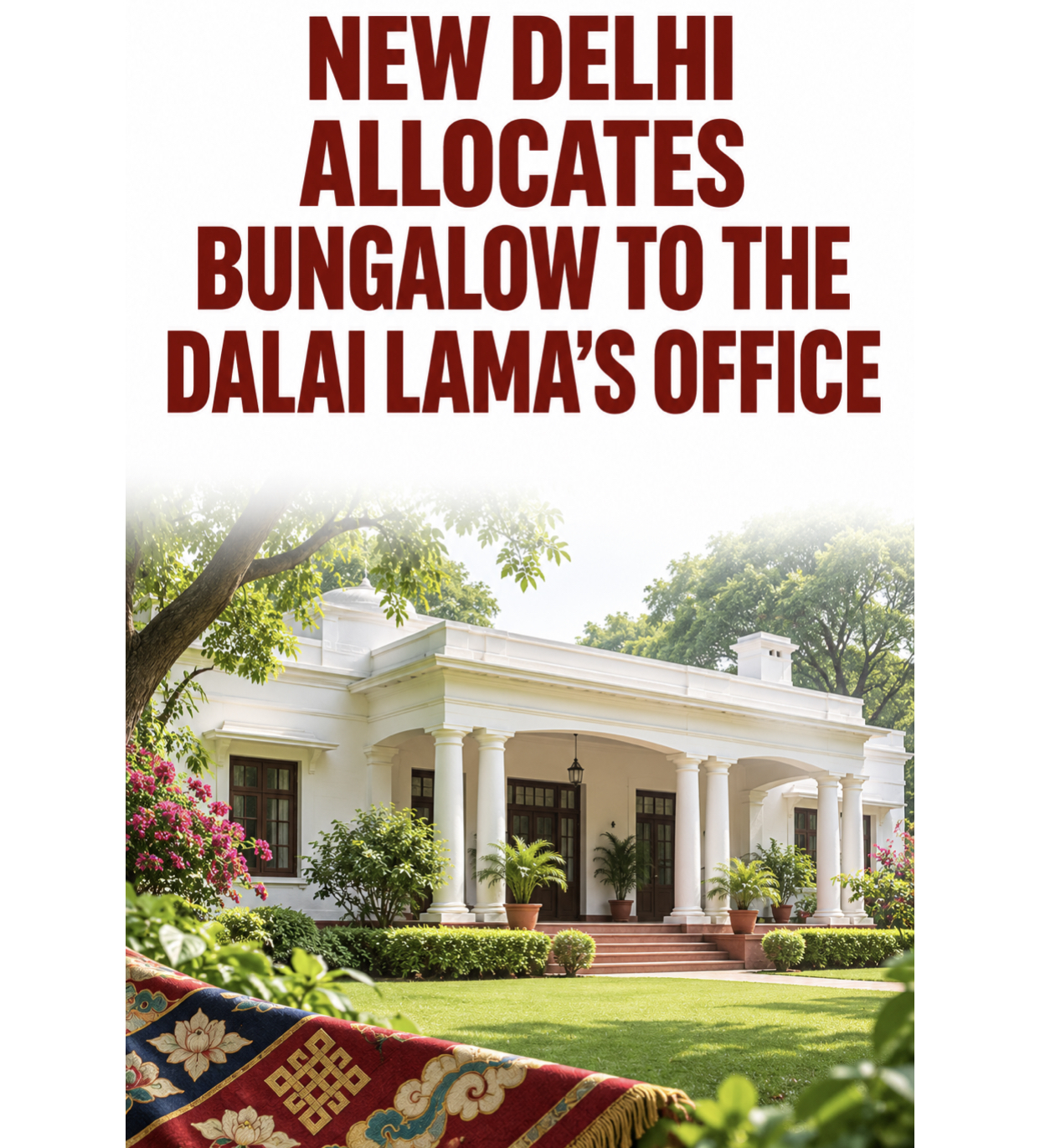
India’s Union government has allocated a bungalow in central New Delhi to the Dalai Lama’s office. The property, at 20 Pandit Ravi Shankar Shukla Lane, was renovated over several months. A nameplate bearing the words Gaden Phodrang was visible at the entrance when a reporter visited on Monday. The allocation gives the Tibetan spiritual leader’s office a base in the Indian capital.
Gaden Phodrang was registered as a trust in 2011, when the Dalai Lama relinquished his political authority. That history matters to understanding who will use the property. The Dalai Lama is the spiritual leader of Tibetan Buddhism, while the office is an institution with its own administrative work. A permanent address in Delhi can make that work easier to conduct in the capital. The details disclosed so far concern the office premises.
A government bungalow in central Delhi also has significance beyond its physical size. The area houses ministries, official residences and diplomatic missions. For an office that needs to communicate with officials and receive visitors, location can make a difference to everyday business. The exact functions to be carried out at the bungalow, and the timetable for putting it into regular use, remain to be set out publicly.
Submit Your Press Release
Get your company news, announcements, launches, appointments and events in front of a wider audience.


The allocation takes place against a long diplomatic history. India has hosted the Dalai Lama since he fled Tibet in 1959. His presence in India has given Tibetan religious institutions space to continue their work, and Tibet remains a sensitive subject in relations between India and China. A decision involving his office can therefore draw attention beyond Delhi property administration. The terms the Indian government sets for the premises, and any statements it makes about their purpose, will help clarify the significance it attaches to the decision.
The most useful detail now would be an explanation of the arrangement from the authorities responsible for the property and from the trust. Knowing who holds the allotment, what activities it covers and when the office expects to start using the building would give the public a clearer account. It would also help people who deal with the trust know which matters they can take up in Delhi and how to contact the office once it is operating.
For now, the visible change is an identifiable address for Gaden Phodrang in central Delhi. The institutional change that gives it context happened in 2011, when the Dalai Lama handed over his political responsibilities. Keeping those facts in view makes it possible to understand both the practical value of the new premises and why a decision about a single bungalow attracts attention well beyond the street on which it stands.