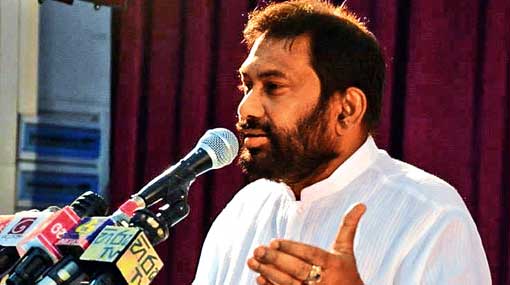
Mr. Ranjith Wickramasinghe, a Sri Lankan professional with many years of expatriate experience and now firmly back in Sri Lanka, is using his knowledge to propose an innovative and creative strategy to assist Sri Lanka and its people in this time of economic difficulty.
He calls it the ‘SLiMDOE strategy”. SLiMDOE- Sri Lanka’s Multi- billion Dollar Ocean-air Expressway is the name Ranjith has given to the 500 mile passage in the major east-west shipping route that brushes past Dondra Head of Sri Lanka. Thus SLiMDOE is used to identify the short cut that cargo ships take when sailing past Sri Lanka from East Asia through South Asia, to Africa and Europe. This was part of the famous marine silk route that connected China with Europe. The marine silk route is thought to be at least 2,200 years old.
It is interesting to explore a bit of history of the ancient maritime route before we get into hard economic and environmental facts. I believe that the narratives of history and stories around it gives the SLiMDOE proposal a magical touch.
Submit Your Press Release
Get your company news, announcements, launches, appointments and events in front of a wider audience.


The story starts with some Brahmi inscriptions found in the present day ‘Godavaya’ temple, situated between Ambalantota and Hambantota. The world- renowned Sri Lankan archaeologist, Professor Senarath Paranavithana helped to start the recent narrative regarding the ‘history of SLiMDOE’ by deciphering the ‘Godavaya inscriptions’ in 1983. The main message of the inscriptions was that King Gajabahu 1 had ordered that customs duty collected at the ‘Gotapabbata’ (the ancient name for Godavaya) harbour be donated to Gotapabbata temple.
More information on the harbour surfaced in 1994, when a team of marine archaeologists from Bonn University in Germany and Sri Lanka explored the sea and land area around the Gotapabbata temple. They found an ancient landing jetty about 3+ metres in height constructed on stone pillars, a stone anchor, some Hun period Chinese pottery, a structure of an ancient customs house and clay customs seals bearing the emblem of a lion.
The wisdom of two local two fishermen cum amateur divers helped to move the story forward. One day, in the course of daily work, the two Lankans had come across a strange stone object. They had promptly brought it to the notice of Sri Lankan government officers. Some believed that the stone quern (a simple grinding mill made of two circular stones) would have been a bigger version of a ‘Kurakkan gala’- a stone used to grind coarse grain like millet. Archaeologists surmised that the stone querns would have been used to balance ships.
This raised further interest about the Gotapabbata harbour, among marine archaeologists. In 2008, the last piece of the Gotapabbata puzzle was found when a team of divers and archaeologists from the Maritime Archaeology Unit of the Central Cultural Fund of Sri Lanka located a shipwreck at a depth of 33 metres, in the sea off the Gotapabbata (present name Godavaya) temple. In 2010, another survey of the sea around the wreck was conducted by a team of Sri Lankan, Indian, and Dutch marine archaeologists with UNESCO assistance.
With the shipwreck located, a comprehensive exploration was launched of the Godavaya shipwreck in 2012. A collaborative international team of maritime archaeologists from Sri Lanka, USA, France, and Turkey undertook to explore the shipwreck. They found ceramic bowls, stone querns or benches, black and red pottery remnants and glass ingots. ‘Carbon-dating’ placed the shipwreck to have occurred between the second century BC to second century AD. The Godavaya shipwreck is considered to be the oldest shipwreck in the Indian ocean. A stone quern (bench) salvaged from the shipwreck is now kept for public viewing in the Tissamaharama museum. In 2024, the Marine Archaeology Unit of the Central Cultural Fund of Sri Lanka launched a conservation and documentation initiative of the shipwreck with the assistance of US embassy in Colombo.
The Godavaya shipwreck confirmed the information given in the Godavaya temple inscriptions that the Godavaya harbour would have been a well- developed harbour in the maritime silk route and was a major maritime hub, which even had an organizational capacity to collect customs duty. The old Godavaya harbour lies close to the present- day Hambantota port.
The SliMDOE proposal by Ranjith Wickramasinghe, a professional Accountant, and a former Chairman of the Ceylon Shipping Corporation and the Sri Lanka Ports Authority, brings us to the present, and explores how Sri Lanka in its hour of economic need can use ‘an ancient sea resource’ to help itself. Advocating, championing, planning, and possible implementation of proposed SLiMDOE strategy would ideally require the Government of Sri Lanka singly or with the United Nations and IMF assistance to energetically liaise with international maritime institutions, other financial institutions, and organizations such as European Union and some key development partner countries to help access the proposed resources to mitigate the adverse effects of green house gases emitted by ships taking the SLiMDOE short- cut.
SLiMDOE is used by Ranjith Wickramasinghe to denote ” the short cut via Dondra Head located in the southern tip of Sri Lanka cutting through the exclusive economic zone (EEZ) and the territorial waters of Sri Lanka”. Every year there are approximately 60,000 ocean vessel crossings along this route, carrying 40% of global commerce. Approximately 40,000 commercial aircraft also fly over this route. The SLiMDOE proposal estimates that by taking this short cut global commerce is saving US $ 12 billion annually. Thus, global commerce has gained approximately $ 240 billion during the last 20 years, whilst no revenue has accrued to Sri Lanka.
Shouldn’t Sri Lanka be happy about helping world trade? So, what is the problem here, some would ask? However, there is a critical problem; the problem, due to its highly technical nature is mostly hidden from the public eye of Lankan and world citizen.
The problem is the effect of 100,000 SLiMDOE crossings burning eight to 10 million tons of fossil fuel for a year. SLiMDOE proposal estimates that SLiMDOE crossings burn approximately twice the amount of fossil fuel that Sri Lanka burns in a year. The SLiMDOE emissions in turn are estimated to release 25 million tons of Green House Gases (GHG).
In bringing to the Table the possibilities of using SLiMDOE as an economic resource to complement and supplement the IMF initiative to help Sri Lanka, it must be emphasized that the author of the SLiMDOE strategy initiative, totally and unconditionally supports the principle of the freedom of the seas concept. Therefore it does not mean that ocean going vessels should take a more circuitous route. This would make the problem more complicated as more GHGs would be emitted by that action and it would worsen the global GHG load.
However, the SLiMDOE proposal, also requests world citizen to view the problem from Sri Lanka’s and Sri Lankan people’s perspective too. Sri Lanka is perhaps the only country in the world that absorbs 200 % more GHG than it produces. This is serious. It affects the health of the people, and the economy, the ocean, agriculture, the climate and rainfall, as well as forest cover in Sri Lanka. This is a case in which Sri Lanka, the benefactor has now become the victim. Ranjith calculates the damage caused by the CHG dumped on Sri Lanka by passing vessels for a year to be four billion US dollars. This is based on the cost of decarbonizing carbon dioxide. May Sri Lanka too, benefit from this hidden ancient marine resource.
For those interested, the details of SLiMDOE are published on ISBN 978-99952-4-6 and www.ranjithwickramasinghe.com
(The writer graduated from the University of Ceylon, Peradeniya, in 1964 and took an MA in 1978 from the University of Reading. He worked as a journalist and later a Research Officer at ARTI before joining UNICEF in Colombo later serving in Uganda, China and East Timor till retirement)
(N.B. The writer says “to be transparent, I wish to state that the author of the ‘Slimdoe’ proposal is my younger brother, and that the article is written not due to sibling relationship, but as I do believe it to be a useful and beneficial strategy for Sri Lankans.)