
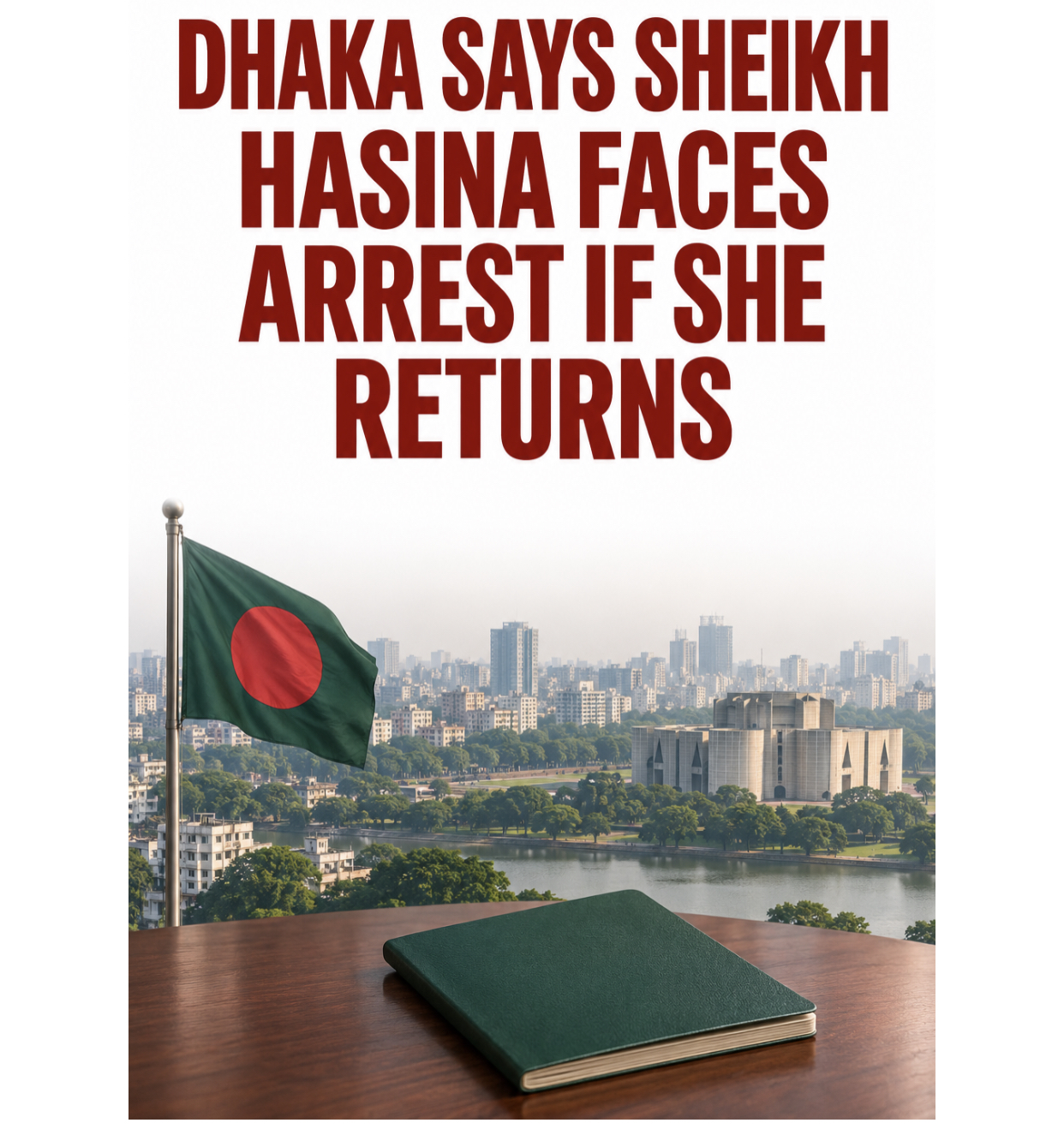
Bangladesh says it will arrest former prime minister Sheikh Hasina if she returns from India, where she has lived since fleeing the country in August 2024. State Minister for Foreign Affairs Shama Obaed Islam said Dhaka wants New Delhi to extradite Hasina under the treaty between the two countries. Hasina faces a death sentence in Bangladesh and has indicated she wants to return in December. Her requests for a new passport and identity card have been rejected.
The announcement brings two possible routes back into focus. If Hasina travels of her own accord, Bangladeshi authorities say she will be taken into custody on arrival. An extradition would require India to act on Dhaka’s request. India said in April that it was examining the matter and gave no immediate public response to the latest remarks. Hasina’s stated intention to return leaves open when, or by what route, she could do so.
The dispute stems from the uprising that ended her rule in 2024. The United Nations has said as many as 1,400 people may have been killed during the unrest. Hasina’s Awami League has since been banned. Its supporters called protests and rallies this month in favour of her return, culminating in a nationwide lockdown call on November 19. The renewed mobilisation has put pressure on the authorities to protect the public while handling a case that remains intensely divisive.
Submit Your Press Release
Get your company news, announcements, launches, appointments and events in front of a wider audience.


For families of those killed, accountability depends on a process that can establish responsibility and withstand scrutiny. That requires a clear public account of what has been decided by the courts and what remedies remain available to Hasina. If she is taken into custody, access to counsel and clarity over the next hearing would give the public a basis for following the case. Those safeguards carry particular weight where a death sentence is involved.
New Delhi faces a decision with consequences for its relationship with a neighbour. A public explanation of where the request stands, including which stage of the treaty process it has reached, would help reduce conflicting accounts. Dhaka can likewise explain the process it expects India to follow and the legal steps its own authorities would take if Hasina returned independently. Neither government needs to disclose every diplomatic exchange to give citizens a clear account of the procedure.
The immediate test will come if Hasina establishes a travel date or India takes a formal decision on extradition. Until then, Bangladesh has to manage the political tension at home and families affected by the violence of 2024 are still waiting for a dependable account of responsibility. How the authorities communicate and conduct the next legal steps will matter long after the dispute over her return is settled.



