BY Lionel Bopage
The cold war in the form that existed in the last century disappeared with the collapse of the state capitalistic model of ‘socialism’ as was practised in the Soviet Union and the Eastern Bloc. The world is left with a few countries that follow the same state capitalistic model. Despite the belief that the cold war ended with the collapse of the Soviet Union, a new cold war appears to have emerged with a vengeance. Though the protagonists of this appear to be the corporate capitalist interests of the United States and its allies versus the Russian Federation and its oligarchs, the real focus of the west’s fear and ire could be the Peoples’ Republic of China.
Since the collapse of the Soviet Union, the corporate capitalist system has reigned supreme almost all over the world, with its attendant severe socio-economic and cultural crises. Peoples’ democracy in the proper sense of the word has not been able to survive with the reappearance of unbridled capitalism in the corporate and state sectors. Such crises have made many western capitalist societies almost dysfunctional. Under open economy and free market conditions, economic disparity has continued to surge, mainly due to the regulatory environment imposed by the ruling corporate interests and the free hand given to them to increasingly monopolise global resources.

Historically and in the present era, governments elected by the populace that are not compatible with the interests of powerful capitalist conglomerates and states have been overthrown by killing tens of thousands of men, women and children to bring to power corporate friendly tyrants. The United Nations is also not immune; it has been made to toe the line of neo-liberal and conservative regimes with threats of sidelining it financially. It has been used against those who oppose the new neoliberal agenda. In this sense, the United Nations has turned out to be an impotent, stranded entity, a mere voyeur, made to watch impotently as blood is been spilt in every corner of the world.
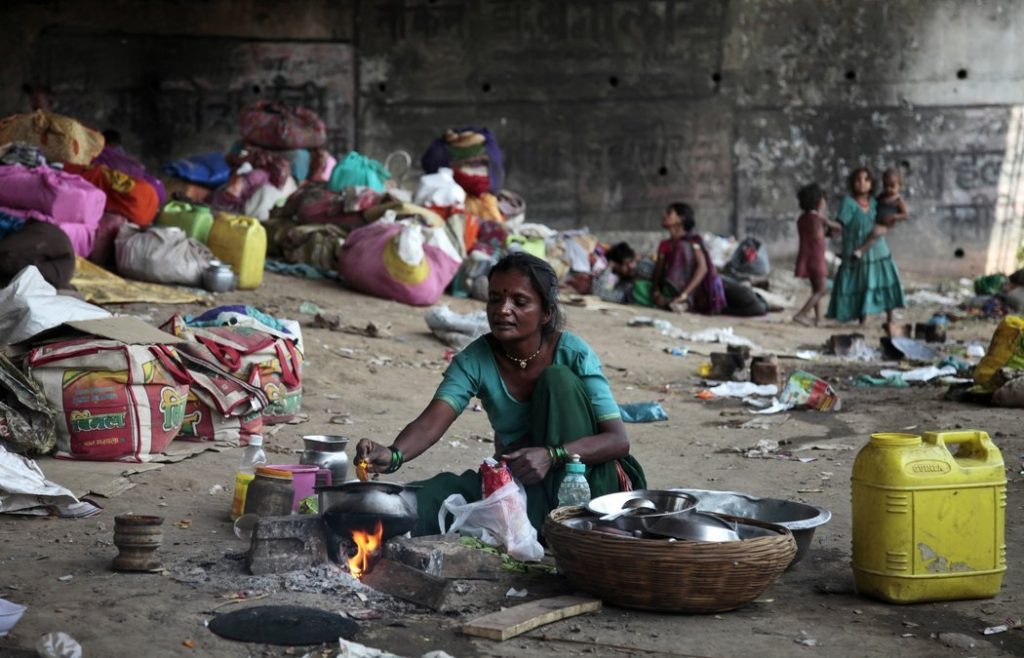
Economic Disparity
Corporate economists are neither concerned about humanity nor are they compassionate. They do not care about economic and income disparity; for them people are either consumers or units of production. Their logic is that people need to work harder to access upward social mobility. Income inequality they argue, keeps their motivation up. They assert that wealth redistribution through social security measures and other welfare programs are expensive. So, despite many faiths preaching compassion, the world has become a more miserable place. Opportunities for economic growth and development have tumbled further downwards.
International Monetary Fund (IMF)[1] and the Organisation for Economic Co-operation and Development (OECD)[2] are not institutions propagating humanitarian views. Yet, they have concluded that income inequality is affecting economic growth. The Center for European Economic Research (ZEW) has contested these findings, but realpolitik indicates that income inequality is on the rise and low-income households increasingly find it difficult to invest in higher education. Thus, their opportunities for upward social mobility are impaired.
According to the World Inequality Report[3], income inequality in all regions has increased in recent decades, and in the Middle East and sub-Saharan Africa inequality is obscenely high and persistent. Inequality in India and China are also of massive proportions. The gap between these countries and those in the west has become narrower, thus reducing global inequality. The global Gini Index[4] has dropped to 65 due to rapid economic growth in several Asian countries. By 2035, the Index is expected to drop to 61.
Rise of nationalism
Accordingly, global income inequality between nations though high is reducing, however the gap between the rich and the poor within countries has widened. Such trends as a whole and individually may explain the rise of populism, nationalism and protectionism in some parts of the world. Regimes pursuing a capitalist path of development have found it difficult to reverse or control this trend of increasing inequality. As recommended and sometimes demanded by the IMF and the World Bank, structural reforms in the form of privatisation of public assets have been carried out in many such countries with devastating results impacting on social fabric.
Regimes in Sri Lanka have pursued a similar path. The global experience during the past several decades is that such measures have made these countries rich as a whole, but with income inequality predominating. In this process, governments have become poorer. According to the World Inequality Report, this is one of the major factors restricting the ability of regimes in tackling inequality.
The current situation in Sri Lanka exemplifies this process. It is characterised by the loss of confidence in both state and corporate sectors and institutions, erosion of social bonds and increasing uncertainty about the future. Widening inequality has significantly affected economic growth and macroeconomic stability. Inequities related to accessing education, health care, and finance have become prevalent. Thus, certain segments of society are being subject to persistent disadvantage.
This situation usually leads to concentration of political and decision-making power in the hands of a few. This could lead to suboptimal use of human resources and cause political and economic instability. In turn, this will obstruct the ability to absorb foreign direct investment, which the capitalist governments mainly rely upon. Misery, poverty, and hopelessness could become pervasive in such a society. This provides an ideal environment for demagogues to raise their ugly heads.
These demagogues will make high pitch noises like saviours, without providing any solutions of substance. Nevertheless, such demagogues can raise a glimmer of hope among the ones whose lives have been adversely affected by this inequity. These nationalistic divisive demagogic leaders can emanate from any ethnic or religious background. Even if they utilise something that looks like a policy, it is solely a tactic used for grabbing power. Once in power they ditch or forget these policies, like those pledging to improve citizens’ economic circumstances and to eliminate their economic exploitation.
The 2008 economic recession that is considered the largest since 1929 created serious political repercussions. As a result, fundamentalist nationalist and religious currents came to the fore in many parts of the world. National and religious supremacy came to be asserted through violent extremism, mostly authoritarian and gave rise to many fascist trends. Simultaneously, political sentiments of certain segments of populations started moving towards extreme right-wing ideologies. Centralisation of decision making power in the hands of an autocrat as discussed is a manifestation of an extreme form of nationalism associated with fascist inclinations.
Concentration of power in the hands of an autocrat can be achieved via presidential and parliamentary elections or through extra parliamentary means. In the US, mostly racist fundamentalist right-wing groups brought Donald Trump to the Presidency. In many Nordic countries right wing groups have been elected to govern. Turkey extended the presidential term and also delegated prime ministerial powers to Tayyip Erdogan. Russian Federation concentrated power in Vladimir Putin’s hands and China made Xi Jinping president for life. Much closer to Sri Lanka, India, despite his hands being stained with Gujarati Muslim blood, Narendra Modi was made the Prime Minister.
Fascism
Fascism is based on the superiority complex of a nation bound by race, ethnicity or culture. This nationalist ideology is upheld by an anti-democratic totalitarian state. A fascist state needs to be totalitarian to ensure that its citizens support controlling aspects of their lives such as leisure time, education and political activity to ensure their support for the regime. Democratic elections do not need to ensure that candidates have national interests at heart. Parliament can become a talk shop and a rubber stamp instead of being a forum that devotes time to discussing, formulating, enacting and implementing policies. If other parties exist, pursuing an ultranationalist goal may be challenged; hence the need not to have other competing parties in parliament.
Democracy can be weak when a regime is incompetent or unresponsive, or when democratic traditions are not entrenched in the social fabric of a country. As a result, citizens become disenchanted and are willing to abandon democracy for another ‘stronger’ and ‘stricter’ regime. Fascism in the guise of ultra-nationalism flourishes in such an environment where democracy is weak, and nationalism is strong. This provides an ideal environment for fascism to replace the weak regime and effortlessly flourish for some time.
How does one come to support demagoguery? When income inequality prevails, most people, especially those at the lower end of the income spectrum find it extremely difficult to meet their needs, whether they are basic economic needs, psychological or self-actualisation. So, it is not surprising that fundamentalism, discrimination, racism and sexism become prevalent in society. Humanity at one time or another has had to confront such issues. When faced with socio-economic and political crises, people will use whatever means available to realise their needs. That is when people start relying on demagogues. That is how fascist trends have established roots in many parts of the world.
Over the past several decades in the western world, and certainly before that in some countries in Asia, totalitarian currents have surged under many pretexts. Humanity easily becomes blind when they cannot satisfy their survival needs. This was the post-World War 1 scenario in both Germany and Italy. Italian and German democracies and democratic traditions were only recent and had weak roots. Unemployment grew with the economic crisis post-World War 1. The Treaty of Versailles made Germans culpable for starting World War 1. They had to accept punitive reparations and significant territorial concessions. Italians contended that they were not bestowed with the territory that should have been awarded to them. Feeling humiliated, national resentment became omnipresent.
The Fascist and Nazi parties promised to restore their respective country’s national greatness. Hence, Italians and Germans started supporting fascism. Germany and Italy pursued their national superiority complexes via the Italian Fascist Party and the German Nazi Party. Benito Mussolini, the leader (Il Duce) of the National Fascist Party intended to “guide the material and moral progress of the [Italian] community.”[1] Adolf Hitler (der Führer) of the National Socialist German Workers’ Party wished to re-position the German nation as “the culture-founder of this earth.”[2] They wanted the loyalty to their nations to be above and beyond religion and social class.
To realise such goals, they needed an anti-democratic totalitarian state that would decimate any prevailing democratic systems and institutions. Mussolini removed all political opposition by employing his secret police and banning worker strikes. He and his followers of the Italian Fascist Party consolidated power by enacting laws and employing violent means that transformed the nation into a one-party dictatorship. His aspirations for creating a totalitarian state ended when he was deposed by the King. Yet, in a few months’ time, he established a pro-Hitler puppet regime in northern Italy and became the leader of the Italian Social Republic. In 1945, while fleeing with his mistress, he was captured and summarily executed.
Hitler believed that the Jewish people were responsible for the economic exploitation of Germans during World War-II. Germans not only accepted Hitler’s falsified version of events, but condoned his savage barbarism, simply because this was justification for their own personal economic benefit.
Courtesy- slguardian.org