From digital nomads and diminishing tourist stays to overcrowded prisons and repeated outbreaks of unrest, governing requires looking at the whole machine – not repairing whichever warning light happens to be flashing
There is something curious about the way public policy is increasingly discussed in Sri Lanka. A problem emerges, a response is announced and attention moves to the next problem. Yet government is not a used-car salesman entitled to offer the country a limited warranty, covering the engine while carefully excluding the gearbox, electrics and everything else likely to go wrong.
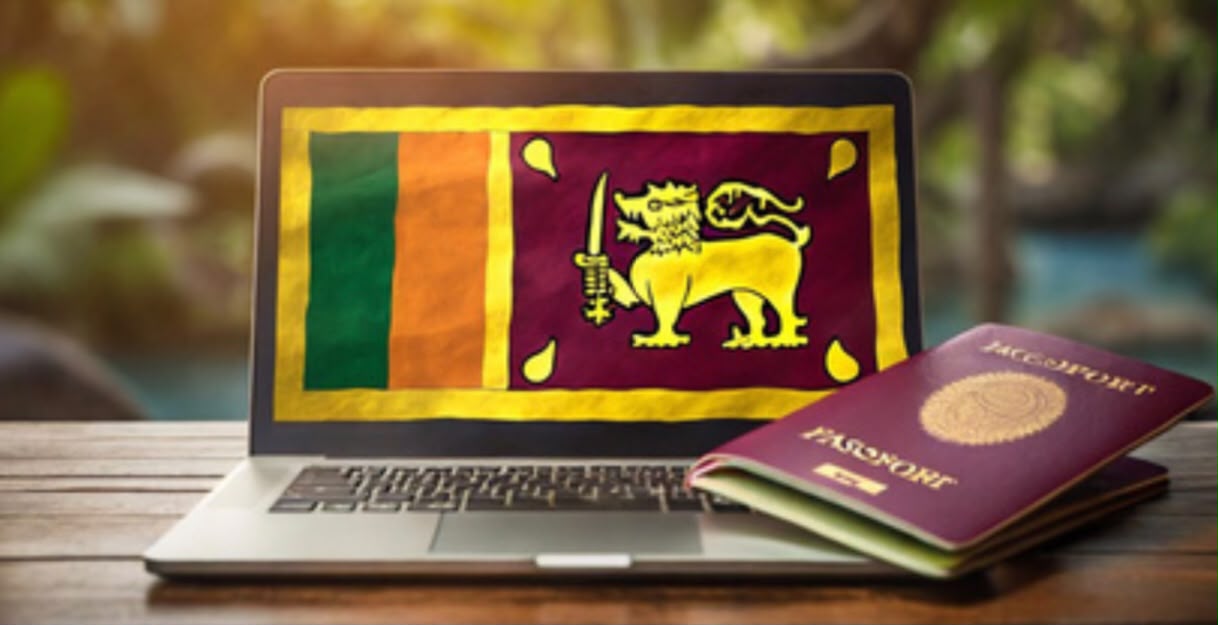
Take tourism. Sri Lanka wants more visitors, more foreign exchange and, understandably, new categories of travellers. The Digital Nomad Visa therefore sounds attractive. It associates the country with a modern, internationally mobile workforce whose members can theoretically live here for extended periods while earning their incomes elsewhere.
But the real question is not whether Sri Lanka should welcome digital nomads. Of course it should. The question is what kind of digital nomad Sri Lanka is attempting to attract and what economic return the policy is designed to produce.
A qualifying income threshold of US$2,000 a month deserves scrutiny when measured against the country’s tourism ambitions. For two people travelling together, that figure can translate into remarkably modest daily spending capacity. If Sri Lanka is attempting to move towards higher-value tourism, policy should encourage precisely that outcome rather than simply adding another category to the arrival statistics.
That becomes still more relevant when the average duration of a visitor’s stay has reportedly fallen to a little over eight days. The headline arrival number may look impressive, but tourism economics cannot be measured by heads passing through immigration alone. How long visitors remain, how much they spend, where that money is spent and how widely the benefits travel through the economy matter considerably more.
The same need to examine the whole rather than its most convenient component applies somewhere considerably less glamorous: Sri Lanka’s prisons.
There has been too much kalabala behind prison walls at too many locations for every incident simply to be placed into its own convenient box. Negombo erupted. Mahara followed. Other disturbances and security concerns have placed the prison system under increasing scrutiny. At some point the question must move beyond what happened at each individual institution to what they have in common.
Is the common denominator overcrowding? Drugs? Organised criminal networks? Inadequate intelligence? Staffing deficiencies? Rival gangs? Corruption? Poor classification of prisoners? Or is it an unhealthy combination of several of them?
That is precisely why an investigation which confines itself to identifying who started a particular disturbance risks missing the larger danger. Government should be looking at the prison estate from above – drone-like, if you will – rather than examining each outbreak through the narrow window of the particular cellblock in which it occurred.
Overcrowding makes that examination urgent. Sri Lanka’s prisons have for years accommodated populations far beyond their designed capacity, with some measurements of the system placing occupancy at several times its intended capacity. Once human beings are compressed into institutions on that scale, almost every other problem becomes more difficult: security, sanitation, rehabilitation, medical care, segregation of dangerous offenders, protection of vulnerable prisoners and the ability of officers to maintain order.
Outside the Colombo prison complex stands a message declaring, in effect, that prisoners have human rights too. It expresses an important principle.
A prison sentence removes liberty; it does not remove humanity.
But when institutions are packed to multiples of their designed capacity, those words risk becoming an indictment rather than an aspiration. The State cannot proclaim the rights of prisoners at the gate while maintaining conditions inside that make the practical enjoyment of those rights increasingly difficult.
President Anura Kumara Dissanayake himself, while in Opposition, spoke of the rights of those held in correctional institutions and of the State’s responsibility towards people in its custody. The principle was correct then. Holding office now provides the opportunity – and imposes the responsibility – to give practical effect to it.
And herein lies the connection between two subjects that otherwise appear worlds apart.
Digital Nomads…
A Digital Nomad Visa cannot be judged merely because a visa has been created. Tourism cannot be judged merely by the number of arrivals. Prison reform cannot be judged merely by restoring order after another disturbance. Human rights cannot be satisfied merely by placing the correct words on a board outside a prison.
Government is the business of joining the dots.
If tourists are staying for only eight days, ask why and design policy to make them stay longer and spend more. If digital nomads are being invited, determine what kind of visitor Sri Lanka wants and what economic contribution the scheme should reasonably produce.
If prisons repeatedly erupt, stop treating every eruption as an isolated fire and determine what combustible material is common to them all. If prisons are grotesquely overcrowded, address the remand system, sentencing alternatives, rehabilitation, capacity and administration rather than simply deploying additional security after trouble begins.
A government cannot sell policy with a limited warranty. It owns the engine, the gearbox, the steering and the brakes.
The electorate bought the whole car.
Be that as it may.