
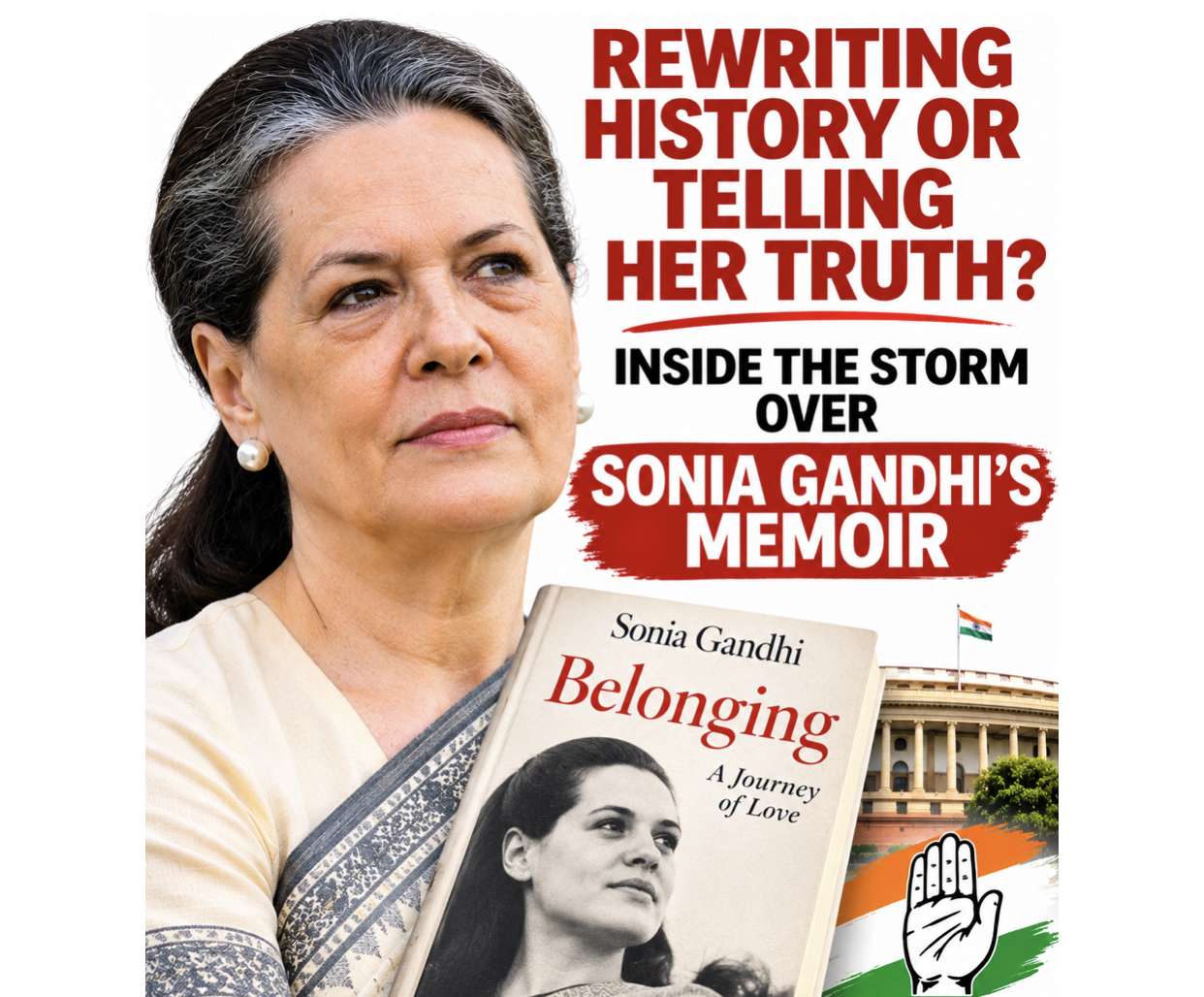
When a towering political figure who spent decades guarding her silence suddenly decides to put pen to paper, fireworks are practically guaranteed. That is precisely what unfolded following the November 10 release of Sonia Gandhi’s long-awaited memoir, Belonging: A Journey of Love. For years, critics dubbed the former Congress president the ultimate political enigma, a leader who wielded immense power from behind closed doors without ever explaining herself. Now that she has finally chosen to tell her story, the book has sparked a ferocious political and literary brawl across India.
The drama began months before the ink even dried on the first edition. In August, Penguin Random House India abruptly walked away from publishing the domestic edition after Gandhi flatly refused editorial demands to alter passages concerning Prime Minister Narendra Modi, the RSS, and border tensions with China. While Congress leaders cried foul over political censorship, Penguin insisted the breakdown stemmed from routine legal and editorial scrutiny. HarperCollins eventually stepped in to bring the book to Indian shelves alongside its global release by Alfred A. Knopf, turning the memoir into an instant bestseller before readers even turned a page.
Inside, the book traces Gandhi’s extraordinary arc from an Italian student in England to the matriarch of the Nehru-Gandhi dynasty, navigating the assassinations of Indira and Rajiv Gandhi, her reluctant entry into frontline politics, and the coalition years of the United Progressive Alliance. Yet rather than settling old debates, the narrative has ignited a fresh firestorm.
Submit Your Press Release
Get your company news, announcements, launches, appointments and events in front of a wider audience.


Detractors and rival politicians have accused Gandhi of blatantly whitewashing dark chapters of Indian history. Critics point out that the memoir conveniently sidesteps thorny controversies like the Bofors scandal, Ottavio Quattrocchi, and the Emergency, while minimizing Congress accountability during the 1984 anti-Sikh riots and offering contested accounts of the 2002 Godhra train burning. Adding fuel to the fire, independent reviewers have flagged over fifty glaring factual blunders, ranging from misstating the founding year of the RSS and the death of her own trusted aide Ahmed Patel to mixing up general election tallies.
Political memoirs are rarely neutral exercises in history, and Belonging is no exception. Whether viewed as a courageous reclamation of her personal voice or an exercise in selective memory, Sonia Gandhi has ensured that even in her eightieth year, she remains at the very center of India’s political storm.



