
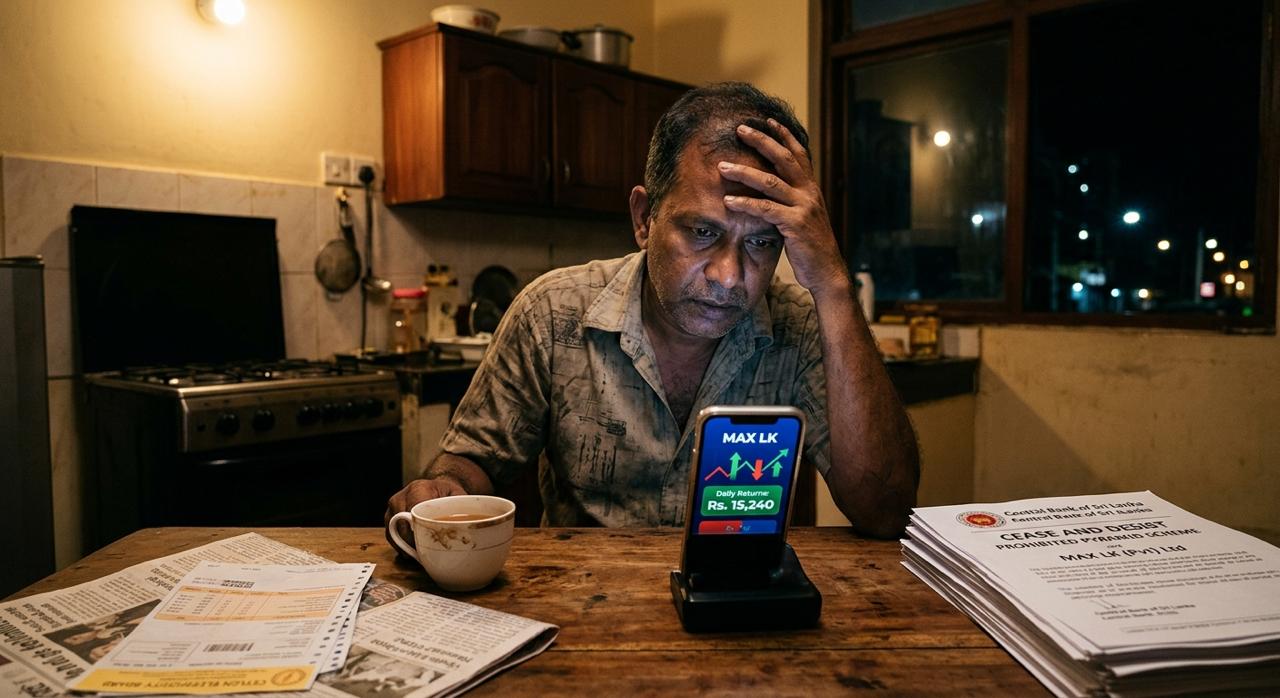
Picture a tired wage earner sitting at a kitchen table late at night, staring at a glowing smartphone screen while daily returns tick upward on an app that looks far too professional to fail. For thousands of families across the country, that digital illusion is a desperate prayer to outrun an impossible cost of living. Then reality crashes through the door.
The Central Bank of Sri Lanka has just added three more names to its public wall of shame. After investigations under Section 83C of the Banking Act, Max App Media Ltd, together with Max LK (Pvt) Ltd and Max Media Lanka (Pvt) Ltd, has been declared a prohibited scheme. That brings the official roster to 27.
The full blacklist now reads:
Submit Your Press Release
Get your company news, announcements, launches, appointments and events in front of a wider audience.


1. Tiens Lanka Health Care (Pvt) Ltd
2. Best Life International (Pvt) Ltd
3. Mark-Wo International (Pvt) Ltd
4. VML International (Pvt) Ltd
5. Global Lifestyle Lanka (Pvt) Ltd
6. Fast3Cycle International (Pvt) Ltd
7. Sport Chain App / Sport Chain ZS Society Sri Lanka
8. OnmaxDT
9. MTFE App (including MTFE SL Group, MTFE Success Lanka, and MTFE DSCC Group)
10. Fastwin (Pvt) Ltd
11. Fruugo Online App / Fruugo Online (Pvt) Ltd
12. Ride to Three Freedom (Pvt) Ltd
13. QNet / Questnet
14. Era Miracle (Pvt) Ltd / Genesis Business School
15. Ledger Block
16. Isimaga International (Pvt) Ltd
17. Beecoin App / Sunbird Foundation
18. Windex Trading
19. The Enrich Life (Pvt) Ltd
20. Smart Win Entrepreneur (Pvt) Ltd
21. Net Fore International (Pvt) Ltd / Netrrix
22. Pro Care (Pvt) Ltd / Shade of Procare (Pvt) Ltd
23. SGO / http://sgomine.com
24. I.C.A.N. Advertising (Pvt) Ltd and affiliated domains
25. Infinity Rover (Pvt) Ltd
26. TM App
27. Max App Media Ltd (including Max LK and Max Media Lanka)
These names are not just companies. They are household trauma. Early operators like Tiens and Best Life relied on old-school multi-level product pitches. Today’s versions have upgraded to high-tech digital traps, slick apps, Telegram groups, and Instagram reels of rented luxury.
And here lies the bitter irony every citizen feels in their bones. The Central Bank issues these alerts through its Financial Consumer Relations Department like clockwork, but the warning always arrives like an autopsy report after the patient has flatlined. By the time the state finishes investigating, gazetting, and publishing, the local promoters have closed their virtual storefronts and funneled millions across borders.
Worse, this toxicity is mutating. Alongside the apps, we now see fraudulent agricultural and plantation schemes promising fake yields on land, shadowy crypto trading bots that vanish overnight, and a predatory explosion of online gambling and betting apps feeding on desperate youth.
When grocery bills double and salaries evaporate before the second week, predatory networks smell blood. They dress classic Ponzi mechanics in modern clothing; digital media agencies, crypto arbitrage bots, social media engagement platforms. They rent flashy hotel ballrooms and promise effortless wealth to people exhausted from counting rupees.
Publishing statutory notices satisfies a legal checklist, but it does not stop the bleeding. Without real-time financial tracking, immediate asset freezing, and aggressive criminal trials that actually lock up local ringleaders, these blacklists remain a museum of financial crime. Until the state stops treating financial fraud as a civil annoyance and starts hunting operators before they cash out, the list of 27 will inevitably keep growing.



