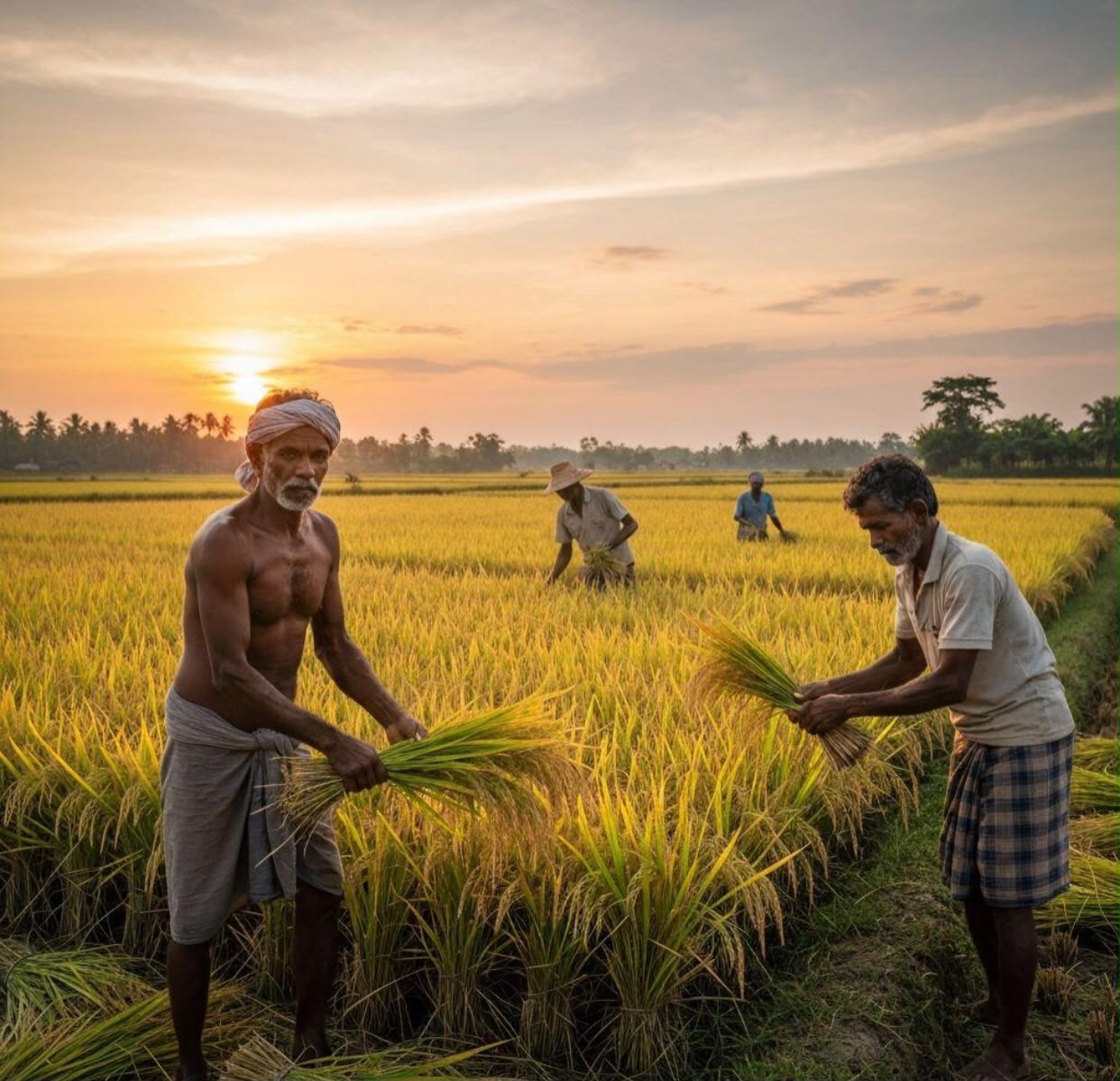
Another Rs 2.5 billion is going to the Paddy Marketing Board to buy the Yala harvest after Rs 6 billion already allocated proved insufficient. Helping farmers when markets fail is understandable. But Sri Lanka has been intervening in paddy for generations. Perhaps the bigger question is why the underlying problem survives every intervention.
There is something remarkably familiar about Sri Lanka’s latest attempt to protect the paddy farmer. The Government allocated Rs 6 billion for the Paddy Marketing Board to purchase paddy from the 2026 Yala harvest. With harvesting still incomplete in several producing areas and the available allocation proving insufficient, another Rs 2.5 billion has been approved for accelerated purchasing.
There is nothing inherently wrong with that. When farmers are confronted by depressed farm-gate prices during harvesting, a government purchaser can provide an important floor beneath the market. Agriculture also has a food-security dimension that ordinary commodity trading does not.
Submit Your Press Release
Get your company news, announcements, launches, appointments and events in front of a wider audience.


But Sri Lanka should ask why this problem keeps returning. The farmer wants a decent price for paddy, the consumer wants affordable rice, the miller has to cover processing, storage and financing costs, and the Government wants all three to be happy. Those objectives do not always coexist comfortably.
The result has been a recurring cycle of guaranteed prices, government purchasing, storage, milling arrangements, controlled releases and arguments about large private millers. The machinery keeps moving, yet the controversy keeps returning.
Perhaps the problem is that Sri Lanka has spent too much time debating the price of paddy and not enough examining the economics of producing it. How much does it actually cost an efficient farmer to produce a kilogram of paddy? How much is lost after harvesting? How efficient are storage and transport? How concentrated is milling capacity? How productive is Sri Lankan paddy cultivation compared with competing producers? How much taxpayer money is repeatedly required to make the system work?
Those answers matter more than another argument about whether the guaranteed price should move by a few rupees. The long-term objective should surely be a paddy economy in which farmers can earn sustainable incomes without requiring emergency government intervention every harvesting season, while consumers can buy rice without governments repeatedly fighting shortages, surpluses or price spikes.
That requires productivity, irrigation, technology, reliable market information, storage, competition and transparent pricing. Government purchasing may remain part of that architecture, but it cannot be the architecture.
Be that as it may.