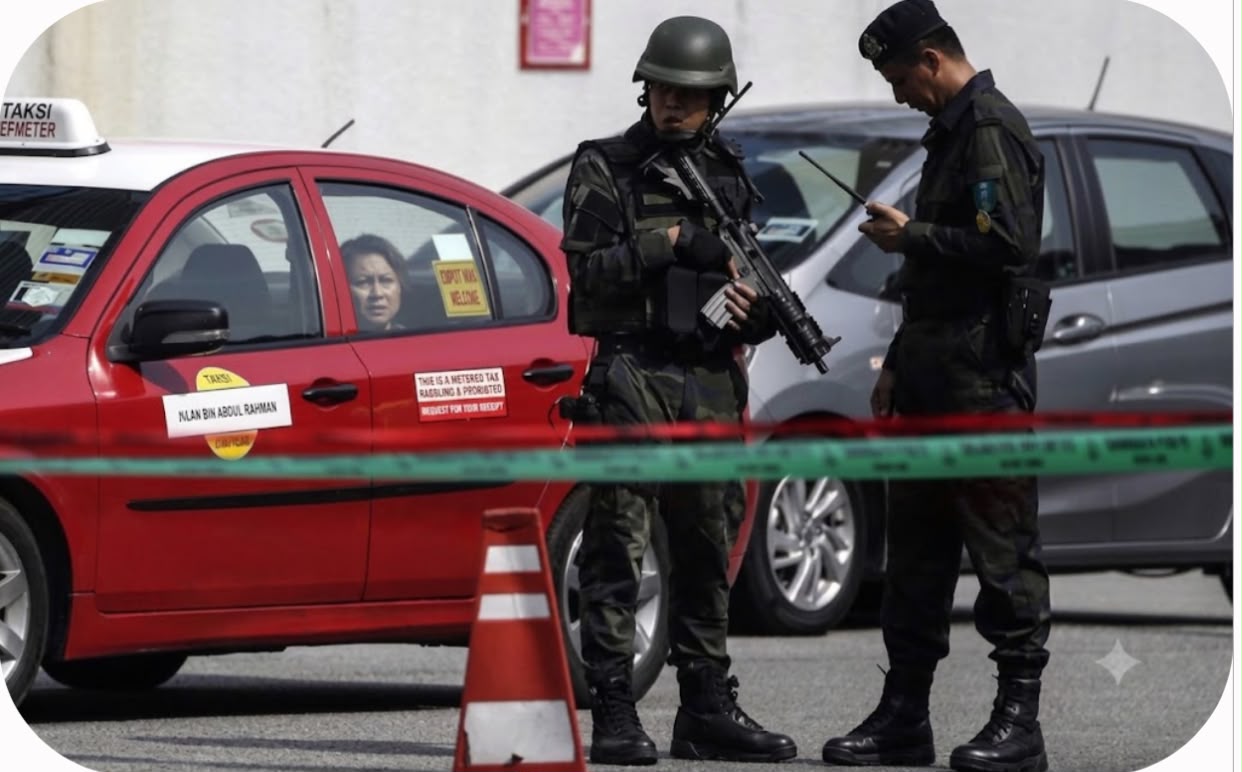
Does the Dickwella Incident Reflect a Wider Erosion of Respect for Law Enforcement?
The assault on police officers in Dickwella this week has once again raised an uncomfortable question that extends well beyond the immediate incident.
Is Sri Lanka witnessing a growing decline in respect for law enforcement, or is this simply one of the unfortunate occupational hazards faced by police services throughout the region?

The incident, in which police officers reportedly came under attack while carrying out their duties, has prompted concern within the Police Department and renewed debate over the increasingly difficult environment in which officers are expected to operate.
Violence directed against police officers is not unique to Sri Lanka.
Across South and Southeast Asia, officers have increasingly found themselves confronting aggressive crowds, organised criminal groups and politically charged demonstrations.
In Bangladesh, police have repeatedly come under attack during episodes of political unrest, particularly in the leadup to elections and during anti-government protests.
Officers have suffered injuries while attempting to disperse violent crowds, with police stations themselves occasionally becoming targets.
In Thailand, police continue to face sporadic attacks, particularly in the southern provinces where insurgent activity remains a security concern.
Elsewhere, officers dealing with organised crime and narcotics operations have also encountered violent resistance.
Malaysia has generally experienced fewer direct attacks on police officers, although isolated incidents involving armed criminals and drug syndicates continue to occur. Compared with many neighbouring countries, however, assaults on police remain relatively uncommon.
Against that regional backdrop, Sri Lanka’s experience does not yet suggest a systemic collapse in policing authority.
Nevertheless, isolated incidents should not be dismissed lightly.
Policing in a democratic society depends upon two equally important principles: public confidence and lawful authority. Officers must exercise their powers responsibly, while citizens must recognise that disagreement with police actions can never justify violence against those enforcing the law.
The Dickwella incident therefore deserves careful investigation – not simply to identify those responsible, but to understand whether changing public attitudes, organised criminality or broader social tensions are contributing to an increase in confrontations.
The answer matters.
A society in which police officers fear carrying out their lawful duties is no healthier than one in which citizens fear unlawful policing.
Both represent failures of the rule of law.
Be that as it may, respect cannot be demanded through uniforms alone.
It is earned through professionalism, accountability and public trust – but once violence becomes an accepted response to lawful authority, the foundations of civil society begin to weaken.