
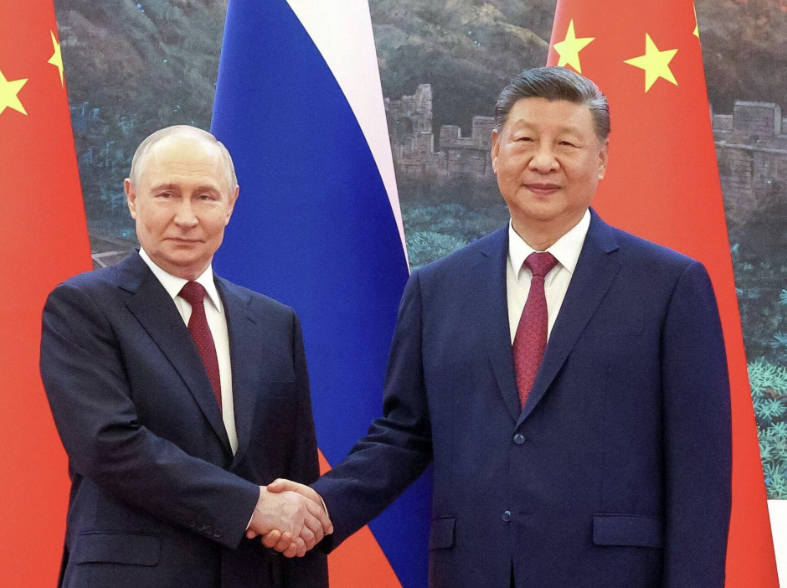
The Asia-Pacific Economic Cooperation summit currently unfolding in the southern Chinese tech hub of Shenzhen is not merely another tedious gathering of bureaucrats trading hollow communiques over lukewarm tea. It is a high-stakes arena where superpowers are aggressively redrawing the economic and technological boundaries of the twenty-first century.
When Chinese President Xi Jinping took the podium on the sidelines of the twenty-one-member forum, his message was characteristically direct. Beijing and Moscow, he argued, carry a shared historical duty to lead and advance the trend toward a multipolar world. To put it frankly, China is positioning itself as the steady, indispensable anchor for the Global South, offering an alternative commercial architecture to a West increasingly bogged down by its own protectionist impulses and domestic turbulence. Xi’s broader summit pitch zeroed in on what Beijing does best: seamless regional integration, lowered trade barriers, and a relentless push into digital and artificial intelligence infrastructure.
Yet the theatrical highlight of the opening sessions belonged across the aisle. Vladimir Putin stepped up to the microphone to deliver a blistering obituary for Western hegemony. In the Russian leader’s telling, Europe is locked in the middle of a humiliating decline, while the traditional tools of Western economic warfare, sanctions, tariffs, and export controls, have largely run out of steam. Putin argued with a straight face that the punishing wall of Western economic sanctions thrown at Moscow following the 2022 invasion of Ukraine failed to crush the Russian economy, instead accelerating the creation of alternative financial networks and non-Western trade corridors. Whether one views that assessment as genuine economic resilience or masterful Kremlin spin, the underlying reality is undeniable: the architecture of global commerce is fracturing along geopolitical fault lines.
Submit Your Press Release
Get your company news, announcements, launches, appointments and events in front of a wider audience.


What makes the Shenzhen summit genuinely fascinating is the sheer weight of what these leaders represent. APEC economies account for over half of global gross domestic product and represent roughly 2.7 billion souls. When this bloc sneezes, the rest of the planet catches pneumonia. Beyond the rhetorical jousting between Beijing and Moscow, the subterranean anxiety haunting every corporate executive and trade attaché in the convention hall is the looming uncertainty over trade truces between Washington and Beijing, particularly with U.S. President Donald Trump’s presence casting a very long shadow over bilateral negotiations.
As artificial intelligence and supply chain resilience dominate the closed-door discussions, the contrast between the old guard of Western dominance and the rising ambitions of Asian and Eurasian economies has never been sharper. The global economy is no longer operating on a single playbook written in Washington or Brussels. Shenzhen has made it abundantly clear that the future belongs to whoever can code faster, trade smarter, and build alternative rails that bypass traditional Western gatekeepers entirely.



