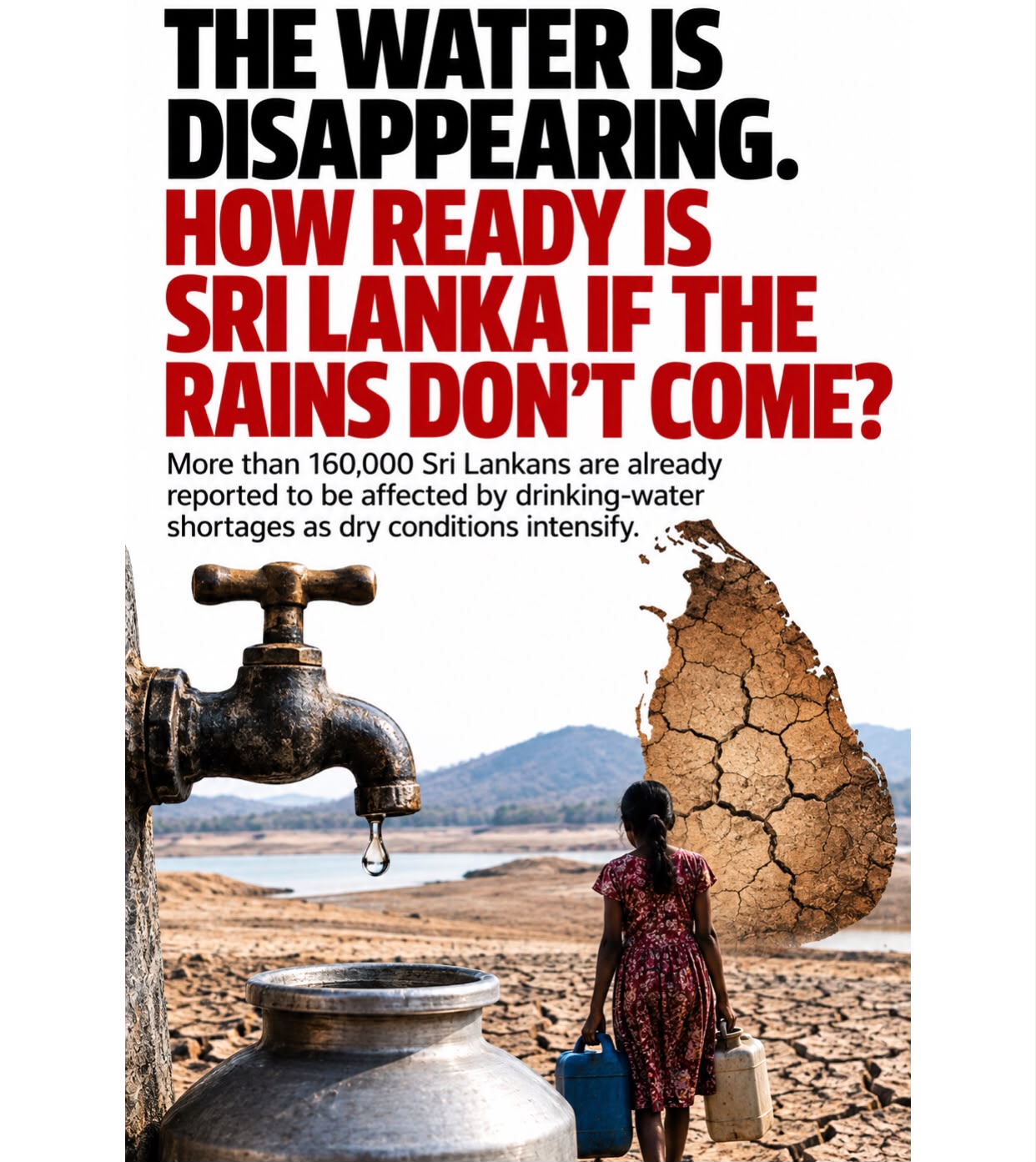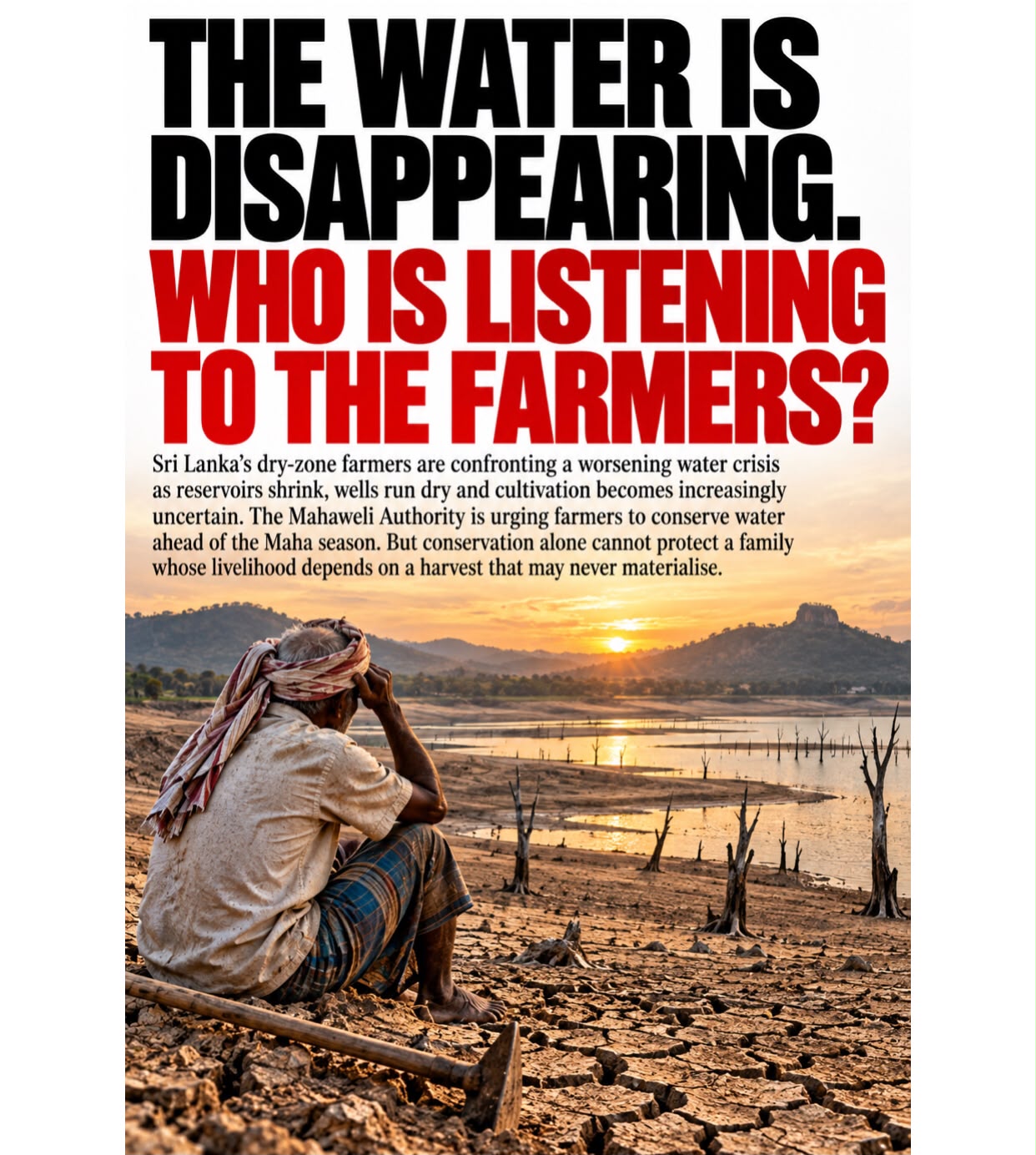
Sri Lanka’s dry-zone farmers are confronting a worsening water crisis as reservoirs shrink, wells run dry and cultivation becomes increasingly uncertain. The Mahaweli Authority is urging farmers to conserve water ahead of the Maha season. But conservation alone cannot protect a family whose livelihood depends on a harvest that may never materialise.
In Medirigiriya and other parts of Sri Lanka’s dry zone, the economic crisis is not measured in percentages or discussed in conference rooms. It is visible at the bottom of an empty well, across a field of failed crops and in the mounting debts of farmers who have already invested money they cannot afford to lose. For these families, the arrival or failure of the rains can determine whether the coming months bring an income or another season of borrowing.
Sri Lanka is experiencing serious water stress following inadequate rainfall, with some reservoirs reportedly holding only about one-third of their capacity. In affected communities, households have become dependent on water deliveries while farmers struggle to keep crops alive. Wildlife is also suffering, with diminishing water sources forcing authorities to intervene in some protected areas.
Submit Your Press Release
Get your company news, announcements, launches, appointments and events in front of a wider audience.


On October 8, the Mahaweli Authority urged farmers preparing for the Maha cultivation season to use rainwater wherever possible and conserve irrigation supplies. Water releases under the 2026/27 Maha programme began on October 1 and are scheduled in stages until November 14, covering 55 Mahaweli schemes and approximately 227,283 hectares of agricultural land.
The advice is sensible, but it exposes the fundamental weakness of agricultural policy in a country where so much depends on increasingly unpredictable rainfall. A farmer can reduce waste, change cultivation practices and follow official irrigation instructions, but he cannot manufacture rain. Nor can he suspend loan repayments simply because a reservoir has failed to replenish itself.
The Government has approved a fertiliser subsidy of Rs. 30,000 per hectare for the coming Maha season, subject to a maximum of two hectares per farmer. The estimated national expenditure is Rs. 16 billion, a substantial commitment intended to reduce cultivation costs and support domestic agricultural production. Yet fertiliser assistance, however welcome, cannot compensate for the absence of sufficient water.
That raises a question which deserves an answer before farmers commit themselves to another season of expenditure. Are the authorities providing reliable, location-specific information about expected water availability, recommended cultivation areas and the risks associated with planting particular crops? Farmers should not discover halfway through a season that the water they were encouraged to depend upon is no longer available.
The consequences of a failed harvest extend well beyond the individual cultivator. Agricultural labourers lose employment, village traders lose customers and families already carrying debt are forced to borrow again. What begins as a shortage of rainfall can quickly become a prolonged financial crisis affecting entire rural communities.
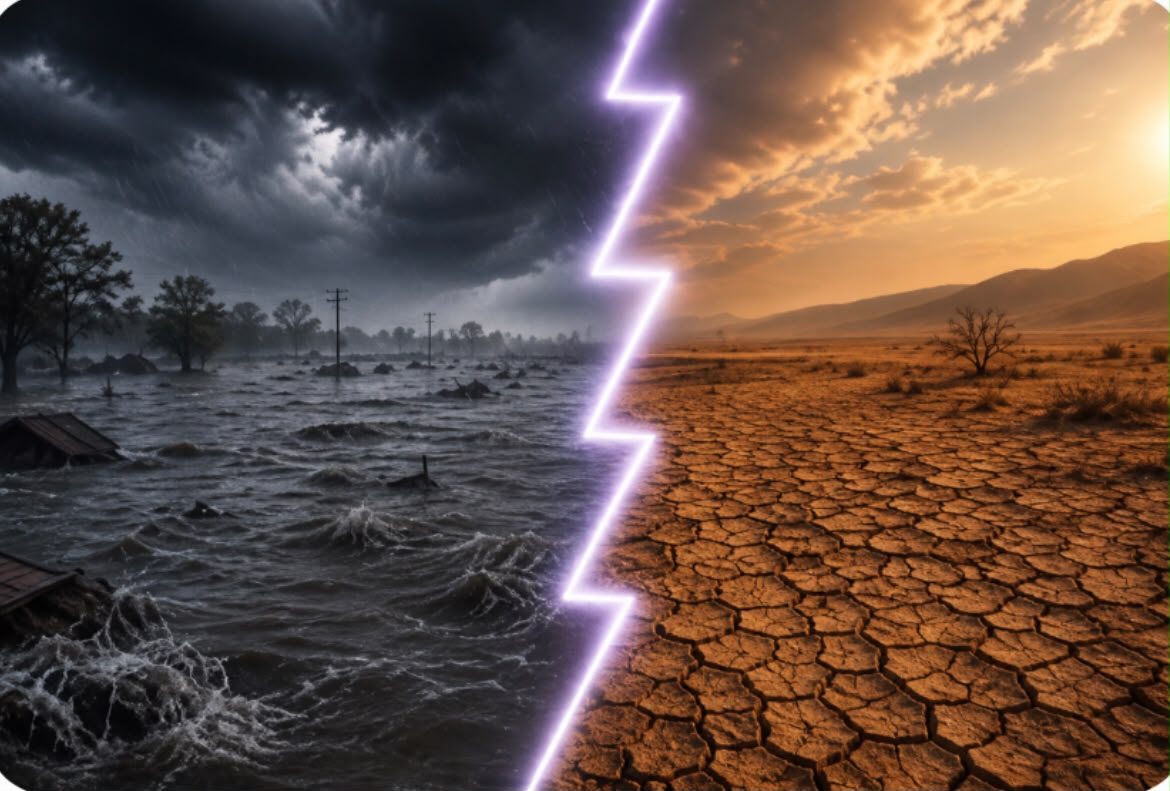
Sri Lanka has experienced droughts before, and climate variability makes further periods of water stress inevitable. Yet the national response remains heavily dependent on emergency measures, cultivation advice and the hope that the next monsoon will restore normal conditions. There is insufficient public discussion about whether existing irrigation infrastructure, water storage arrangements and agricultural risk protection are adequate for the conditions farmers now face.
The immediate priority must be transparent water allocation, credible cultivation guidance and practical assistance for households facing crop losses. Longer-term policy must address irrigation efficiency, storage, drought-resistant cultivation and insurance arrangements capable of protecting farmers against circumstances beyond their control.
There is also a question of fairness when water becomes scarce. Agriculture, domestic consumption, industry and environmental protection all make legitimate demands upon limited supplies. Decisions about allocation must therefore be explained openly rather than left to administrative discretion, particularly when the consequences fall most heavily upon people with the least financial protection.
Sri Lanka frequently describes its farmers as the backbone of the national economy. That description carries an obligation which extends considerably beyond ceremonial speeches and seasonal subsidies. If the country depends upon these families for food security, it must also accept responsibility for ensuring that agricultural risk does not repeatedly condemn them to debt and uncertainty.
The Government cannot guarantee rainfall, but it can guarantee honest information, transparent decisions and a credible framework for protecting rural livelihoods. Those are reasonable expectations of a country that has made agricultural self-sufficiency a recurring national objective.
Be that as it may, the farmer standing beside an empty reservoir does not need another assurance that agriculture is important. He needs to know whether there will be enough water to grow a crop, and what happens to his family if there is not.